GIMP-Nigeria Calls for Ethnic, Religious Tolerance on Independence Anniversary
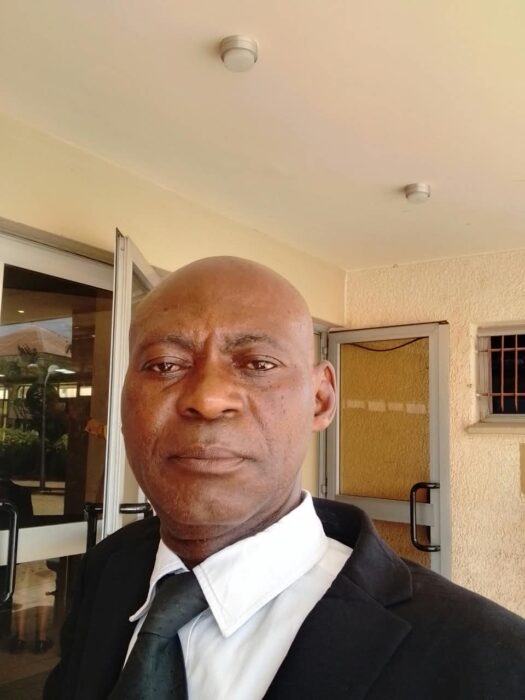
The Guild of Interfaith Media Practitioners Nigeria (GIMP-Nigeria) has called on Nigerians to strengthen ethnic and religious tolerance, saying peaceful coexistence and national unity are critical to the country’s socio-economic development.
The Guild made the call in an Independence Day address signed by its Secretary, Governing Board, Barrister Samuel Egburonu, to mark Nigeria’s 66th Independence Anniversary yesterday.
Egburonu urged Nigerians to use the anniversary to reflect on the country’s journey and the kind of nation they would bequeath to future generations, rather than limiting the celebration to ceremonies and patriotic activities.
He said Nigeria’s ethnic, religious and cultural diversity should be treated as a national asset rather than a source of division.
Citing the Qur’anic injunction in Surah Al-Hujurat 49:13 and the biblical teaching in Psalm 133:1, Egburonu said the promotion of peaceful coexistence was not merely a social obligation but also a moral responsibility.
He said ethnic and religious intolerance had serious economic consequences, noting that insecurity and communal conflicts could disrupt businesses, agriculture, investment and employment.
According to him, violence often forces businesses to close, drives farmers from their fields, destroys homes and schools, displaces communities and discourages investors.
“When ethnic or religious tensions rise, investors become more cautious,” he said, adding that distrust among communities also makes economic cooperation more difficult.
Egburonu therefore described peace as “not merely a spiritual virtue” but an important economic resource capable of creating an environment conducive to investment, entrepreneurship, trade and innovation.
He said Nigeria could not fully realise its socio-economic potential without deliberate investment in social cohesion and interfaith understanding.
The Guild urged Nigerians to recognise their interconnectedness, noting that farmers, traders, transporters, manufacturers and consumers depend on one another for their livelihoods.
“Our destinies are intertwined,” Egburonu said, stressing that Nigeria’s diversity should provide a platform for cooperation rather than competition driven by fear and suspicion.
He also called on religious leaders, including imams, pastors and priests, to use their platforms to promote peace, reconciliation and responsible citizenship.
Egburonu warned that messages delivered from mosques, churches and online platforms could either calm tensions or deepen resentment, depending on how they were communicated.
He urged Muslim and Christian leaders to speak consistently against violence, hate speech, religious bigotry and ethnic discrimination.
“Faith should build bridges, not walls,” he said, citing Qur’an 5:32 and Romans 12:18 as examples of religious teachings that emphasise the sanctity of human life and peaceful coexistence.
Beyond peaceful coexistence, GIMP-Nigeria advocated greater practical cooperation among Nigerians of different faiths and ethnic backgrounds.
The Guild proposed increased collaboration between Christian and Muslim leaders in supporting vulnerable families, promoting education and youth entrepreneurship, and developing community-based security and development initiatives.
It also urged religious institutions to establish platforms where young Nigerians from different backgrounds could interact, exchange ideas and develop joint ventures.
According to the organisation, interfaith engagement should not be activated only during crises but should become a permanent instrument of national development.
The Guild also urged journalists and media practitioners to exercise greater responsibility when reporting religious, ethnic and communal issues.
Egburonu said the media could either deepen social divisions or contribute to reconciliation, urging journalists to uphold accuracy, verification, fairness and sensitivity, particularly in conflict-related reporting.
He warned that misinformation and inflammatory content could spread rapidly through social media and escalate tensions.
The Guild therefore called for journalism that “informs without inflaming, investigates without demonising and reports conflict without unnecessarily widening it.”
On the youth, Egburonu identified Nigeria’s large young population as a major national resource requiring purposeful investment.
He said unemployment, frustration and identity politics could expose young people to manipulation and violence, and called for greater investment in entrepreneurship, technology, agriculture, creative industries and innovation.
“Our young people should inherit opportunities rather than prejudices,” he said.
The Guild also called on government and public institutions to strengthen citizens’ confidence in the fairness of national institutions.
It identified justice, accountability, equal citizenship, effective security and equitable access to opportunities as important elements of national cohesion.
Egburonu said security could not be achieved through force alone, advocating greater emphasis on intelligence gathering, community participation, dialogue, trust and prevention.
He consequently called for stronger collaboration among government, religious organisations, traditional institutions, communities and the media in addressing insecurity and strengthening social cohesion.
According to GIMP-Nigeria, Nigeria’s 66th Independence Anniversary should remind citizens that nation-building remains an unfinished project.
The Guild urged Nigerians to reject ethnic superiority, religious bigotry, permanent suspicion and the use of identity as a weapon for political mobilisation.
It called for a citizenship culture in which every Nigerian is valued regardless of religion, ethnicity or political affiliation.
The organisation urged parents to teach tolerance, religious leaders to preach peace, journalists to report responsibly, traditional rulers to promote reconciliation and political leaders to foster unity.
It also called on young Nigerians to choose innovation and enterprise over violence and hatred.
Egburonu said the Guild envisioned a Nigeria where religion would not determine the value placed on a citizen’s life, ethnicity would not determine access to opportunities and political differences would not become permanent hostility.
He said such a Nigeria would provide an environment in which agriculture, industry, education, investment, innovation and entrepreneurship could flourish.
He concluded by urging Nigerians to build bridges rather than walls, embrace dialogue over confrontation and cooperation over division.
“Let us choose truth where misinformation threatens peace, and let us choose Nigeria where narrow ethnic and religious interests seek to divide us,” he said.
He reaffirmed GIMP-Nigeria’s call for a country defined by peace, justice, tolerance, inclusive development and shared prosperity, and wished Nigerians a peaceful 66th Independence Anniversary.
to like, bookmark, and comment.
Comments
Join the conversation:
No comments yet. Be the first to share your thoughts.