Despite my support for Tinubu’s election, he chose Adelabu as minister over my nominee – Makinde
Add us on Google
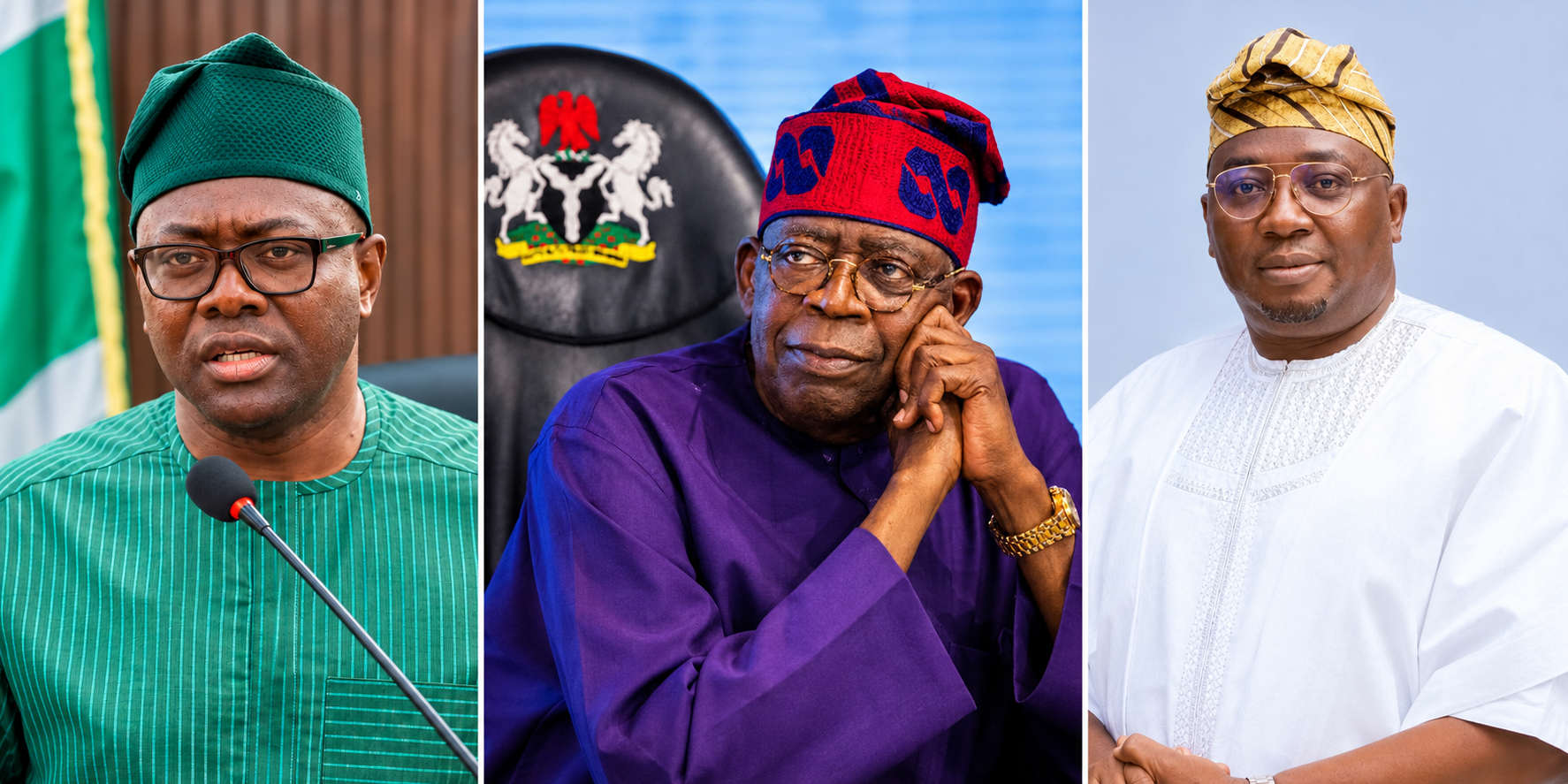
Oyo State Governor Seyi Makinde has said President Bola Tinubu chose Adebayo Adelabu for a ministerial appointment reserved for the state over Bimbo Adekanmbi, whom he had recommended for the position, despite his support for Mr Tinubu’s 2023 presidential bid.
Join the Premium Times WhatsApp Community For Quick Access To News and Happenings Around You.
Open in WhatsApp
Mr Makinde said this during a radio appearance at Fresh FM in Ibadan, where he recounted his discussions with the president following the 2023 election and questioned whether the political understanding that preceded the election had been honoured.
Mr Adelabu, a former deputy governor of the Central Bank of Nigeria (CBN), was appointed by Mr Tinubu as the Minister of Power in August 2023, but eventually resigned in April 2026 to pursue his ambition to become governor of Oyo State on the platform of the All Progressives Congress (APC). Mr Adelabu lost the party’s ticket to Sharafadeen Alli following the party’s primary.
He resigned from the CBN in 2018 to contest the 2019 governorship election in Oyo State on the platform of APC but lost the election to Mr Makinde, who contested under the banner of the Peoples Democratic Party (PDP).
He again contested against the incumbent governor in 2023, this time on the platform of the Accord Party, but lost.
However, Mr Adekanmbi, whom Mr Makinde said he unsuccessfully nominated for a ministerial appointment, served as commissioner for finance and budget planning under Mr Abiola Ajimobi.
Mr Makinde said his decision to recommend the former commissioner was based on his assessment of his performance in public office rather than party affiliation.
Stay Ahead with Premium Times
Follow us on Google News and never miss breaking stories, investigations, and in-depth reporting.
Add as a preferred source on Google
The governor said he had asked Mr Tinubu what role he intended to assign to Oyo State in his cabinet and was told that the president wanted a developmental economist to handle the budget and economic planning portfolio.
According to Mr Makinde, the president subsequently informed him that he had settled on Mr Adelabu for the ministerial position.
“I know Bayo. I contested against Bayo in 2019, bright, first-class material, but I went ahead to nominate Bimbo Adekanmbi,” Mr Makinde said.
He said he recommended Mr Adekanmbi because of his experience in public financial management and his contributions to the administration of the late Governor Mr Ajimobi.
Mr Makinde said he had reviewed the records of officials who served under Mr Ajimobi after assuming office in 2019 and concluded that Mr Adekanmbi had played a role in stabilising the administration’s finances.
“I thought, well, I’m blind to party affiliation. If you can help Nigeria or you can help your state, I will give you the opportunity,” he said.
Mr Makinde said Mr Tinubu eventually told him to take ownership of Mr Adelabu’s appointment by presenting the former minister as his preferred choice.
But the governor said he rejected the suggestion, insisting that the appointment should be publicly acknowledged as the president’s decision.
“No, sir. Bayo is your choice, and let it be known to the people that it is your choice,” he recalled telling Mr Tinubu.
The governor said Mr Adelabu was appointed despite his objection to presenting the decision as his own nomination.
‘We supported Tinubu for national unity’
Mr Makinde also revisited the political understanding that, according to him, informed his support for Mr Tinubu during the 2023 presidential election.
He stated that he and other political leaders supported the APC candidate in the hope that his administration would bring together political actors across party lines to address the country’s security and economic challenges.
The governor said the agreement was intended to produce a government of national unity at a time when Nigeria was facing insurgency in the North-east, banditry in the North-west, farmer-herder and other security challenges in the North-central, separatist agitation in the South-east, militancy in the South-south and kidnappings in the South-west.
“We said to the candidate, then who is now the president, that, look, we’re supporting you, but we are hopeful because of all the challenges we have in Nigeria. We’re hopeful that you will put in place a government of national unity,” he said.
Mr Makinde said the agreement was signed by representatives of the political leaders involved and subsequently presented to Mr Tinubu, who, he claimed, expressed support for it.
He said the arrangement was not simply about sharing ministerial positions or other political appointments but about bringing people together across party lines to find solutions to the country’s problems.
However, Mr Makinde said the appointments made after the election did not reflect the understanding he believed had been reached.
He alleged that political affiliation and connections to the president’s political circle influenced appointments that should have reflected a broader national consensus.
The governor also argued that the concentration of influential appointments among people from the South-west had fuelled perceptions that the administration favoured one region.
Mr Makinde’s account also brings renewed attention to the role of the G5 governors, a group of five PDP governors who opposed the party’s presidential candidate, Atiku Abubakar, ahead of the 2023 general election.
READ ALSO: Fuel Discount: Makinde asks Tinubu to release petroleum pricing template
The group comprised Mr Makinde; Nyesom Wike, then governor of Rivers State; Samuel Ortom of Benue State; Ifeanyi Ugwuanyi of Enugu State; and Okezie Ikpeazu of Abia State.
Their dispute with the PDP leadership deepened after Mr Abubakar emerged as the party’s presidential candidate, despite the governors’ position that power should return to the South after President Muhammadu Buhari’s eight-year administration.
Following Mr Abubakar’s emergence as the party’s presidential caididate, the G5 governors demanded the resignation of the then-national chairman of the PDP, Iyorchia Ayu, arguing that the party’s presidential candidate and national chairman should not come from the same region.
The group’s opposition to Mr Abubakar weakened the PDP’s campaign and fuelled speculation about its members’ political alignments ahead of the presidential election.
Mr Tinubu eventually won the election, defeating Mr Atiku and the Labour Party candidate, Peter Obi.
“Of course, in the G5 it was only Wike that was given the appointment. The rest, you know, they were left in the river,” he said.
The governor, whose second and final term ends in May 2027, is the presidential candidate of the Allied Peoples Movement (APM), Seyi Makinde. He will be running against Mr Tinubu, who is seeking reelection, in 2027.
On Sunday, Mr Makinde promised to establish a four-year transitional Government of National Unity (GNU), if elected President in 2027.
The presidential candidate, who made the promise on Saturday at the APM North-east 2027 Town Hall Meeting in Yola, Adamawa State, said the proposed GNU, which he promised would not last beyond four years, would prioritise national unity and address concerns about political representation and the exclusion of some sections of the country.
to like, bookmark, and comment.
Comments
Join the conversation:
No comments yet. Be the first to share your thoughts.