Ned Nwoko And The Weight Of A Historical Moment
By Charles Ozoemena
History is often kinder to those who recognise defining moments than to those who allow them to pass unnoticed. Across the world, great constitutional and liberation movements have reached critical stages at which unity, strategic thinking, continuity and leadership became particularly important. The Anioma State aspiration appears to be approaching such a moment.
The quest for Anioma State is neither new nor the product of a one off struggle. It is an aspiration that stretches back several decades, nurtured by generations of Anioma leaders, traditional rulers, intellectuals and political actors who have believed that the people deserve a federating unit reflecting their shared history, culture and aspirations. Like many long-standing constitutional campaigns, the movement has experienced periods of hope, disappointment and renewed determination.
History also shows that enduring causes often become associated with identifiable champions during their decisive phases. India’s struggle for independence found an enduring symbol in Mahatma Gandhi. South Africa’s anti-apartheid movement became closely associated with Nelson Mandela. In Nigeria, Nnamdi Azikiwe became one of the defining voices of the independence movement, while Chief Obafemi Awolowo’s legacy remains strongly associated with education and regional development.
These figures did not invent the causes they championed, nor did they pursue them alone. Their historical significance arose partly from the fact that they carried those causes through critical periods.
The Anioma movement has its own distinguished history, with notable figures such as Chief Dennis Osadebey and many other sons and daughters of Anioma contributing to the aspiration over the decades.
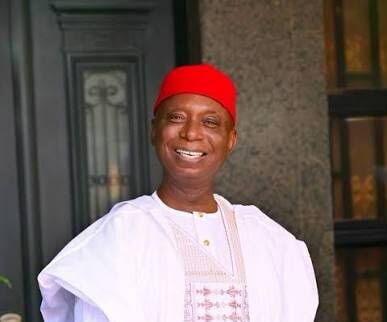
Today, however, the contemporary constitutional campaign is most visibly represented by Senator Ned Nwoko. Through his sponsorship of the proposal for the creation of Anioma State in the National Assembly, public advocacy and sustained engagement with political stakeholders, Nwoko has emerged as the principal legislative face of the current constitutional effort.
His published position has also framed the proposal within the broader constitutional question of the South-East, which remains the only geopolitical zone with five states, while the South-South has six.
The Place of Ned Nwoko in Anioma’s History
History has a way of assigning particular individuals to particular moments. Great causes are collective, but decisive phases of those causes often become associated with leaders who assume the responsibility of advancing them.
The contemporary campaign for Anioma State has reached such a phase.
Nwoko’s legislative sponsorship and sustained advocacy have moved the Anioma question beyond a regional aspiration into a subject of national constitutional discourse. Whatever one’s position on the precise constitutional structure ultimately proposed, there is little doubt that his role has given the issue considerable visibility at the national level.
An especially notable indication of the extent of Nwoko’s engagement appears in a leaked telephone conversation released online by Sandra Duru on September 18, 2026. In the recording, the Senate President Godswill Akpabio is heard discussing Nwoko’s pursuit of Anioma State.
Akpabio says:
“Uncle Ned wants Anioma State and he has mobilised every person that you can imagine in that area.”
He further describes Nwoko as “very pushy”, adding:
“When he wants something done he doesn’t leave you alone.”
The significance of the remarks lies in what they purport to reveal about how extensively Nwoko was engaging stakeholders in pursuit of the Anioma objective.
The leaked recording is also notable when placed alongside Akpabio’s subsequent public statements. On Wednesday, March 25, 2026, Akpabio publicly acknowledged that the Anioma proposal was being championed by Nwoko and other stakeholders was receiving legislative attention. He made the revelation while addressing the All Progressives Congress (APC) South-South Zonal Congress in Asaba in the presence of Governor Sheriff Oborevwori. Akpabio stated unequivocally that Anioma State would be created, with Asaba as its capital, while Warri would assume the status of the new capital of Delta State. His message was clear, direct, and left little room for ambiguity.
“If that is the only demand from the South-South for state creation, then I should be proud to support it. For Anioma State, the capital will be in Asaba; then the capital of Delta State proper will be in Warri. That’s not a problem.
“I don’t think we should be afraid because the more states we have, the more development. Assuming it passes through the various Houses of Assembly, it means we are going to have one additional state.
“It is definitely going to be another broom and progressives from the South-Eastern part of Nigeria.” the Senate President clarified.
Taken together, the public statements and the reported contents of the recording provide an indication of the sustained political effort surrounding the Anioma question and of Nwoko’s prominent role in the contemporary campaign.
That does not diminish the contributions of those who came before him, Rather, it recognises a recurring feature of constitutional movements: collective aspirations sometimes reach moments when particular individuals become especially prominent in carrying the campaign forward.
The Sixth-State Question
One of the central issues in the present debate is Nwoko’s insistence that the proposed Anioma State should constitute the sixth state of the South-East.
Nwoko and his supporters have argued that the position is rooted in historical, cultural and constitutional considerations. They point to the shared linguistic, cultural and traditional affinities between Anioma communities and communities across the River Niger, while also drawing attention to the fact that the South-East remains the only geopolitical zone with five states.
This position has attracted competing interpretations.
Former Delta State Governor, Dr. Ifeanyi Okowa and his supporters, have publicly stated that they support the creation of Anioma State in principle while expressing reservations about aspects of the current approach, including the proposed geopolitical alignment. They have also stated that they do not believe any Anioma sons and daughters are opposed to the creation of Anioma State.
The difference therefore extends beyond whether Anioma should become a state. It also concerns the constitutional architecture within which that state should be created.
Supporters of the present proposal championed by Nwoko contend that establishing Anioma as the sixth state of the South-East would simultaneously address the long-standing issue of regional numerical imbalance while fulfilling the aspiration for Anioma statehood.
Those who favour a different geopolitical arrangement advance a different constitutional approach.
The distinction is important because state creation is ultimately a constitutional process requiring broad legislative and political consensus. The merits of any proposal must therefore be considered alongside the coalition required to secure its passage.
The Value of Constitutional Momentum
One of the least discussed realities of constitutional reform is that ideas alone do not change a nation’s laws. Constitutional amendments require sustained advocacy, legislative engagement, coalition-building and patient negotiation. All these Senator Nwoko has achieved.
By the time a proposal reaches an advanced stage of national discussion, it may have accumulated considerable political capital through relationships, consultations and stakeholder engagement.
This is why continuity has become an important issue in the current Anioma debate.
Nwoko is presently the public legislative sponsor of the proposal before the National Assembly. His supporters argue that his continued involvement is important because he has already invested considerable political capital in advancing the proposal and building relationships around it.
They also point to his legislative record, including his sponsorship of more than 30 bills, as evidence of his broader legislative activity.
Changing the principal legislative sponsor at a critical stage could endanger the whole process. Why? It require new relationships, renewed negotiations and additional stakeholder engagement. At the same time, constitutional processes are larger than individual political careers and must ultimately depend on institutions, consensus and the constitutional requirements for creating a new state.
The Larger Constitutional Question
The aspiration for Anioma State predates Senator Ned Nwoko and will outlive any individual political office-holder. What is different about the present period is that the aspiration has acquired a prominent legislative vehicle and has become the subject of sustained national debate. Who made this possible? Nwoko.
There is also a broader regional question.
Only one new state is currently being discussed in relation to the South-East, while the South-South already has six states. Those who support Anioma’s inclusion in the South-East argue that this would bring the zone to parity with the South-South and address a long-standing concern about the South-East’s representation within Nigeria’s federal structure.
Those who advocate a South-South configuration approach are dead on arrival because there is no option of creating additional state for the South-South region.
The competing positions are therefore not simply about personalities; they concern geography, history, identity, constitutional structure and the political coalition required to amend the existing arrangement.
A Defining Moment
Senator Ned Nwoko has undoubtedly become a prominent figure in the contemporary phase of that struggle. His legislative sponsorship, advocacy and engagement with political stakeholders have placed him at the centre of the present constitutional conversation.
The significance of the reported Akpabio remarks lies precisely here. The statement attributed to the Senate President offers an unusually direct acknowledgment that Nwoko was pursuing Anioma State persistently and had mobilised extensively around the objective.
It does underline the extent to which the Anioma question had become a central part of Nwoko’s political and legislative engagement.
History will ultimately record the contributions of all those who advanced the cause. Certainly, history will be kind to Nwoko.
The question before the present generation is whether the opportunity created by decades of advocacy can now be translated into constitutional reality through unity, strategic engagement, legislative consensus and sustained commitment.
Defining moments rarely announce themselves twice.
When they arrive, history asks not only who stood at the forefront, but whether the generation entrusted with the opportunity recognised what was at stake.
Charles Ozoemena, a Public Affairs Analyst writes from Abuja
to like, bookmark, and comment.
Comments
Join the conversation:
No comments yet. Be the first to share your thoughts.