FG to negotiate ₦1,350 petrol price ceiling as global oil shock drives pump prices
Add us on Google
The federal government says it is negotiating a ₦1,350 per litre ceiling on the ex-gantry or landing cost of petrol as part of measures to shield Nigerians from sharp fluctuations in fuel prices amid rising global oil prices.
Join the Premium Times WhatsApp Community For Quick Access To News and Happenings Around You.
Open in WhatsApp
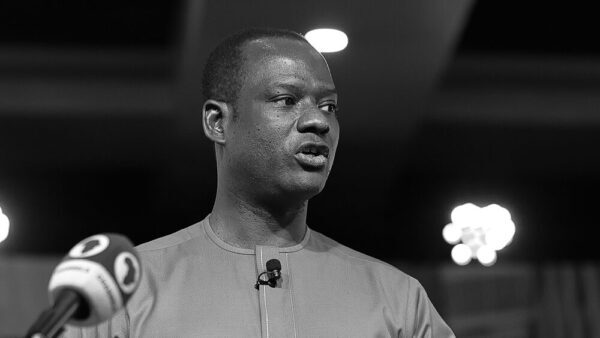
The Minister of Finance and Coordinating Minister of the Economy, Taiwo Oyedele, disclosed this on Thursday at a press briefing in Abuja on rising petroleum product prices and calls for the return of fuel subsidy.
Mr Oyedele said the proposed ceiling would prevent petrol prices from immediately reflecting every movement in global crude oil prices and the exchange rate.
“Pump prices should not have to follow every swing in global crude or the exchange rate,” he said.
Under the proposed arrangement, when the cost of petrol rises above the ceiling, refiners and importers would carry the shortfall and recover it later when crude prices or the exchange rate become more favourable.
The minister said the arrangement would be reviewed monthly, with the figures published to ensure transparency.
He stressed that the measure was neither a subsidy nor a price control, but an attempt to smoothen price movements over time.
Stay Ahead with Premium Times
Follow us on Google News and never miss breaking stories, investigations, and in-depth reporting.
Add as a preferred source on Google
Mr Oyedele said the government’s objective was to prevent sharp price increases that could worsen transportation and logistics costs for households and businesses.
He explained that relatively stable petrol prices would be preferable to sudden increases followed by reductions that may not immediately translate into lower transport fares.
“₦1,400 a litre today and ₦1,400 tomorrow is better than ₦1,500 today and ₦1,300 tomorrow, because volatility itself adds to uncertainty and cost,” the minister said.
Global oil shock
The proposed price ceiling comes amid a sharp rise in global crude and refined petroleum product prices following the conflict in the Gulf.
Since the United States and Israel launched attacks on Iran in February, disruptions to oil supply through the Strait of Hormuz have contributed to higher global crude prices, with Brent crude rising above $100 per barrel.
The impact has been felt in Nigeria despite the country being an oil producer, as higher international crude, freight and refined-product prices feed into the domestic fuel market.
While Nigeria could benefit from higher crude prices through increased government revenue, fluctuations in petrol, diesel and aviation fuel prices have increased costs for households and businesses, adding to the cost-of-living pressures that followed the removal of petrol subsidy in 2023.
The sustained pressure has also renewed calls for the reintroduction of fuel subsidy, with the issue increasingly featuring in political debates ahead of the 2027 general elections.
Mr Oyedele said Brent crude was trading above $100 per barrel, almost 50 per cent higher than its pre-war level.
He said shipping through the Strait of Hormuz had fallen to roughly 13 per cent of its pre-war level by mid-September, while diesel exports from the Middle East and Russia had declined by 75 per cent from a year earlier.
The minister added that crude tanker rates from West Africa reached record levels in September as countries sought alternative sources of supply.
He said the developments had contributed to the rise in Nigeria’s petrol price from about N830 per litre before the conflict, when crude traded at around $70 per barrel, to an average of about ₦1,400 per litre currently.
READ ALSO: Nigeria has reduced reliance on oil revenue – Tinubu
Other measures
Mr Oyedele said the proposed price ceiling was one of several measures being considered by the government to moderate the impact of rising fuel prices without returning to a blanket subsidy.
Other measures include a 30-day margin discount on petrol sold at NNPC Limited stations, with priority given to public transporters.
The government is also considering forward sales of crude to domestic refineries to shield petrol prices from global market volatility as domestic crude production improves.
It plans to remove illegal road taxes and levies that increase transportation and logistics costs and expand cash transfers and subsidised credit for vulnerable households and small businesses.
The government also plans to accelerate the rollout of compressed natural gas (CNG), while considering an excess profit tax on energy operators that take undue advantage of consumers.
Mr Oyedele said the government was also investing in a National Strategic Fuel Reserve to release refined products into the market during periods of global disruption or artificial scarcity.
He said the reserve would help reduce price volatility without fixing prices or reintroducing fuel subsidy.
The minister said the government remained committed to maintaining the gains from the 2023 removal of petrol subsidy while ensuring that the burden of higher energy costs did not fall disproportionately on vulnerable Nigerians.
to like, bookmark, and comment.
Comments
Join the conversation:
No comments yet. Be the first to share your thoughts.