Kenyans Turn to Chatbots for Secrets They Keep From People, Study Finds
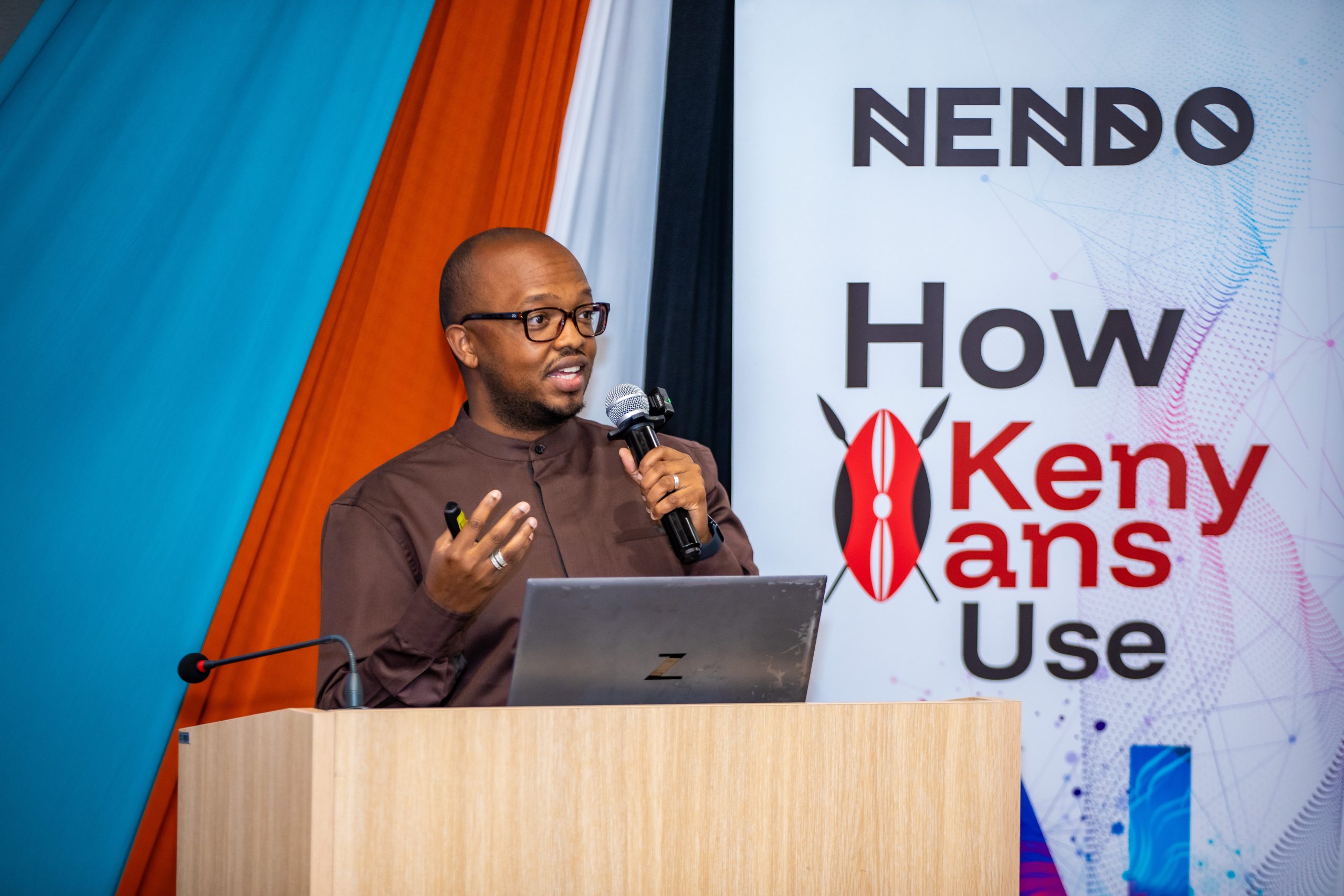
Nearly half of 1,200 Kenyans surveyed in a new study say they have used artificial intelligence to discuss matters they keep hidden from other people, according to research by Nendo, a Nairobi-based consultancy.
The finding suggests that generative AI, often seen as a tool for drafting emails or automating routine tasks, is increasingly being treated as a private confidant. Among those surveyed, 46.3% admitted turning to AI for secrets they had not shared with others, while 72% said they had sought emotional support or guidance on personal situations. More than half of that group, 54.1%, did so weekly.
The study does not claim that nearly three-quarters of all Kenyan adults are using AI as a form of therapy. The sample consisted of 1,200 digitally literate, AI-aware individuals drawn from 18 counties, a group that is younger, more educated and more online than the average adult in the country. Of these, 1,161 completed the detailed AI section of the survey. As a result, the findings are not nationally representative, and the research did not classify every personal query as clinical therapy or assess the safety and accuracy of the responses users received.
What the data does show is that among frequent users, a technology built for task automation is moving into emotional territory once reserved for human relationships. That shift carries consequences beyond the usual debate about jobs being replaced by machines. The more immediate change is the kind of intimate exchange people are now willing to hand over to algorithms.
Conversational design encourages openness
Chatbots invite personal disclosure in a way earlier technologies did not, largely because natural conversation is their main interface. Search engines require users to reduce complex problems to keywords. Traditional software forces them through menus and commands. Generative AI, by contrast, lets people express themselves much as they would with another person.
That difference matters most when the subject is deeply personal. Looking for advice on a troubled relationship online produces static pages; talking to a chatbot allows a user to explain what happened, answer follow-up questions and receive guidance tailored to their situation. Even though the underlying system is code, the experience can feel social and empathetic.
Nendo's respondents illustrate how quickly the line blurs. One man aged 25 to 34 in Nyeri, about 150 km north of Nairobi, said he used AI to draft meeting minutes, find holiday rentals and ask for emotional support. Those tasks once belonged to separate areas of life: office work, travel planning and mental well-being. Generative AI brings all three together behind a single prompt box.
Other participants said they used AI to write business plans, seek financial advice, complete academic work, translate local languages, structure lesson plans, compose cover letters and write research papers. The significance is that regular use for ordinary tasks makes the move toward emotional intimacy almost effortless. Someone who has spent months asking a model to explain concepts or polish documents does not need a new platform when the request changes from “rewrite this email” to “how do I handle this crisis?” They simply keep typing.
Why the machine listens
The study does not establish exactly why respondents confide in AI, but the way conversational platforms are built offers clues. Chatbots are available around the clock. They do not require appointments or emotional give-and-take. There is no visible judgment when someone asks an awkward question, no interruption mid-sentence and no social awkwardness in returning to the same problem again and again. These features were designed for customer service efficiency, yet they suit personal confession unusually well.
The pattern is strongest among younger users. Among respondents aged 18 to 24, 76% said they relied on AI for emotional support or personal guidance, rising to 81.4% among those aged 25 to 34. The share fell to 63.8% among 35- to 44-year-olds and dropped below 50% for those aged 45 and above. Women were more likely than men to report emotional or personal use, at 76% compared with 68.4%.
Because the survey does not examine what drives these differences, it would be premature to conclude that younger people or women are replacing human relationships with AI. Still, the age link matters: the groups forming the deepest bonds with the technology are the ones who will live alongside it for decades. For them, asking an algorithm for personal advice may soon feel as routine as using a search engine does today.
Intimacy alters the risk
Public discussion of generative AI has focused heavily on made-up facts and misinformation. Intimate personal use introduces a subtler danger: the real-world consequences of a flawed response depend on the context.
An inaccurate summary can be corrected, a weak email revised, a false statistic checked against original sources. Judging advice about someone's life is far harder. Nendo found that 57.9% of respondents placed high or complete trust in AI for career decisions. For legal issues, 55.7% expressed significant trust; for financial choices, 53.5%; and for health matters, 50%. Only 39.9% reported the same level of trust for family-related guidance.
Notably, respondents were more willing to trust algorithms with legal problems than with domestic relationships. One possible explanation is that law and finance are seen as having objective, rule-based answers, while family matters require emotional nuance, a theory the survey did not directly test. Yet legal, financial and medical decisions are precisely where confident but wrong advice can cause serious harm. The mechanics of chat interfaces make this worse. A chatbot does not simply return links; it weaves information into an authoritative narrative aimed at the person asking. Fluency can be mistaken for expertise.
What does the machine know about Kenya?
The risk grows when an AI system giving advice lacks real understanding of the social and cultural setting in which the user lives. Here Nendo found a striking contradiction. While 72.5% of respondents believed AI models broadly understood Kenyan daily life, 25.1% said they had received recommendations that clashed with local culture or values. Nearly three-quarters said they would use AI more if it better grasped indigenous languages and cultural nuances.
Language remained a clear weak point: only 34.9% rated AI responses in Kiswahili or Sheng as “very good” or “excellent,” while 35.8% rated them lower.
to like, bookmark, and comment.
Comments
Join the conversation:
No comments yet. Be the first to share your thoughts.