Africa Can Retain $500bn Reserves By Borrowing Locally – Oramah
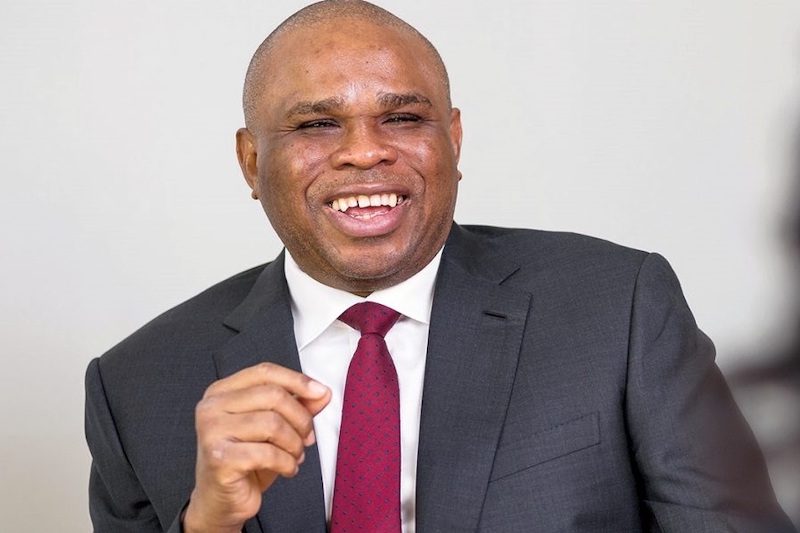
Africa can reduce its rising sovereign debt burden and dependence on foreign financing by strengthening indigenous financial institutions, retaining its foreign reserves within the continent, and expanding local-currency transactions through regional payment platforms, former president of the African Export-Import Bank (Afreximbank), Professor Benedict Oramah, has said.
Oramah, speaking at the Aelex 20 Annual lecture in Lagos, said the continent’s continued reliance on foreign currencies for international trade settlements and external borrowing had left its economies vulnerable to exchange rate fluctuations, global financial shocks and sovereign debt crises.
He argued that African countries must take greater control of their financial resources and develop mechanisms to mobilise domestic capital for economic development, rather than continue to depend on external institutions and foreign-currency-denominated financing.
According to him, Africa’s economic independence will remain incomplete as long as its countries continue to hold their reserves outside the continent, borrow in foreign currencies and depend on financial institutions beyond their control.
He said, “the inherited, not acquired, inability to issue long-term debt in a national currency in the international market, the so-called original sin, exposes our economies to sovereign debt vulnerability. So everywhere we turn, we are trapped.”
The former Afreximbank president noted that African economies, which are heavily dependent on commodities and third currencies for trade settlements, remain exposed to external shocks because their payment obligations often exceed their receipts.
He said the continent must develop its national currencies and strengthen regional financial infrastructure to reduce the risks associated with foreign currency borrowing and external financing.
Oramah identified the Pan-African Payment and Settlement System (PAPSS) as a major instrument that could help African countries domesticate intra-African trade payments, reduce transaction costs and deepen financial integration.
The platform, which he said links nearly three dozen central banks across more than 40 countries, alongside over 200 banks and payment service providers, could save the continent about $5 billion annually in payment costs.
He said the greatest potential of PAPSS extended beyond facilitating trade payments to transforming how African countries finance infrastructure and other development projects.
Using the example of infrastructure financing, Oramah explained that Nigeria could borrow in its local currency to pay contractors from Egypt, South Africa and other African countries, while the payment platform settles the transactions in the contractors’ respective national currencies.
“If we can, you imagine a situation where instead of borrowing to build roads, railways, and ports, which always increases our sovereign debt, we borrow in our national currency because we pay a contractor coming from Egypt, South Africa, anywhere. We use naira to settle, and PAPSS pays those contractors in their respective national currencies. Our national debt will go down,” he said.
He further proposed deeper integration of African capital markets through cross-border bond transactions, which would allow investors from different African countries to purchase securities issued in other countries using their respective currencies.
Oramah noted that such arrangements would deepen liquidity across the continent and encourage convergence in monetary policies by increasing financial transactions. He also raised concerns over the concentration of Africa’s foreign exchange reserves outside the continent, arguing that the practice had weakened indigenous financial institutions and limited the continent’s ability to deploy its own resources for development.
He said most of Africa’s foreign reserves, estimated at between $350 billion and $500 billion, were held in non-African banks for safety and international ratings. However, he questioned the logic of keeping African capital abroad when the same institutions often subjected African countries and businesses to stringent conditions when they sought financing.
“As a result, most of Africa’s $350 billion to $500 billion in reserves end up outside Africa. Yet, when we, the owners of these funds, approach those deposit requirements for credit facility were torn down and led to other compliance, country risks and other imaginary problems,” he said.
He maintained that African countries must begin taking calculated risks by investing their resources in indigenous financial institutions and strengthening their capacity to support economic growth. “I do not see European banks putting their reserves in African banks. If our institutions are weak, we should fix them. And if we lose the money in our institutions, let’s learn from them,” he said.
Oramah disclosed that during his tenure at Afreximbank, the institution mobilised more than $40 billion in deposits from African countries, demonstrating the potential of retaining the continent’s financial resources within its own institutions.
He stressed that none of the funds had been lost, adding that the deposits helped reduce the bank’s financing costs. The former bank president also argued that African countries must move away from exporting raw materials without developing industries around their natural resources, noting that mineral wealth should serve as capital for industrialisation and economic transformation.
He urged African leaders to develop economic policies based on the continent’s realities rather than rely exclusively on international best practices designed for other economies. “Best practice is always somebody’s practice, designed for somebody’s attention,” he said, adding that African countries must have the conviction to develop their own approaches when conventional models do not address their development needs.
to like, bookmark, and comment.
Comments
Join the conversation:
No comments yet. Be the first to share your thoughts.