Bank Recapitalisation Boosts Long-yerm Capital Drive – Association
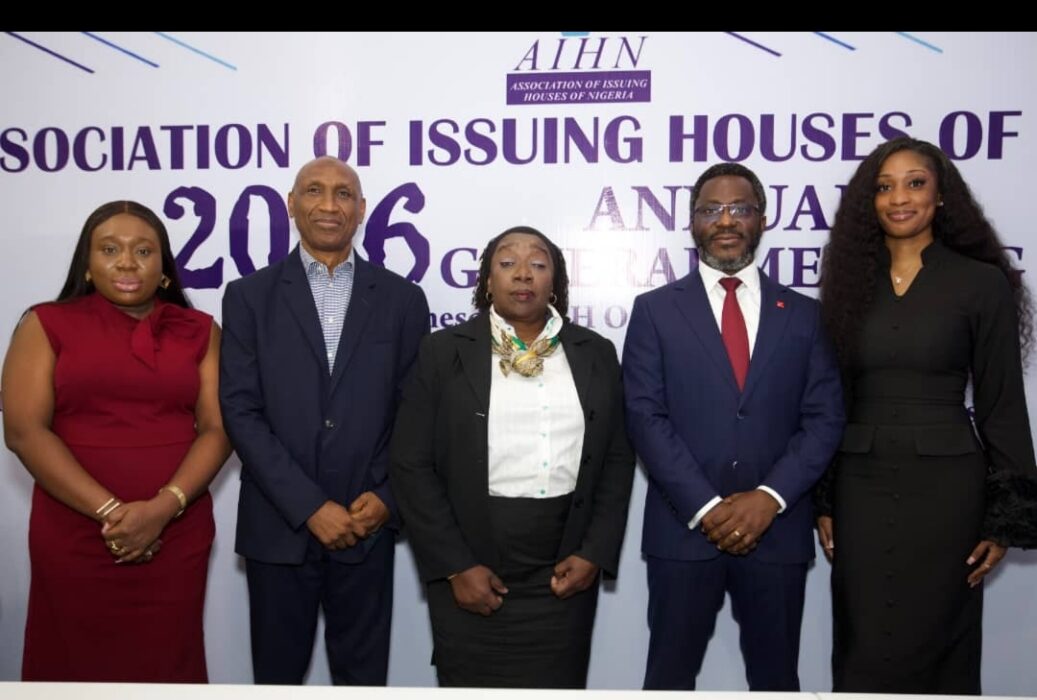
The banking sector recapitalisation has created a pathway for new capital-raising and reinforced the capital market’s role in mobilising long-term funding for economic development, the president of the Association of Issuing Houses of Nigeria (AIHN), Kemi Awodein, has said.
Speaking at the Association’s 2026 Annual General Meeting and presentation of 2025 results in Lagos, Awodein said market capitalisation approached N95 trillion at the end of last year, underscoring the resilience and growing importance of Nigeria’s capital market.
She said issuing houses remained central to the transactions, advising issuers, structuring offerings and facilitating access to capital.
According to her, the recapitalisation exercise initiated by the Central Bank of Nigeria was a major driver of primary market activity, with banks raising funds through public offerings, rights issues and private placements.
About N1.65 trillion was raised, with domestic investors accounting for 71 per cent. By November 2025, 27 banks had undertaken capital-raising initiatives, while 33 of the 37 banks had met or been confirmed compliant with the new capital requirements.
Under the revised requirements, international commercial banks must maintain a minimum capital of N500 billion, national banks N200 billion and regional banks N50 billion.
“The recapitalisation exercise significantly increased primary market activity in 2025, with many banks accessing the capital market,” she said.
Awodein noted that the introduction of the Investments and Securities Act 2025 ushered in a modern legal framework aimed at strengthening investor protection, supporting innovation and enhancing market integrity.
“Through our advocacy and the expanding activities of the AIHN Academy, the association continued to promote professionalism, market development and capacity building,” she said.
She said AIHN also sustained advocacy for a better business environment, improved transaction processes and adoption of global best practices.
On its financials, Awodein said total income rose to N193.3 million in 2025 from N123.67 million in 2024, while current assets grew to N605.4 million from N510.19 million. Total funds and liabilities increased to N613.3 million from N518.2 million, with surplus rising to N94.84 million from N62.91 million.
On the economy, she said Nigeria continues to show signs of strengthening, supported by improvements in services and oil sectors, while forex reforms contributed to greater naira stability and improved external liquidity.
“The naira closed 2025 at approximately N1,435.75 to the dollar and has strengthened further to N1,327.78 as at September 23, 2026. Gross foreign exchange reserves also increased from $45.48 billion to approximately $55.25 billion by September 2026,” she said.
She said headline inflation moderated to 15.39 per cent in August 2026, though food inflation remained elevated at 19.57 per cent, adding that moderation has provided room for monetary policy adjustment and should spur activity in the domestic debt capital market.
“A more predictable macroeconomic environment is essential to restoring investor confidence, supporting corporate planning and encouraging longer-term capital formation,” she added.
On equities, Awodein said corporate listings on the Nigerian Exchange stood at about N2.7 trillion by mid-September 2025, with major transactions including Dangote Petroleum Refinery, Dangote Sugar and Presco rights issues.
to like, bookmark, and comment.
Comments
Join the conversation:
No comments yet. Be the first to share your thoughts.