How to rebuild Nigerian football, By Shehu Adamu Dikko
Add us on Google
With the foregoing and other relevant factors in place, the standard of our football will certainly improve beyond reasonable doubt. Also, once the players are well taken care of and they have a sense of security by playing at home, they will always prefer to stay at home and give their very best, until such a time when they have a better contract in Europe. Also, should they go to Europe and not succeed, they will not hesitate to come back home to play since the standard is good and the pay is reasonable. This will certainly translate to better national teams for Nigeria…
An old article by Mumuni Alao certainly made an interesting reading when it came out then. And the issues he had spoken to back in the day, are still as relevant today as they were then. He had stated therein that the ideas he had on the reformation and rebuilding of Nigerian football were crazy ones and were largely meant to stimulate further suggestions on how to have a worthwhile home-based Super Eagles to effectively compete with the foreign based players, and be able to stand their own against any team in the world.
Join the Premium Times WhatsApp Community For Quick Access To News and Happenings Around You.
Open in WhatsApp
Anyway, the suggestion he made were definitely not feasible for so many reasons, which he must have also have been aware of then. These factors include but are not limited to the following:
Nigeria is a country of over 200 million people with probably more than 20 million as footballers and each and every one deserves to play for the Super Eagles if he can measure up to the standards required. Therefore, it will not be feasible to select only a few to be put on salary by the Nigerian Football Federation (NFF) and be classified as national team players. This is because football is a progressive game and a player who is good today might not be good tomorrow, or other players with better qualities will emerge. Hence, it will be very difficult to keep a standard team under the payroll of the NFF without shutting out other good players (which by extension will kill the game the more), otherwise the NFF will end up with hundreds or even thousands of players on their payroll.
Also, the system will only encourage more corruption and decay in the system as substandard players will be willing to share their salaries with the officials, so as to be included in the programme. The case of what is happening at present in the junior teams and, to some extent the Super Eagles, will come handy in this regard.
The system will not help Nigerian football move forward as it will not improve the standard of the local league. In fact, the system is simply escapist and will not add any value to the local league and will ultimately kill the league completely.
In view of the above, I wish to suggest that we just have to go back to the drawing board and see how we can improve the local league. One of the cardinal points of successfully achieving this is to have good facilities and the players should be well taken care of in a fair and competitive tournament. In this regard, I wish to propose the following:
First and foremost, the NFF should ensure that only teams that have standard playing grounds (stadium), training pitches, facilities, equipment and kits, housing (camps), insurance and adequate welfare for players should be allowed to partake in the league. In this respect, a minimum standard should be spelt out and vigorously enforced by the NFF. Here, the NFF should ensure that our teams are fashioned out in accordance to what is obtained in European leagues.
The practice of signing players on a yearly contract and payment of signing-on fees to each player every season should be abolished. This is because most players keep changing clubs every year just for the sake of the signing on fees, which does not allow for continuity and planned development of the players and the team in general. Players should be made to sign long term contracts to ensure stability and continuity, which will translate to good football.
The clubs should also be made to sign not less than 18 first team players and not more than 22, which are completely professionals. All other players should be reserves and second/youth team players, which should normally be between ages of 15 to 20 years. All teams should have a youth academy and a decent programme to train young players.
A minimum salary of between ₦500,000 to ₦700,000 should be enforced for the first team players (professionals) while the reserves and the second/youth team players should be put on allowances of not less than ₦100,000 a month (since it’s expected that the young boys are living with their families and still going to school).
The NFF should make a law that only players above 20 years should be given clearance to play abroad. However, foreign clubs could still sign Nigerian players below 20 years but must allow them to continue to play in Nigeria until they reach the age of 20. Also, the NFF must see a copy of a player’s contract before he is cleared. To this end, a clause should always be included in the contract whereby whenever the player is further transferred to another club, a certain percentage (say 2 to 5 per cent) should be paid to the club that nurtured and trained him here in Nigeria.
The NFF should also set up a pension fund for the professional players, whereby a certain percentage of their monthly income would be paid into. An independent organisation (fund managers) with bias for players’ welfare and future decent existence should be formed to manage the fund. Players should also be encouraged to keep contributing to this fund, even if they are based abroad. Accordingly, at the end of each player’s career, a pension is set up for him for a certain number of years, depending on his total contribution to the fund and/or the fund will train him on another endeavour of his choice, so as to be able to hold a job that can sustain him for life. This will make the players to feel secure enough for their future and hence they will settle down and give their best always.
The NFF, in conjunction with the Referees Association, should also work to ensure that the standard of officiating is improved and maintained. In this regard, a standard should be enforced on the personnel to be employed as referees and the kind of training they should receive. Only people of unquestionable character and with a defined means of livelihood should be employed as referees.
The NFF should also establish contacts with top European clubs where our local coaches can be periodically sent on refresher course and attachment so as to improve their knowledge of the game and management skills. The administrators and management of the clubs should also be sent on this kind of attachment and refresher courses.
The NFF should also ensure that all the league matches are recorded and highlights screened on national TV with one match as the star match. Eventually, the star match should be shown live on national TV and satellite stations as well.
…it is my sincere belief that once we are able to have a strong and viable National League, where everything is done professionally, we will have a strong Super Eagles (and other national teams as well) without too much recourse to the foreign based players. The case of Argentina, Brazil, Mexico, Egypt, Morocco, Tunisia and South Africa may come handy in this respect. Whatever we do, we have to start from the scratch to be able to achieve the desired results. It may take some time, but it is the only way out and the earlier we start the better.
With the foregoing and other relevant factors in place, the standard of our football will certainly improve beyond reasonable doubt. Also, once the players are well taken care of and they have a sense of security by playing at home, they will always prefer to stay at home and give their very best, until such a time when they have a better contract in Europe. Also, should they go to Europe and not succeed, they will not hesitate to come back home to play since the standard is good and the pay is reasonable. This will certainly translate to better national teams for Nigeria and it will eliminate the complex that the home-based player normally suffers when in camp with the foreign based players.
Stay Ahead with Premium Times
Follow us on Google News and never miss breaking stories, investigations, and in-depth reporting.
Add as a preferred source on Google
Once the standard of the league is good and the crowd are back to the stands, then SPONSORS will certainly come begging to participate by both sponsoring the league and the participating clubs. It will not be difficult for the teams to get sponsors from both home and abroad. Also, TV money will come into the league, which will further provide the teams with the financial stability required and thus be able to meet their bills and continue to develop and prosper under a good management.
I believe many will also think that I am also “crazy” because where will the funds come from to effectively execute the above-mentioned programmes. Certainly, without adequate funding nothing can be achieved and at present the Nigerian league does not have the necessary financial capability to support the programmes being suggested above. In this regard, I wish to suggest the following:
A study should be undertaken to effectively ascertain and estimate the potentials of establishing a standard and viable Nigerian football league from both the financial terms, job creation (for all sectors involved with the game), poverty alleviation, image of the country, etc.
With the above data at hand, a powerful lobby group should be set up comprising people of unquestionable character/influence to work on the government and the powers that be so as to convince the government on the need and desirability to support the establishment of the National League (both financially, morally and legislatively etc.).
On the source of finance, here I suggest that the lobby group should impress it on the government to fund the take-off of the programme.
To start up the National League as described above, at least ₦30 billion will be required. Accordingly, the government should only give out the funds as a soft loan to the league repayable in say, 10 to 20 years without or with minimal interest. This is to ensure that the funds are judiciously and effectively utilised. Also, guarantees should be provided by the respective state governments for the participating clubs in conjunction with some participating banks before they can draw from the fund.
With the cash available, then the NFF should ask all the best teams in the country to make a presentation/proposal from where 16 to 20 top teams to participate in the league will be selected based on certain criteria such as history, followership, existing structures, quality of management, financial proposal, viability, etc. Weaker teams should be classified accordingly and be allowed to compete in the second and third divisions.
With the classification done, the NFA will provide funds to the teams to be able to provide the facilities required and also have a working capital. The NFA will take care of the provision of infrastructure such as match venues and TV equipment, before handing them over to the clubs for further management and utilisation.
Once the league takes off and stabilises, a gradual privatisation of the NFF, as well as the clubs, should be undertaken so as to make the system a purely private concern managed by private businesses.
Conclusively, it is my sincere belief that once we are able to have a strong and viable National League, where everything is done professionally, we will have a strong Super Eagles (and other national teams as well) without too much recourse to the foreign based players. The case of Argentina, Brazil, Mexico, Egypt, Morocco, Tunisia and South Africa may come handy in this respect. Whatever we do, we have to start from the scratch to be able to achieve the desired results. It may take some time, but it is the only way out and the earlier we start the better.
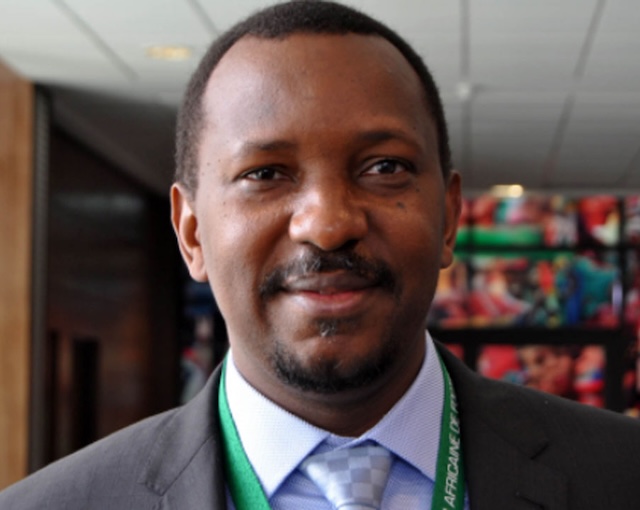
Shehu Adamu Dikko is the chairman of the National Sports Commission.
to like, bookmark, and comment.
Comments
Join the conversation:
No comments yet. Be the first to share your thoughts.