Kenya’s digital payment boom is leaving mobile money agents stranded
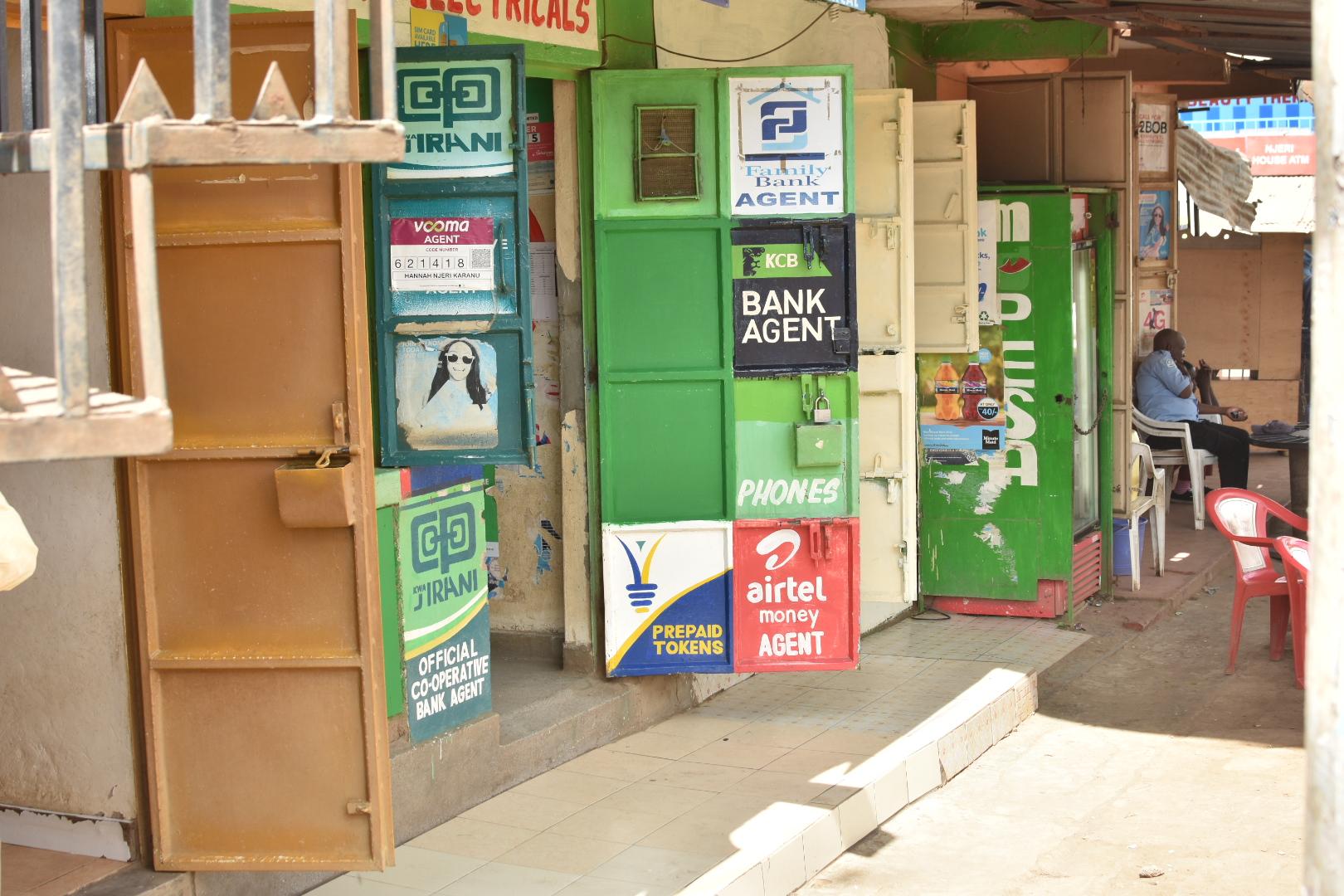
Mobile money shops were once among Kenya’s simplest small businesses, built around customers depositing, withdrawing, and sending cash. Now, the network is shrinking as more Kenyans transact directly from their phones.
Data released by Kenya’s tech regulator, the Communications Authority (CA), reveals a sharp structural shift in the mobile financial ecosystem. Between March and June, the country lost roughly 34,000 mobile money agents. The total number of registered agents dropped by 5.6%, falling from 602,470 to 568,463 in just three months.
The contraction in physical infrastructure does not signal a slowing market. During the exact same three-month window, total mobile money subscriptions grew by 1.2%, rising from 53.37 million to 54.01 million. Annually, subscriptions surged by 13.2%.
Mobile Money Transfer Services
Indicator
Apr–Jun 2026
Jan–Mar 2026
Quarterly Variation (%)
Number of Registered Mobile Money Agents
568,463
602,470
-5.6
Mobile Money Subscriptions
54,005,800
53,368,939
1.2
Source: Communications Authority of Kenya (CA)
Phones over agents
The paradox of fewer agents serving significantly more users highlights a fundamental transformation. Kenyans are no longer using mobile money simply as a digital remittance service that requires converting paper bills into phone balances. Money is staying inside the digital loop. The widespread adoption of direct digital checkout channels has shifted transaction flows entirely away from cash counters.
Consumers now have more ways to spend money without visiting an agent. One option is Buy Goods tills, which are merchant numbers that let customers pay a shop directly from M-PESA or Airtel Money, so someone buying food at a supermarket or kiosk doesn’t need to withdraw cash.
Pochi la Biashara, an M-PESA business wallet for small traders, allows kiosk owners and other informal businesses to receive customer payments separately from their personal M-PESA wallets.
PayBill numbers, payment accounts corporations use to collect money from customers, let customers send money directly to organisations such as schools, insurers, and utility companies to settle bills.
Bank-to-wallet integrations have removed another trip to the agents by allowing customers to move money between bank accounts and mobile money wallets on their phones. The more payments that happen this way, the fewer customers need an agent to turn their digital money into cash.
Market concentration remains heavily skewed toward the dominant incumbent. Safaricom commands 88.8% of total mobile money subscriptions, alongside 69.8% of mobile voice subscriptions and 64.4% of mobile broadband connections. Airtel Money holds nearly the entire market, accounting for 11.1% of mobile money subscriptions.
While both networks historically depended on massive agent distribution channels to acquire customers and handle liquidity, the underlying unit economics for individual operators have broken down.
Agents’ core revenue driver has always been commissions on deposits and withdrawals. When a customer uses a till number to buy food or settles an account via PayBill, the physical agent earns nothing. As consumer habits shift toward merchant payments, the high-volume cash-in and cash-out transactions that once sustained agents’ livelihoods are disappearing.
Squeezed margins and regulatory pressure
Compounding the drop in top-line commission income is a dramatic rise in the cost of running a physical shop. Small agents across urban centres find themselves squeezed between falling foot traffic and soaring operational overheads.
“Cost of operation is high,” explained one agent in Kisii, a town 300 km west of Nairobi. “M-PESA shops generate from KES 11,000 ($85) to KES 30,000 ($230) in monthly commission. At KES 11,000 ($85), with rising rent costs, paying attendants, and still needing to justify your investment, it’s tricky. Business permits are up by 30%, too.”
Prior economic models no longer reflect current commercial realities.
“In the past, a commission of KES 22,000 ($170) meant you paid rent of KES 3,000 ($23) and the worker KES 5,000 ($38),” noted another operator in Ruaka, a satellite town 15 km northwest of the Nairobi Central Business District. “Now rent starts at KES 5,000 ($38), and attendants demand KES 7,500 ($58). There are additional expenses and fraud cases to deal with.”
An industry executive, who preferred anonymity, pointed to concerns about transaction costs and government scrutiny of mobile money accounts. Kenya Revenue Authority’s efforts to use transaction data for tax compliance have raised privacy concerns among some businesses and consumers, adding another source of pressure on a market already dealing with a decline in cash transactions.
The smartphone migration and fintech’s next phase
The double squeeze of declining transaction volumes, escalating fixed costs, and heightened regulatory scrutiny has forced thousands of operators to close shop.
The rapid spread of smartphones has accelerated the migration. Kenya recorded 52.26 million smartphone connections by June, up from 50.18 million in March. As basic feature phones fall out of favour, their numbers have dropped to 27.42 million, while more consumers gain access to app-based banking, QR code scanning, and direct merchant checkout. Mobile data usage has surged in parallel, reaching 64.26 million subscriptions, driven by faster 4G and 5G networks.
Mobile Data and Broadband Subscriptions
Indicator
Apr–Jun 2026
Jan–Mar 2026
Quarterly Variation (%)
Mobile Data Subscriptions
64,263,694
62,634,225
2.6
Mobile Broadband Subscriptions
54,925,257
52,852,505
3.9
Source: Communications Authority of Kenya (CA)
Mobile network operators like Safaricom and Airtel Kenya view the contraction of the agent network as both an opportunity and a strategic challenge. A fully digitised payment ecosystem drastically lowers cash-handling costs and capital expenditure required to maintain physical distribution networks.
Agents are important to telcos for onboarding non-digital users, managing liquidity and serving customers in rural areas. As cash transactions decline, operators will need to provide these shops with more ways to earn revenue beyond deposits and withdrawals.
True scale demands moving beyond surface-level integrations to robust execution. We’ve filtered the noise out of Moonshot 2026, optimising the conference strictly for high-calibre connections between startup founders, global financial operators, enterprise leaders and individuals rewiring Africa’s technical frameworks. Get 20% off Early Bird tickets for a limited time.
to like, bookmark, and comment.
Comments
Join the conversation:
No comments yet. Be the first to share your thoughts.