Forgotten schoolchildren of Borno
Add us on Google
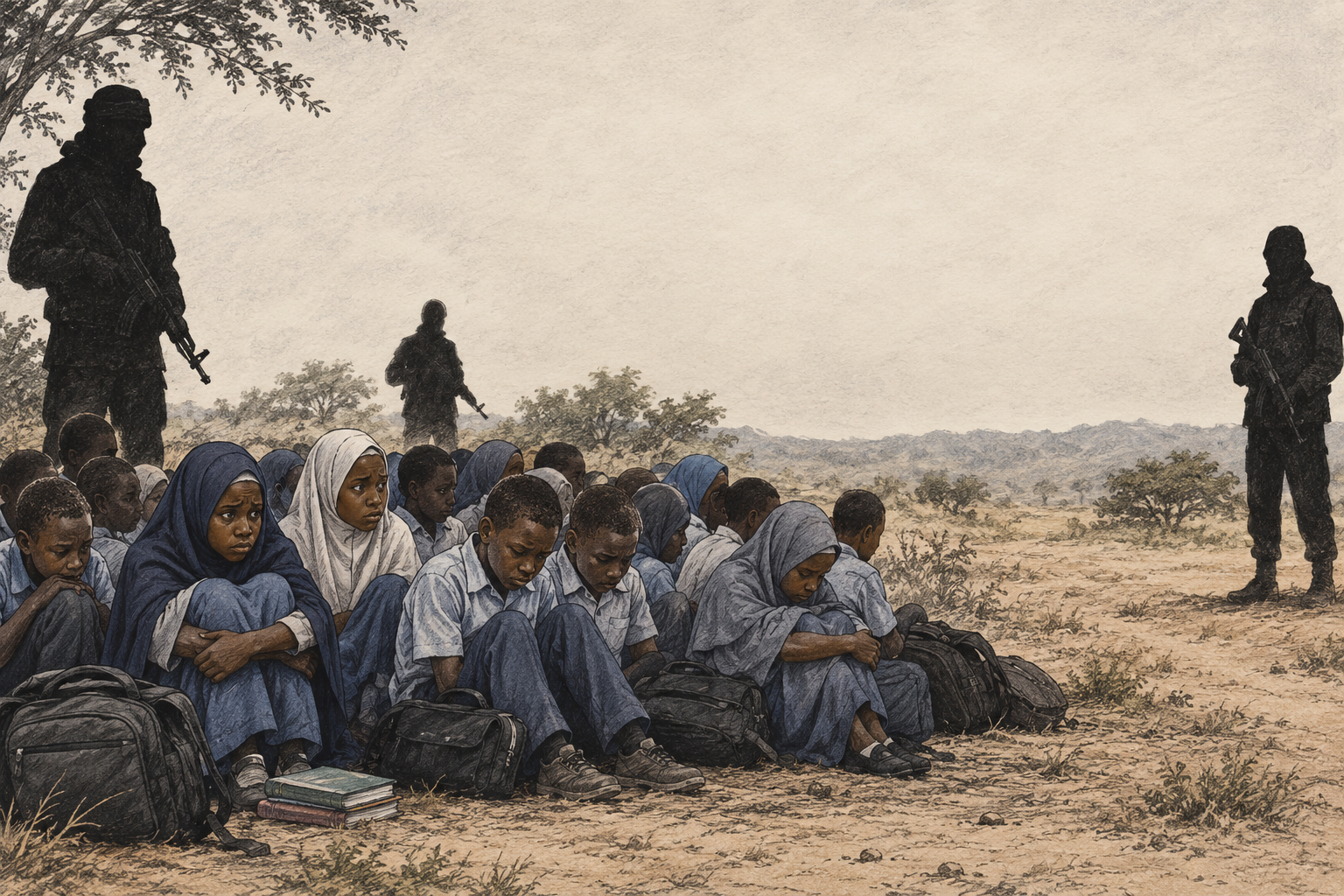
Nearly six months after insurgents seized dozens of students from their schools in Borno State, they remain in captivity, raising concerns that they have become Nigeria’s forgotten schoolchildren.
Join the Premium Times WhatsApp Community For Quick Access To News and Happenings Around You.
Open in WhatsApp
With more than 2,000 students abducted in roughly 30 mass kidnapping incidents, school abductions have grimly evolved into a normalised feature of Nigeria’s security landscape, arguably gaining less national attention since the kidnapping of 276 schoolgirls from Chibok in 2014.
Starting with just one incident under former President Goodluck Jonathan, school abductions worsened under late President Muhammadu Buhari, and the wave continued, spreading southward under the watch of incumbent President Bola Tinubu.
At the heart of this crisis is a well-intentioned safety policy paralysed by rugged terrain, inadequate public awareness and an expanding security landscape that leaves an overstretched military and understaffed police force struggling to defend thousands of vulnerable schools against a relentless network of terrorists and their collaborators whose kidnap-for-ransom industry keeps expanding.
In a direct response to the 2014 Chibok abduction, Nigeria introduced the Safe School Initiative (SSI) policy, prioritising key measures such as perimeter fencing, early warning and response systems, among others. The Defence Headquarters reiterated some of the measures following recent school abductions.
More than a decade later, the policy has not been able to prevent school abductions. A researcher with the Centre for Democracy and Development (CDD), Dengiyefa Angalapu, said the policy’s implementation needs review, accountability strengthened, and more stakeholders involved.
‘Selective response’
The Borno students and their teachers were kidnapped in two separate attacks between May and June in Askira/Uba LGA. The first abduction took place in Mussa, and coincided with the coordinated kidnapping of 39 students and seven teachers from three schools in Oyo State.
Stay Ahead with Premium Times
Follow us on Google News and never miss breaking stories, investigations, and in-depth reporting.
Add as a preferred source on Google
The figure of students abducted from that incident remains contested. Although PREMIUM TIMES documented 40 names, the Borno State Governor, Babagana Zulum, estimated that 44 are missing.
Nearly two months after the Mussa abduction, terrorists seized 36 students and one teacher from a school in Lassa, bringing the total figure of abducted students to 80.
While the Oyo students were freed after 57 days in captivity, their Borno counterparts are still held captive, with their parents accusing the federal government of selective response. The parents have staged protests in Borno, threatening to take the next demonstration to Aso Rock if their children are not released.
“Why have the Oyo children been freed and our own children are still held captive?” Ishaku Wabba, the chairperson for the parents of the abducted schoolchildren, asked during the most recent protest.
Borno State Governor Babagana Zulum has repeatedly assured the aggrieved parents of his administration and the federal government’s efforts to ensure the safe return of the children. But parents have continued to express concerns over this unfulfilled, delayed promise.
“Every time we meet government officials, they tell us to be patient, that efforts are ongoing. But about 143 days later, we have not seen our children. They are just dribbling us,” Musa Buba, one of the parents, told Leadership newspaper.
Mr Buba lamented that some parents traumatised by the incident have fallen sick, while some pregnant women have suffered miscarriages.
He also urged the government to provide updates on rescue efforts and as well hasten the process.
READ ALSO: SPECIAL REPORT: Two school abductions 45 days apart. What happened to Borno’s Safe Schools measures?
A policy problem
Mr Angalapu attributed the continued school abductions to four key issues bedevilling SSI policy.
The first is that it is largely reactive rather than proactive, with government attention often renewed only after another abduction or attack. The second is poor publicity and “stakeholder buy-in”, leaving many Nigerians unaware that the Nigeria Security and Civil Defence Corps (NSCDC) is the lead agency responsible for the initiative.
“The lead agency that should have been held accountable is the NSCDC,” he said, adding that the lack of publicity has weakened accountability.
He also argued that the initiative treats school protection too narrowly, focusing on school buildings without addressing the wider factors that threaten safety.
“We think that when we protect the school buildings, we’ve done the job. But there are systems that this is connected to, including dealing with the issues of out-of-school children,” the researcher said.
“Schools will never be safe if we don’t know if we can deal with the fate of out-of-school children,” he warned.
He also identified poor inter-agency collaboration as a major challenge, particularly in rural areas where many schools are isolated and vulnerable.
Meanwhile, Amnesty International bemoaned the continued captivity of the Borno students, saying “education should not be a matter of life and death for anyone.”
“Nigeria is failing children once again in a horrifying manner,” the rights group said, telling the government to “do more to safely and securely rescue all school children in captivity.”
to like, bookmark, and comment.
Comments
Join the conversation:
No comments yet. Be the first to share your thoughts.