Cross-border Traders Urged To Shun Illegal Routes
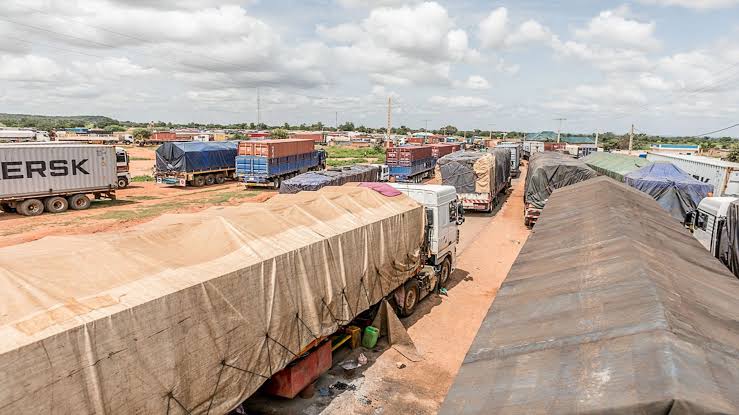
Female informal cross-border traders have warned their colleagues against using illegal routes, saying the practice could expose them to danger and erode their profits.
The traders spoke to our correspondent during a three-day capacity-building training organised by Adolescent Health and Information Projects (AHIP), in collaboration with the International Organisation for Migration (IOM) and the Economic Community of West African States (ECOWAS) in Kano.
The training, held under the Resilient Opportunities for Outreach, Trade and Sustainability (ROOTS) project, focused on safe migration, ECOWAS free movement protocols, business management, financial literacy and climate resilience.
An agribusiness operator, Rabi Umar, who exports agricultural products to Ghana and Cotonou, said the training had exposed the participants to the need to obtain adequate information before transporting their goods across borders.
Umar said traders who used illegal routes often incurred additional costs and risked losing profits from their businesses.
“We were made to understand that we should not use illegal routes because travelling through those routes makes us spend extra money that we shouldn’t have spent.
“Smugglers eat into the profits we are supposed to make on the goods we sell,” she said.
Also speaking, a spice processor, Hajiya Halima Abdullahi, said certification procedures remained one of the major challenges confronting exporters.
Abdullahi urged prospective exporters to start gradually and seek information from relevant agencies, including the Nigeria Customs Service and the National Agency for Food and Drug Administration and Control (NAFDAC).
“Start step-by-step, ask the correct questions from the correct people. Once you get the correct thing and you are through, you are good to go,” she said.
Another participant, Khadija Jibril, a food processor, said compliance with immigration requirements and other regulations would help traders avoid problems at the borders.
Earlier, the Director of AHIP, Dr Mario Bello, said the training was aimed at educating female informal traders on established procedures for conducting cross-border businesses.
Bello said some traders had lost their livelihoods due to failure to comply with relevant regulations, urging participants to keep their travel and business documents valid and use recognised border procedures.
The training officer, Muhammad Auwal, an immigration officer, also sensitised the participants to ECOWAS free movement protocols, border documentation, safe trading practices and the risks of trafficking, exploitation and harassment.
to like, bookmark, and comment.
Comments
Join the conversation:
No comments yet. Be the first to share your thoughts.