Supreme Court bench shrinks as NJC receives notices of deaths, retirements from various courts
Add us on Google
The National Judicial Council (NJC) says it has received death and retirement notices regarding 14 judges of various courts at the federal and state levels.
Join the Premium Times WhatsApp Community For Quick Access To News and Happenings Around You.
Open in WhatsApp
According to a statement by its Deputy Director (Information), Kemi Babalola-Ogedengbe, on Wednesday, the NJC acknowledged the notices at its 112th meeting held on 3 November.
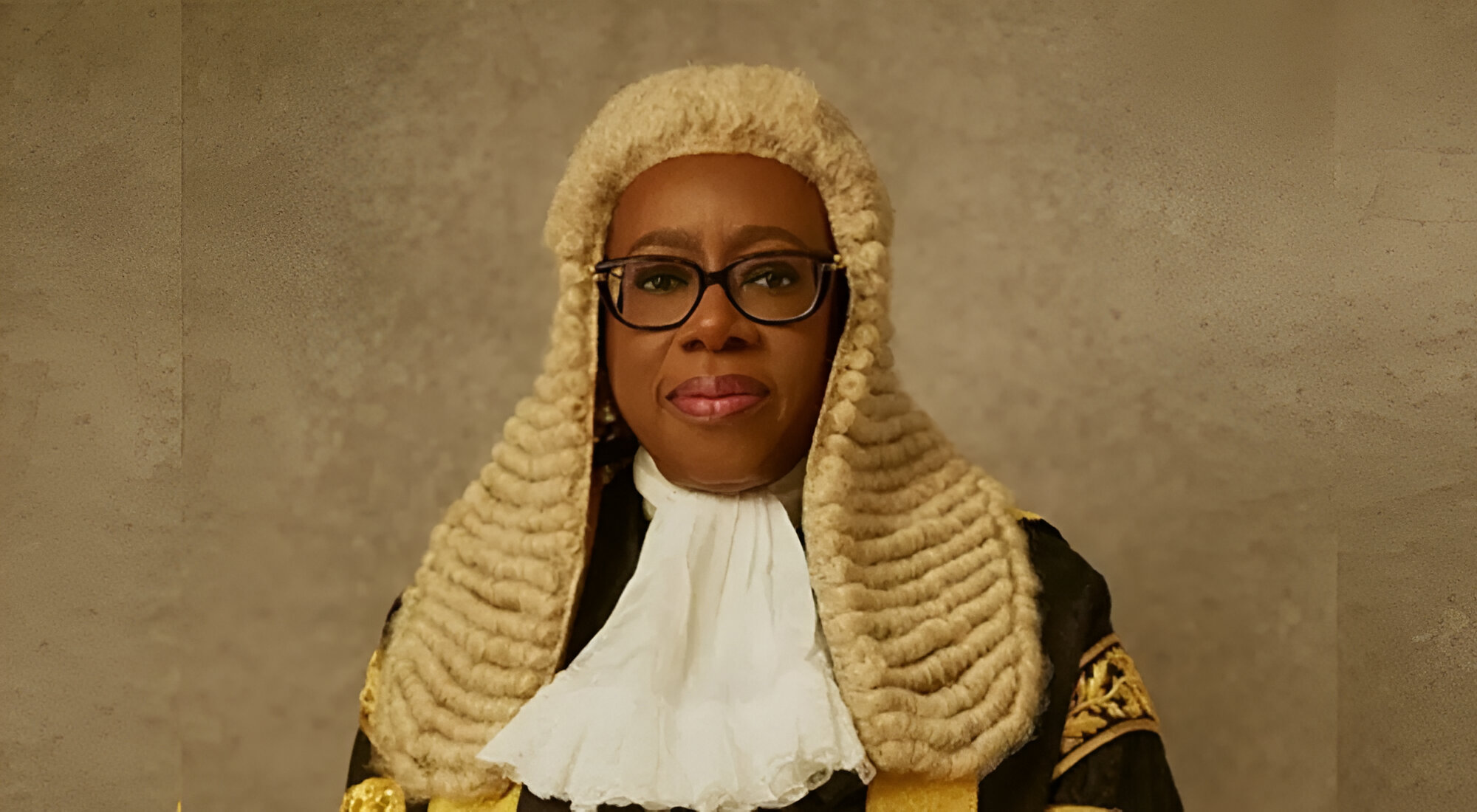
According to the statement, the council, chaired by Chief Justice of Nigeria (CJN) Kudirat Kekere-Ekun, received notices of six retirements and nine deaths of judges.
The list is made up of judges of the Supreme Court, the Court of Appeal, the Federal High Court as well as the High Courts and the Customary Courts of Appeal of various states.
Two of the notices announced the retirements of two Supreme Court justices within a span of less than two months.
Ibrahim Saulawa, who joined the Supreme Court bench in November 2020, already retired on 29 September, joining the roll of 103 former justices of Nigeria’s highest court.
Uwani Musa Abba Aji, elevated to the Supreme Court bench in January 2019, will follow suit on Saturday, 7 November.
Stay Ahead with Premium Times
Follow us on Google News and never miss breaking stories, investigations, and in-depth reporting.
Add as a preferred source on Google
It means that, by Saturday, the Supreme Court bench will be two justices short of its full complement of 21, which the court regained only in February with the inauguration of Olubunmi Oyewole.
Four other retirement notices the NJC acknowledged at its meeting on Tuesday included Justice O. F. Omoleye of the Court of Appeal, who retired on 6 October.
Other retiring or already retired judges are Ogechi Okehielem, Abia State High Court, voluntarily retired on 15 September, Theresa Isidore Obot of Akwa Ibom State High Court, due to retire voluntarily on 30 December, Munir Muhammad Ladan of the Kaduna State High Court due to retire voluntarily on 31 December.
Deaths
The council also acknowledged notices of the deaths of nine judges.
Accordign to the NJC, the judges passed away between 1 May and 26 September.
They include Mohammed Nasir Yunusa of the Federal High Court, Kano Division; Sambo Sammy Daka of the Kaduna State High Court; Josephine Efunkumbi Oyefeso of the Lagos State High Court, and Musa Mohammed Dallah, Nasarawa State High Court.
Others are Bello Muhammed Shinkafi of the Zamfara State High Court, Edem Nyong Okokon of the Cross River State High Court, Aliyu Mani Yauri, a kadi of the Kebbi State Sharia Court of Appeal, Dorothy Sim Inwulale of the Kaduna State Customary Court of Appeal, and Legor Torbira Senewo of the Rivers State Customary Court of Appeal.
Appreciation and condolences
The NJC “expressed profound appreciation” to the retired and retiring judicial officers “for their dedicated and meritorious service to the Judiciary and the nation”.
It also “extended its heartfelt condolences to the families of the deceased judges, the judiciary and the Nigerian legal community, and prayed for the peaceful repose of their souls.
About full complement of Supreme Court bench
Although the Nigerian constitution provides for a full complement of 21 justices for the Supreme Court, a full complement remained elusive for decades until 2024.
For decades, justices’ deaths, retirements (including voluntary ones), a complicated appointment process, and a lack of commitment from the executive arm of government made it impossible for the Supreme Court to attain its full complement.
The court reached its full complement for the first time in its history months after the number of its serving justices had declined to an all-time low of 10 in 2023.
The number leapt to the full complement of 21 on 26 February 2024 with the elevation of 11 justices to the Supreme Court bench in one fell swoop.
READ ALSO: NJC rejects exclusion of Imo acting chief judge from shortlist for substantive appointment
Again, it dropped to 20 in August that year following the retirement of CJN Olukayode Ariwoola. It rebounded to its full complement of 21 with the elevation of Mr Oyewole to the Supreme Court bench in February this year.
At Mr Oyewole’s inauguration on 25 February, the CJN, Ms Kekere-Ekun, who administered the oaths to him, described the attainment of the Supreme Court’s full complement as “no small milestone.”
“A full court enhances our capacity to sit in robust panels, to manage our docket more efficiently.
“It will ensure that the business of the nation’s apex court proceeds with renewed vigour and dispatch. It enriches intellectual diversity, and reinforces the stability of our jurisprudence.
“For a court whose pronouncements shape the legal destiny of the nation, numerical completeness is structurally significant to the effective discharge of our constitutional mandate.,” she said.
to like, bookmark, and comment.
Comments
Join the conversation:
No comments yet. Be the first to share your thoughts.