Aradel and Oando Put Nigeria’s Indigenous Energy Sector on the FTSE Frontier Index
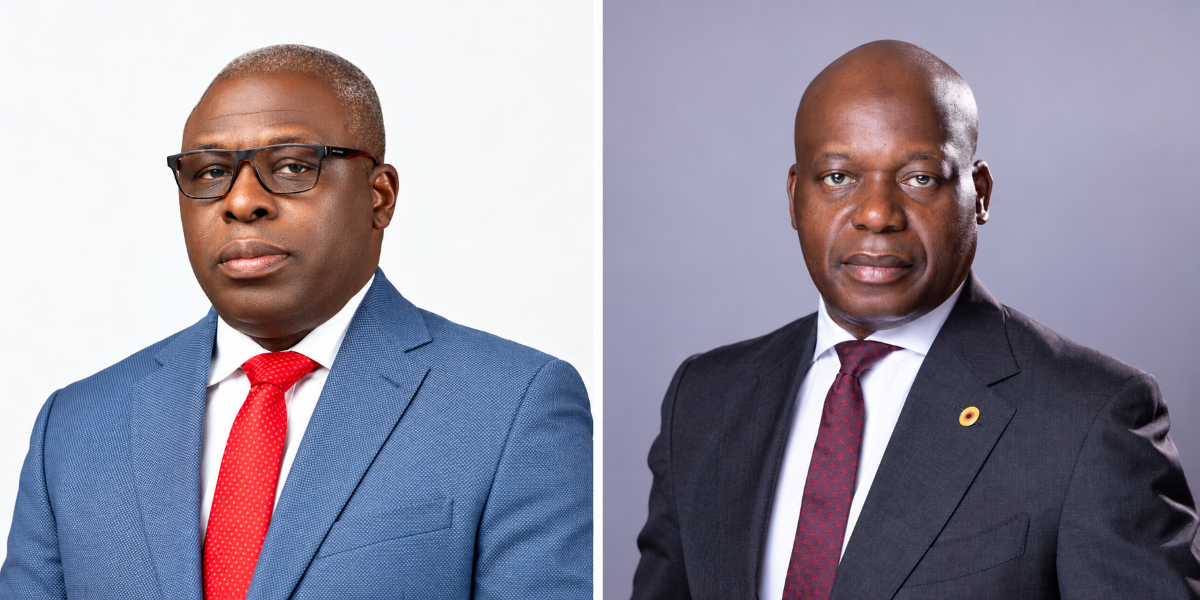
Nigeria’s return to Frontier Market status has brought 31 Nigerian companies into the FTSE Frontier Index Series, including Aradel Holdings and Oando Plc, the only two Nigerian indigenous energy companies among the constituents.
Their inclusion is notable not simply because they have entered an international market benchmark, but because it offers a useful lens into the evolution of Nigeria’s indigenous energy sector, where companies are taking on larger asset positions, greater operating responsibility and increasingly diversified roles across the energy value chain.
The FTSE Frontier Index Series provides benchmarks covering eligible frontier markets and is used by investors to assess market performance and exposure to frontier economies. Its methodology considers factors including market capitalisation, liquidity, free float and foreign ownership. Nigeria’s return to Frontier Market status, effective September 21, 2026, follows its move to Unclassified status in 2023 amid challenges around market accessibility, including foreign exchange availability and the repatriation of investment proceeds.
Index inclusion does not, by itself, guarantee investment or capital inflows. Rather, it places qualifying Nigerian companies within an international benchmark framework through which investors assess markets and companies. For the energy sector, the presence of Aradel and Oando within that framework provides a useful indication of the scale and complexity some indigenous businesses have reached.
Aradel’s trajectory illustrates this shift. Its growth has involved building an integrated platform across upstream, gas, and refining, including the acquisition of an additional 40 percent interest in ND Western in 2025, which increased its effective equity interest in Renaissance Africa Energy Company to 53.3 percent. In H1 2026, Aradel reported revenue of ₦2.49 trillion and EBITDA of ₦1.39 trillion, while refined output reached 67.5 million litres in the second quarter.
Its activities also extend across the gas value chain. OML 34, in which Aradel has an indirect interest through ND Western, has more than 400 million standard cubic feet per day of combined gas processing capacity, with gas supplied through the West African Gas Pipeline to markets including Benin, Togo and Ghana. At Ogbele, Aradel operates its refinery and has also developed infrastructure to capture associated gas. Its portfolio therefore extends beyond crude production into gas processing, refining, and regional energy supply.
Oando presents a complementary model. The completion of its acquisition of Eni’s interest in the Nigerian Agip Oil Company (NAOC) in 2024 increased its participating interests in OMLs 60 – 63 from 20 percent to 40 percent and saw it assume operatorship of the assets. In H1 2026, Oando reported revenue of ₦2.1 trillion and invested ₦81.4 billion in capital expenditure, primarily towards upstream drilling across OMLs 60–63 and its non-operated portfolio. Facility uptime stood at 92 percent, while production operating costs fell 18 percent to US$16.83 per barrel of oil equivalent.
The enlarged portfolio is being developed alongside activities further across the energy value chain and beyond Nigeria. Oando’s development programme includes 62 development wells and 55 planned well interventions beyond 2026, supporting its medium-term production ambition of approximately 100,000 barrels of oil equivalent per day. It is also supplying 11.2 million standard cubic feet per day of gas to the 60MW Bayelsa Independent Power Plant and holds a 45 percent participating interest and operatorship of Angola’s KON 13 block.
The two companies have taken different routes to scale, but the broader direction is similar. Indigenous energy businesses are taking on greater responsibility for assets and operations while expanding into gas, refining, power, and other parts of the energy value chain. That shift is occurring alongside wider changes in Nigeria’s energy industry. International oil companies have been divesting some onshore and shallow-water assets, creating opportunities for indigenous operators to acquire interests and assume operatorship. At the same time, investments such as the Dangote Refinery demonstrate the growing role of large-scale private capital in developing domestic energy infrastructure. Together, these developments are changing the ownership, operation, and structure of Nigeria’s energy industry.
The FTSE inclusion, viewed in that context, is less about an index alone and more about what the companies within it represent. Aradel and Oando have built businesses that extend beyond their traditional domestic identities, combining asset ownership, and operatorship with investments across the wider energy value chain. Their presence in the FTSE Frontier Index Series puts that evolution into a global market context. It is a reminder that as Nigeria’s energy industry changes, the indigenous companies shaping it are becoming increasingly visible not just as local operators, but as businesses with a growing place in the global capital-market story.
to like, bookmark, and comment.
Comments
Join the conversation:
No comments yet. Be the first to share your thoughts.