Dangote Offers 30% Stake in $16bn Lamu Refinery to East African Nations
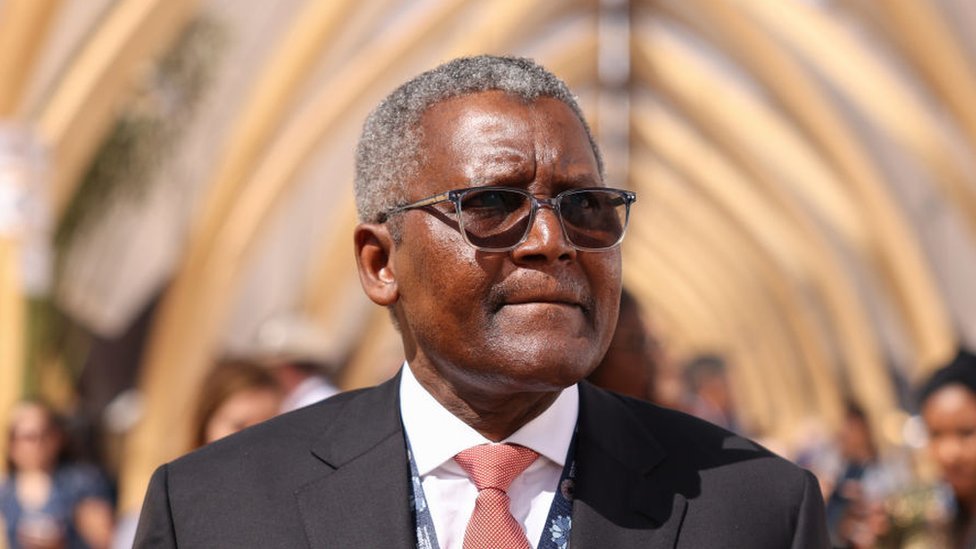
Nigerian businessman Aliko Dangote has extended an offer of a combined 30 per cent equity stake in his proposed $16 billion refinery at Lamu, Kenya, to countries in East Africa. Kenya, Rwanda and Ethiopia have indicated interest in taking part in the venture.
The offer was made as Dangote and Kenyan President William Ruto performed a groundbreaking ceremony on Wednesday for the 700,000-barrel-per-day facility at the Port of Lamu, marking the formal start of construction.
David Ndii, an economic adviser to President Ruto, had previously indicated that Kenya was looking at acquiring a 10 per cent share worth approximately $500 million. He also noted that Ethiopia and Rwanda had shown interest.
Ndii put the total regional contribution at about $1.5 billion. He further explained that the plan could go ahead even if some of the participating nations chose not to purchase petroleum products from the refinery, saying, "If some of them are not off-taking we will backstop."
Rwandan President Paul Kagame also said his country had held initial talks with Dangote about possible involvement in the project. "Rwanda would be happy to be part of this investment," Kagame said, adding that "it is too early to talk about the details."
The refinery, with an estimated cost of about $16 billion, is planned to process 700,000 barrels of crude oil daily and is expected to rank among Africa's largest refining complexes. The broader development will also feature a 1,000-megawatt power plant alongside petrochemical and other industrial facilities.
At the groundbreaking event, Dangote called the project "a new chapter in Africa's industrial journey" and drew a parallel with his refinery in Lagos. "Lekki proved that it can be done, Lamu must prove that it can be repeated," he said. He also committed to completing the Lamu refinery within 40 months.
President Ruto has said the project could generate around 60,000 jobs and reinforce Kenya's role as a regional hub for energy and industry.
Dangote stated that the refinery would draw crude from a variety of suppliers instead of relying on one source. "You don't go and build a refinery for only one source of crude. You take different types: Middle East crude, American, and WTI, so you mix them up," he said. Uganda is seen as a potentially significant supplier of crude to the refinery, while Kenya is also developing plans to produce and transport crude from its Turkana oil fields to Lamu.
Legal and environmental challenges, however, surround the project. A Kenyan court has directed parties in a land dispute involving 133 residents of Chandavai in Lamu to keep the status quo on the contested parcel until further hearings. The case is set for hearing on October 14. The court order did not stop the planned groundbreaking ceremony, though activities on the disputed site could be impacted. Dangote Group had said the ruling would not prevent the official groundbreaking.
Environmental organisations have also voiced worries about how the project might affect Lamu's marine ecosystem and nearby communities.
The Lamu refinery forms part of Dangote's push beyond Nigeria, where his 700,000-barrel-per-day refinery in Lagos is operational and undergoing further expansion.
to like, bookmark, and comment.
Comments
Join the conversation:
No comments yet. Be the first to share your thoughts.