30-Day Petrol Discount: ‘Will It Reduce Poverty?’ — Obi Blasts Tinubu
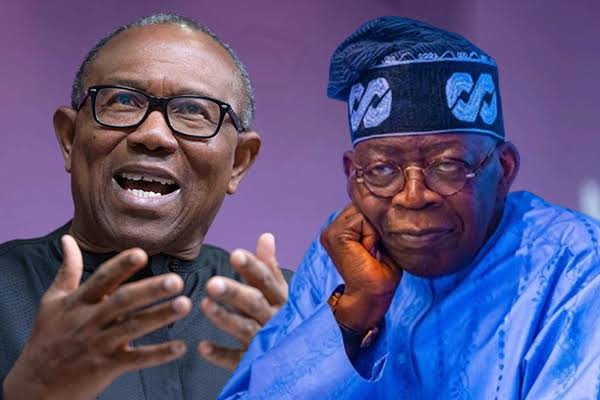
The presidential candidate of the African Democratic Congress (ADC), Peter Obi, has criticised President Bola Tinubu’s administration over its one-month petrol discount policy, describing it as “plain political optics masked as policy” and calling for the restoration of fuel subsidy.
Obi argued that the Federal Government’s decision to offer a 30-day discount on petrol was a reactive measure that would do little to address the economic hardship Nigerians have faced since the removal of fuel subsidy in May 2023.
The former Anambra State governor made the remarks in a post on his X account on Sunday, following his assessment of the policy announced by the Federal Government.
LEADERSHIP reports that the Federal Government had announced the 30-day petrol discount as part of efforts to provide relief to Nigerians amid rising fuel prices and the cost of living.
The Minister of Finance and Coordinating Minister of the Economy, Taiwo Oyedele, disclosed the measure on Thursday during a press briefing on petrol prices and subsidy-related issues in Abuja.
Oyedele explained that the arrangement would operate as a margin discount at NNPC retail stations and would prioritise public transport operators. He clarified that the measure did not amount to a return to petrol subsidy.
However, Obi questioned the rationale behind a temporary discount of less than five per cent on petrol prices, asking whether the initiative would reduce poverty, unemployment, insecurity and inequality or improve productivity and exports.
“What really does the President Bola Tinubu-led government want to achieve with a one-month discount of less than 5% on fuel cost? Will it reduce poverty, unemployment, insecurity, and inequality? Will it increase productivity and exports?” he asked.
Obi also questioned whether the initiative was a test to determine if fuel subsidy should be restored or a political strategy ahead of the 2027 general election.
“Is it a test to ascertain if subsidy should be restored? Is it another political gambit in the face of threats of electoral loss in the 2027 election? Too many questions, no answer!” he stated.
The ADC candidate said he had delayed his response to the announcement to allow him assess its outcome, but concluded that the policy substituted political considerations for sound economic planning.
According to him, the removal of fuel subsidy by Tinubu on May 29, 2023, was implemented without adequate consultation or a proper assessment of its potential impact on the economy and the livelihoods of ordinary Nigerians.
He further criticised the subsequent floating of the naira and tax reforms, alleging that the policies were poorly sequenced and implemented without sufficient coordination or sensitivity to the economic circumstances of Nigerians.
Obi also faulted the government’s management of multiple budgets simultaneously, arguing that it contributed to a lack of transparency and accountability.
He blamed the combined effects of these policies for rising inflation, increasing costs of goods and services, growing poverty, unemployment, business closures, insecurity and widening inequality.
The former governor added that the economic difficulties had contributed to the migration of young Nigerians and a general decline in citizens’ well-being.
Obi argued that a competent government should conduct and publish detailed regulatory impact assessments before introducing major policies, while engaging stakeholders and ordinary citizens to develop sustainable economic strategies.
He maintained that such consultations would help the government understand the potential consequences of its decisions and adopt measures that promote inclusive economic growth.
On the petrol discount scheme, Obi questioned its reach, noting that the Federal Government had indicated that the benefit would be available at Nigerian National Petroleum Company Limited (NNPC) Retail filling stations, estimated in his post at about 900 outlets.
He compared this figure with an estimated 24,000 petrol stations nationwide, arguing that the discount would be available at fewer than four per cent of filling stations.
Using an estimated national population of 243 million, Obi said the arrangement would leave a large number of Nigerians competing for access to the discount, particularly in areas where NNPC Retail stations were not evenly distributed.
He also questioned the effectiveness of the arrangement despite the government’s stated priority of providing relief to public transport operators.
“Imagine 243,000 Nigerians struggling for a N66.00/per litre discount in each of the NNPC petrol stations. This is certainly not how to govern a richly blessed and endowed nation!” he said.
Obi, however, said he was preparing a more detailed explanation of his position on fuel subsidy, alongside a proposed policy roadmap for ensuring fair, transparent and affordable petroleum product pricing.
He maintained that subsidy should be restored, not only on petrol but also in agriculture, healthcare, education and infrastructure.
According to him, Nigeria has sufficient revenue potential to support such interventions under a productive economy managed by a transparent and competent government.
“Beyond subsidy, it is important that we have a leadership that is focused on policies that drastically reduce the cost of living through welfare-enhancing pricing policy and honest administration of same,” he said.
Obi concluded that Tinubu’s October 1 announcement did not offer the kind of sustainable economic relief Nigerians needed, describing the initiative as a political gimmick.
“Nigerians are tired of those gimmicks. It is time for real change,” he added.
to like, bookmark, and comment.
Comments
Join the conversation:
No comments yet. Be the first to share your thoughts.