2027: Nigeria’s Middle Class NoT Tasking Govt Enough, Abdu Warns
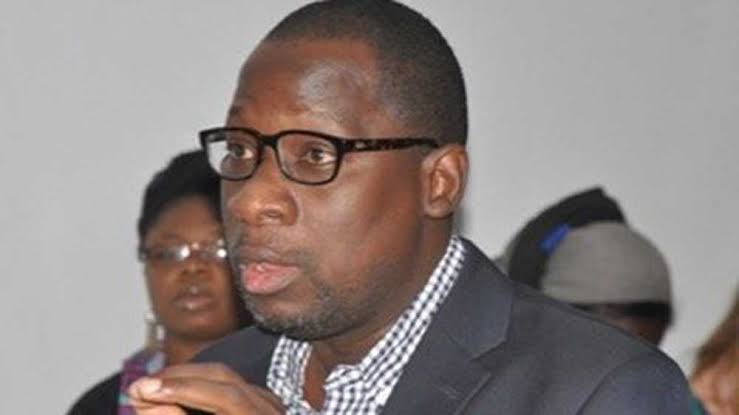
The Country Director of CARE Nigeria, Dr Hussaini Abdu, has warned that the Nigerian middle class is weakening collective action by finding private solutions to public service failures instead of demanding accountability from government.
Abdu, who spoke at the eighth annual public lecture of the Just Friends Club of Nigeria (JFCN) in Abuja, said the middle class had not disappeared but had lost the vibrancy required to drive social and political change.
The lecture, with the theme, “From Concern to Action: Making Our Votes Count in the 2027 General Elections,” featured a keynote presentation by the Executive Director of the Policy and Legal Advocacy Centre (PLAC), Mr Clement Nwankwo.
Abdu said the development had contributed to Nigeria’s governance challenges, arguing that many middle-class Nigerians had become more concerned with protecting their personal interests than addressing problems affecting society.
He said the middle class had increasingly resorted to private alternatives to failing public services, including generators and solar panels for electricity, boreholes for water, private schools for education and private hospitals or overseas treatment for healthcare.
“The middle class we have today is a middle class that is successfully finding alternatives to its problems. Therefore, collective action has become a significant challenge,” he said.
Abdu argued that the middle class had historically played a leading role in social transformation because it resisted downward economic mobility while aspiring to improve its living conditions.
He, however, said Nigeria was struggling with a weakened version of that class, pointing to the declining vibrancy of professional associations and other institutions that previously represented middle-class interests.
Using his Abuja neighbourhood as an example, Abdu said residents often discussed grievances against local authorities in a WhatsApp group but rarely took collective action.
He said some residents eventually settled their individual problems through payments to officials, including payments allegedly directed to personal or company accounts rather than government accounts.
Abdu also questioned the role of humanitarian and development organisations that provide services ordinarily expected from government, warning that such interventions could allow public authorities to withdraw further from their responsibilities.
He said the relationship between citizens and elections should extend beyond voting to sustained demands for accountable governance.
During the panel discussion, the New Democratic Congress (NDC) candidate for Ebonyi Central Senatorial District in the 2027 general elections, Prof Benard Ifeanyi Odoh called on Nigerians, particularly the middle class, to take greater responsibility for electoral participation.
Odoh said only 26 per cent of Nigerians voted in the 2023 general election, stressing the need for greater participation ahead of the next polls.
He urged Nigerians to mobilise voters across churches, markets, schools, the civil service and among commercial motorcyclists to encourage wider participation.
Drawing on his experience during the 2011 elections, Odoh stressed the importance of remaining at polling units to monitor the process and help protect electoral integrity.
He said Nigeria could not be rescued without citizens’ active involvement in elections and efforts to hold political leaders accountable.
Another panel discussant, Nana Sani Kazaure,who is the spokesperson to the African Democratic Congress (ADC) presidential candidate, Atiku Abubakar, expressed concern that Nigerians had become increasingly indifferent to kidnappings and the deaths of fellow citizens.
Kazaure called for a renewed commitment to protecting human life, stressing that every Nigerian’s life should be valued.
She urged the middle class and other members of the elite to reconnect with grassroots communities by visiting their hometowns, engaging ordinary people and listening to their concerns.
She also called for accountability for wrongdoing, arguing that Nigeria could not improve without consequences for misconduct.
In his keynote presentation, Nwankwo urged Nigerians to approach the 2027 elections with informed judgment, active participation and vigilance in protecting their votes.
He highlighted economic hardship, insecurity, corruption, weak public services and the difficulties confronting businesses as issues that should shape citizens’ assessment of political parties and candidates.
Nwankwo said elected officials should be judged by their performance in office rather than their ability to mobilise financial resources and political support for re-election.
He also criticised political parties for failing to clearly explain how their policies differed and how they intended to address the country’s challenges.
The PLAC executive director urged eligible voters to collect their Permanent Voter Cards and participate in the elections, warning against allowing frustration and distrust in the electoral process to discourage them from voting.
He further called for vigilance at polling units, urging voters and political party agents to document results and monitor the electoral process to guard against manipulation.
Earlier, the President of JFCN, Mr Amaechi Aloke, said the lecture was designed to move public concern about Nigeria’s condition beyond complaints to responsible citizenship and active participation in the electoral process.
He said citizens’ concerns about insecurity, unemployment, corruption, infrastructure deficits and the cost of living must translate into knowledge, participation and sustained demands for accountability.
to like, bookmark, and comment.
Comments
Join the conversation:
No comments yet. Be the first to share your thoughts.