Nigeria at 66: Five songs that still echo today's struggles
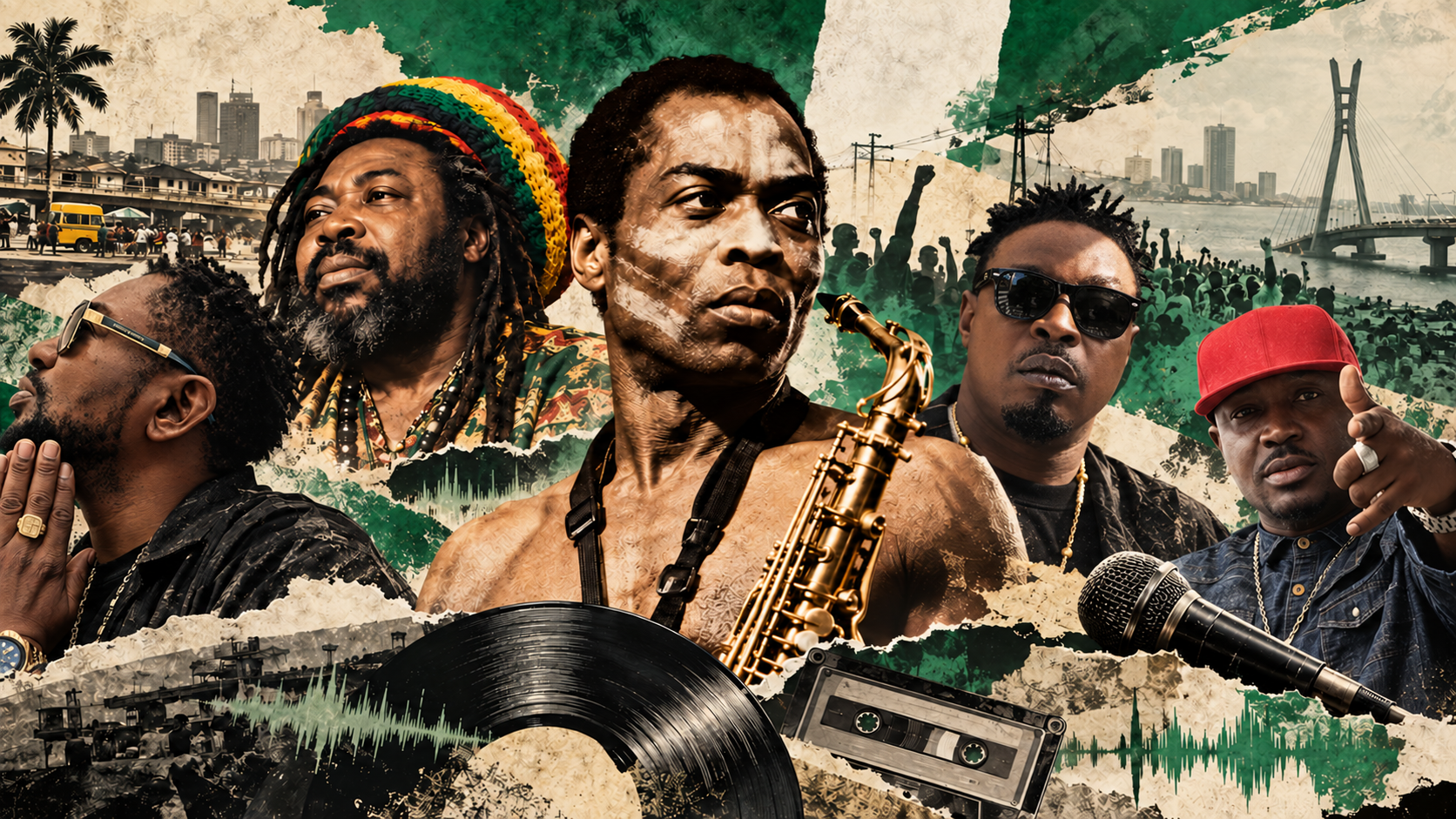
As Nigeria marks 66 years of independence, the occasion again prompts a look at how far the nation has travelled. The assessment that follows is frequently more damning than favourable.
Well before hashtags emerged as instruments of protest, Nigerian artists were already using music to reflect the country back to itself, combining entertainment with sharp critique. The styles shifted over the decades, from Fela Kuti's scorching denunciations of oppression and suffering to the reggae and hip-hop that came later. What did not shift were the grievances: poor leadership, escalating living costs, violations of rights, disunity and pledges that were never kept.
In an era when economic pain continues to shape discussions in marketplaces, at bus stops and in group chats, these tracks seem less like artefacts of another time and more like a continuing report on the Nigerian condition.
Presented here, in no particular order, are five Nigerian songs of social commentary.
Original Sufferhead – Fela (1981)
Without question, Fela Kuti occupies the throne as Nigeria's foremost social commentator. On his 1981 record Original Sufferhead, he voices anguish over the harsh realities Nigerians confront, including a serious scarcity of safe drinking water, expensive food, inadequate electricity and a massive housing deficit.
For anyone who would rather avoid the technical language of inflation, this track provides the most vivid account of how far the Naira has depreciated and how deeply the cost-of-living crisis has bitten. Fela points out that bread was selling for 60 kobo and a single ball of Akara for 20 kobo. He voices astonishment that it took until 1990 for all Nigerians to have access to clean drinking water through a United Nations programme. Now it is 2026, and Fela is no longer alive, so there is no way to ask him whether that target was ever reached.
What's Gwan – Ras Kimono (1990)
Allow me a brief digression: when Nigerian reggae is the subject, many people immediately think of Majek Fashek as its leading figure. For me, that figure is Ras Kimono. Majek may have enjoyed greater international recognition, but Kimono's output was more down-to-earth and direct. Majek was global; Ras Kimono was local.
His track "What's (whatta) Gwan," which also gave its name to the album, swept through the early 1990s. The phrase itself even slipped into everyday street speech. In reggae patois, "What's/Whatta Gwan" means "what is going on?" In the song, Kimono catalogued the social, moral and economic problems afflicting Nigeria at the time. He drew attention to ethnic cleavages, widespread poverty, the moral rot of lecturers preying on female students, and the craze for material and trivial pursuits. The song has lost none of its relevance. It was a serious reggae number, yet it retained a playful energy. It is fair to say that social commentary runs through the majority of Ras Kimono's catalogue.
Jaga Jaga – Eedris Abdulkareem (2004)
Move into the 2000s and the 'Gbedu' Afrobeats period, and you still encounter songs carrying heavy messages about Nigeria's condition. Among that later set, Eedris Abdulkareem's Jaga Jaga stands out.
As is typical of Eedris, instead of merely listing Nigeria's troubles—poverty, insecurity and poor political choices—he goes further, depicting Nigeria as 'Jaga Jaga' where "everything scatter scatter," which loosely translates to a country in ruins, seemingly past saving.
Rumour has it that the song so annoyed then President Obasanjo that he took a swipe at Eedris' parents. Jaga Jaga is another track that, despite its protest message, carries energetic, bouncy beats that get people moving as soon as it plays. To this day, most demonstrations about living conditions adopt Jaga Jaga as their unofficial anthem.
Show Me – Blackface (2004)
Picture taking your country's government before God over its misrule.
"Jehovah Nissi, I want make you know say every day na only you me see. Life has not been easy, especially the way our Government dey treat we."
That is precisely how Blackface opens this introspective song, "Show Me," taken from his first solo album, Ghetto Child. The track, made more captivating by the smooth vocals of Blackface's protégé, Rocksteady, stirs powerful feelings about the government's indifference to the living conditions of ordinary Nigerians, while those in power enrich themselves.
Such themes pervade much of Blackface Naija's music. His debut album contains no fewer than four songs, among them the well-known "Hard Life," which tackles various issues surrounding corruption, police brutality and political repression.
Ko Gbadun – Mr Raw ft Duncan Mighty (2012)
Mr Raw is the only rapper who can make you feel pain and laugh simultaneously. He possesses a rare gift for weaving Igbo and English vocals into a song, and even more remarkable is his knack for folding comedy into his music without effort, however weighty his message.
On "Ko Gbadun," supported by the unmistakable voice of Port Harcourt Boy, Duncan Mighty, Mr Raw spells out everything wrong with Nigeria's politics, from rigged elections and broken campaign pledges to poor treatment of workers and arrested national development, leaving listeners to laugh and dance through the suffering. For reasons unclear, Mr Raw's music has not received the recognition it merits, but anyone who follows his craft closely will rate him highly for how effectively he delivers his message.
Jose Abuku, a music enthusiast, writes from Makurdi, Benue State.
to like, bookmark, and comment.
Comments
Join the conversation:
No comments yet. Be the first to share your thoughts.