Lagos Life maker Vatar raises $500,000 one week after launch
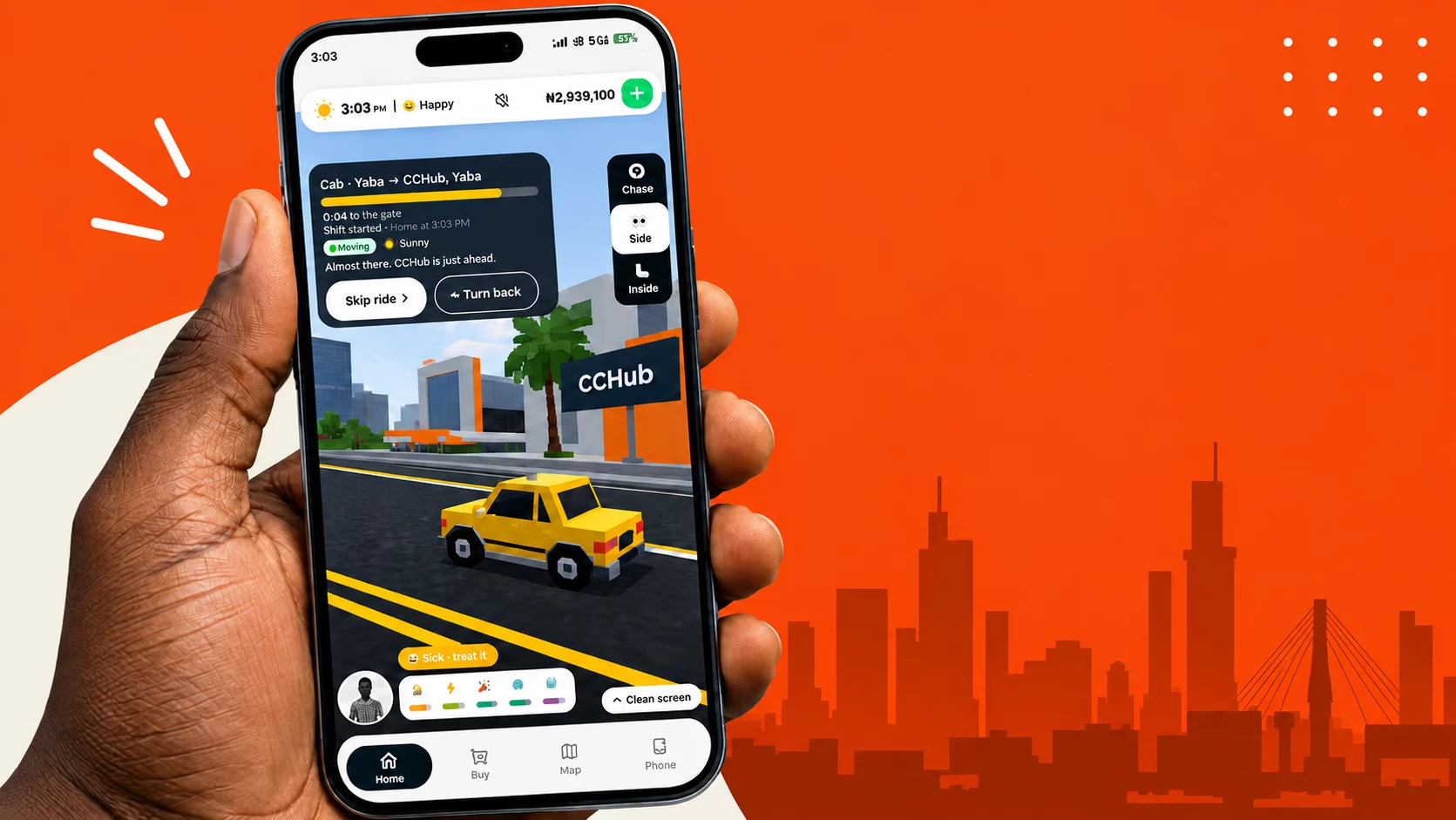
Vatar Inc., the company behind the viral Nigerian browser game Lagos Life, has closed a $500,000 pre-seed round at a $10 million valuation three days after incorporation, according to a company statement.
“We built something people love that is growing very fast, so a lot of investors wanted to be involved,” Shalom Rayhamen, co-founder and CEO of Vatar Inc., told TechCabal in an interview. “We got the opportunity to connect and hear their offers, and because we are growing so fast, we closed it quickly so we could focus on the product.”
Olugbenga “GB” Agboola, Flutterwave’s CEO, invested through his fund, Resilience17. Oo Nwoye, Nathan Nwachuku, Terra Industries CEO, and Abdulhamid Hassan, Mono’s CEO, also participated in the round, which the company says closed in a day.
Lagos Life is part of a wave of Nigerian-made browser games sparked by Lagos Run, Opeyemi Adeniran’s game about driving a danfo, the iconic yellow bus, through Lagos, which drew more than 140,000 players in its first week. Rayhamen built Lagos Life days after seeing Lagos Run on X, and copycats soon followed.
The developers are building fast with AI, and the games spread through links shared on social media. In a fortnight, the shift shows that a game made by Nigerians, about Nigeria, can reach a mass audience almost immediately.
Lagos Life hit 4.3 million users on Thursday evening, with users from 15 countries. More than 100,000 were playing on Thursday evening, Rayhamen said, and the game has peaked at more than 200,000 players at once. After Nigeria, most users come from the US, UK, Ghana, Canada and the Netherlands, she added.
“Just signing up, setting up your character. That makes you registered,” Rayhamen said.
Rayhamen co-founded Vatar Inc. with Owen Rayhamen, the chief product officer, and Anderson Oriahi, the chief business development officer, on October 6. The funding will go to product, marketing, and hiring.
“We can still reach more people,” she said, adding that four million players is still a small share of Nigeria’s population.
How the game works
Lagos Life is a free life-simulation game that runs in a web browser. Players create a character, get a job, earn virtual naira, pay rent, and meet other players in a shared city. They buy generators to deal with power cuts, ride danfo buses, and live under a virtual governor and commissioners. Players pick who holds office, Rayhamen said, because a world where people earn money needs people in charge.
The in-game clock runs on real Lagos time. Real locations such as the Quilox nightclub and the Amala Shitta food spot appear in the city so players recognise them.
“It’s intentional,” Rayhamen said.
Each new player starts as either “Nepo,” with money and connections, or “Lapo,” a reference to microfinance loans and a hard start. Rayhamen said players asked for the feature. Some now say it promotes classism, which she said “wasn’t what I had in mind.”
“You release features, and some people will say ‘yay’ and some people say ‘nah’,” she said.
She expected players to want to socialise, but was surprised by how much. Recent requests include cooking, starting a family and sending children to school. “It’s almost blurring the line between the physical and the simulation,” she said.
The game’s virality and users’ ability to message each other have raised questions around content moderation and user protection. Rayhamen said Vatar has added an age check and tools to help users protect themselves.
“We screen and censor messages,” she said. “We have put mechanisms in place to keep users safe. Users can report other users, and they can block anyone they do not want to talk to.”
How it makes money
Selling games to Nigerians has long been hard. Credit card penetration in Nigeria is about 3.5%, making paid downloads and in-app purchases hard. Lagos Life is free to play and has charged brands since it launched.
Businesses rent billboards and plots inside the virtual city, while musicians pay to have their songs played in its clubs. Chowdeck, a food delivery company, appears as an app on every character’s phone and has partnered with Vatar Inc.
Rayhamen told TechCabal the game currently has five revenue streams, including advertising, music promotion, company deals, and football streaming. Players can also pay real money to top up their in-game cash.
“People want to have like an edge in games,” she said.
Vatar says it has earned and contracted more than $170,000 since launch. That is up from about $46,900 in its first four days, a figure Rayhamen posted on X. Payments run through Flutterwave, she said.
“This is actually a business,” she said, adding that “the infrastructure is expensive.” She declined to say how much the game costs to run and did not say whether Vatar is profitable.
Built in one night
Rayhamen started building the game at 9 p.m. on Wednesday, September 30. After working until 5 a.m., she took a nap and released it at 7 a.m. on October 1, Nigeria’s Independence Day.
“The first thing I worked on was the world itself, then the avatars, meaning the people,” she said.
“I started by researching the places I wanted to put in and placed them to create the world. The avatars take a lot of time because you have to think about everything an avatar should be able to do. It should be able to walk, sit down, sleep, and dance,” she added.
She used AI for research and coding through Anthropic’s API. “I’m pro AI,” she said. “I know how to use AI to my advantage.”
Rayhamen is a software developer with nearly a decade of experience, mostly in JavaScript for web and mobile. She holds a UK Global Talent visa, according to the company’s statement.
She built the game while caring for her four-month-old baby. “I’m a mom, so I’m proud of that,” she said, hoping her story encourages other nursing mothers and challenges the idea that marriage and children end a woman’s ambitions.
The idea came from The Sims 3, which she played as a child, and from Lagos Run, a browser game in which players drive a danfo bus through Lagos.
“I didn’t know it was going to grow so fast,” she said. Since launch, she has been rebuilding the game’s systems to handle the traffic. She uses AI agents to collect player requests from social media and sort them into bugs, urgent fixes, and new features. The agents are expensive, she said, but they help her decide what to build next.
Rayhamen said she has released products for years, and Lagos Life is her first big hit. “I’ve finally built something that people love,” she said.
What’s next
Port Harcourt, Nigeria’s oil hub in the Niger Delta, went live in the game around October 6, Rayhamen said. She declined to name the countries or cities Vatar plans to feature next. “I want people to anticipate,” she said.
Copycats have already appeared, including PH Lifestyle, a Port Harcourt Life game, and London Red Bus, a version of Lagos Run. Rayhamen said developers with AI tools should build something original.
“I feel like that is not creativity,” she said. “You have that opportunity, and all you can do is copy.”
Rayhamen said the moment Lagos Life stops feeling new will help Vatar, because the team can then build features players have not asked for. “When they get used to it, then we blow their minds,” she said.
to like, bookmark, and comment.
Comments
Join the conversation:
No comments yet. Be the first to share your thoughts.