Federal Govt’s N1,350 Petrol Cap, Discount: Atiku, CSO, Consumers Ask What Happens After 30 Days
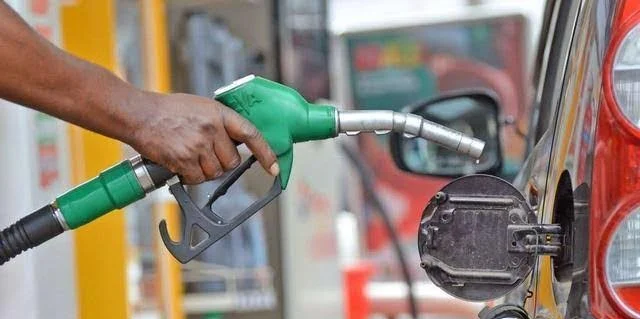
…It’s election gimmick, says ADC presidential candidate
BY NSE ANTHONY-UKO Abuja, YUSUF BABALOLA, BUKOLA ARO-LAMBO, DEBORAH BELLO and FAVOUR OLOKUNGBOYE, Lagos
Nigerians have given a mixed reception to the Federal Government’s 30-day cap on petrol at N1,350 per litre at NNPC stations. Some welcome the price stability, but many doubt the savings will ease the cost of living.
Former Vice President Atiku Abubakar has dismissed the measure as an election-season gesture, while civil society groups and analysts are demanding to know who is funding the discount and what happens after 30 days.
Minister of Finance and Coordinating Minister of the Economy, Taiwo Oyedele, announced the discount on Thursday in Abuja as part of measures to alleviate the suffering caused by the high cost of fuel, even as he insisted that there would be no going back on subsidy.
An entrepreneur, Sewanu Alagbe, said the 30-day petrol price cap at N1,350 per litre may provide some level of price stability and predictability for consumers and businesses, but would not significantly ease the financial burden on Nigerians.
According to him, the difference between the current pump price and the N1,350 cap is too small to make a meaningful impact on consumers’ finances.
“If you’re buying 10 litres of fuel, you’ll be saving about N200, which is insignificant,” Alagbe said.
He added that the major benefit of the intervention would be the stability it provides, noting that “if I’m making a budget for next week, I don’t have to worry that fuel prices will increase,” since the period falls within the 30-day intervention.
However, Alagbe said the duration of the intervention may be too short to have a substantial effect on the wider economy, noting that greater price certainty could encourage businesses to plan and operate with more confidence.
Similarly, a photographer, Owen Ogie, welcomed the 30-day petrol price cap, saying the intervention could provide some level of stability in fuel prices and offer immediate relief to Nigerians, particularly those who depend on public transportation.
“Since it’s a 30-day trial period, I feel we should welcome the idea. At least we can agree that we would have a stable price for the next 30 days,” he said.
According to him, while the impact of the intervention may be temporary, it could reduce uncertainty among consumers.
“Nigerians won’t have to be scared of one fuel station having a greater price than the other,” Ogie added.
He also noted that a reduction in price disparities among filling stations could ease some of the pressure on consumers, especially public transport users.
But the Civil Society Legislative Advocacy Centre (CISLAC) raised concerns over the intervention, warning that temporary price measures cannot substitute for lasting solutions to Nigeria’s worsening cost-of-living crisis.
The executive director of CISLAC, Auwal Musa Rafsanjani, said while any genuine relief was welcome, the government must accept responsibility for the hardship faced by Nigerians.
“Nigerians have endured enormous sacrifices following petrol subsidy removal, yet the promised benefits remain largely invisible to struggling households,” he said.
Rafsanjani demanded transparency over the N1,350 petrol price ceiling and the 30-day NNPC discount, asking what Nigerians would actually pay at the pump, who was financing the discount and what would happen after the 30-day period.
“Without clear answers, transparent financing and verifiable consumer benefits, this intervention risks becoming another temporary announcement that fails to address the suffering of citizens,” he said.
He called on the federal government to confront the structural drivers of economic hardship, including corruption, excessive governance costs, wasteful public expenditure and weak accountability.
He said the true measure of responsible governance was not a 30-day petrol discount but sustained reductions in living costs, improved livelihoods and accountable management of public resources.
Also reacting, former Vice President Atiku Abubakar condemned the planned discount, describing it as a desperate, temporary gesture that cannot repair the damage caused by the high cost of fuel.
In a statement by Phrank Shaibu, director of strategic communication of the ADC Presidential Campaign Council, Atiku said the Tinubu administration’s attempt to dangle a fuel subsidy as bait for Nigerians was “reckless, disgraceful and scandalous”. He said the government had watched Nigerians endure hardship without meaningful relief and was now offering a temporary discount as the election drew closer.
“Atiku totally rejects this calendar-scheduled, election-laced subsidy package. Nigerians are not fools to be offered a month of discounted fuel after years of punishing prices, only to be expected to forget the hardship when the discount expires. This is shameless and heartless,” he said.
Atiku called the 30-day discount “a political bandage on a wound the government had helped create”, and asked: “What happens on Day 31? Nigerians wake up to the same brutal prices, the same punishing transport fares and the same rising cost of food.”
He noted that the offer is limited to NNPC stations, and that the government has yet to state how much motorists will save per litre or guarantee that transport operators will pass any savings on to passengers through lower fares.
The former Vice President said the administration’s sudden reversal was an admission of guilt over the hardship Nigerians have endured. He said it also showed that the production-support proposal he has advanced is “workable, achievable and not complicated”.
He reiterated his proposal for capped and budgeted production support tied to fuel refined in Nigeria, with safeguards to ensure the benefit reaches consumers and supports local refining.
“Nigerians need lasting relief, not a countdown to the return of hardship,” Atiku said.
Meanwhile, financial analyst, Charles Fakrogha, said lower petrol prices could provide significant relief to households and businesses by reducing transportation costs, easing pressure on consumer prices and lowering operating expenses.
Fakrogha, however, urged the government to be transparent about the cost of petroleum products, arguing that Nigerians needed to understand how pump prices were determined.
He said cheaper petrol could have a multiplier effect on the economy because transportation remains a major component of the cost of moving people, agricultural produce, raw materials and finished goods.
“Whether government or private businesses, you don’t want to get a product at N10 and sell it at N8. The worst, you want to sell to recover your costs,” he said.
He nevertheless argued that with proper pricing and transparency, petrol prices could be significantly lower.
“If they do the right pricing very well, and NNPC is transparent, then, for me, petroleum products with CNG should not go beyond N500 to N600,” he said.
Fakrogha said the government should disclose the components of the pricing template, including the cost of crude, refining, transportation and other charges.
“If you tell us this is your landing cost, you tell us this is the cost of all that, then we don’t expect any government to run the business at a loss. But they should be transparent,” he said.
For Ayo, a commercial motorcyclist, the reduction could offer some relief because fuel constitutes a major operating cost, but he said other expenses would continue to constrain operators.
“It changes things o, because fuel is one of our biggest expenses. If the price comes down, it will reduce what I spend and give me some relief,” he said.
Ayo, however, explained that lower fuel prices would not automatically translate into lower transport fares, citing traffic, bad weather, road construction and daily payments to touts.
“If the government can sustain the fuel reduction and also address these other pressures, then both operators and passengers can genuinely feel the benefit,” he said.
Grace, another consumer, was more sceptical, saying she did not believe the government could sustain petrol price stability or that the discount would significantly reduce the pressure on Nigerians.
“Firstly, I don’t think the government can ever stabilise the petrol prices,” she said.
She noted that even if transport operators reduced fares, they would still have to contend with payments to agberos, vehicle maintenance and other operating costs.
“In regard to goods and services, everybody knows that whatever price goes up in NIGERIA only comes down by the special grace of God,” Grace said.
“So, I personally don’t think their ‘discount’ will even scratch the surface of the problem we have in this country,” she added.
Grace also questioned the sustainability of the intervention, asking, “Moreso, after 30 days what happens after?”
Tominiyi, who uses public transport nearly every day, similarly said the intervention was unlikely to result in a sustained reduction in transport fares.
“The reality is that transport fees will remain the same because it is not a permanent solution,” she said.
According to her, even if transport operators reduce fares during the 30-day period, sustaining such reductions after the intervention would be difficult.
“The most important question is this, after the 30 days, what next?” she asked.
She also suggested that the timing of the intervention could be linked to the government’s campaign strategy.
to like, bookmark, and comment.
Comments
Join the conversation:
No comments yet. Be the first to share your thoughts.