NFF Leadership Crisis: North Insists On Producing Gusau’s Successor
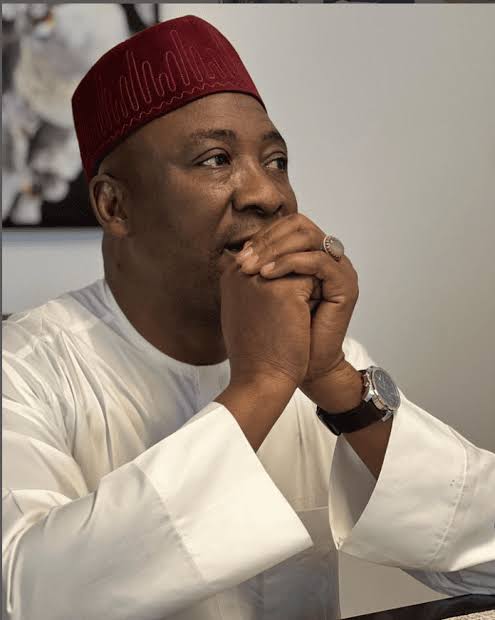
A state Football Association chairman from north-east Nigeria seeking to become the next president of the Nigeria Football Federation (NFF) has insisted that the position should remain in the North following the unceremonious exit of Ibrahim Gusau.
The chairman argued that the North was entitled to produce Gusau’s successor because the former president had served only one four-year term, unlike his predecessor, Amaju Pinnick, who spent eight years in office.
“It is still the turn of the North to produce the next president of the NFF. Amaju Pinnick spent eight years as NFF president. So, it is still our turn from the North because Ibrahim Gusau only served one term of four years,” the chairman told our correspondent on condition of anonymity, citing the sensitivity of the matter and its consideration by FIFA.
His position highlights the regional interests emerging in the struggle over the NFF’s leadership and the future structure of football administration in Nigeria, as stakeholders await FIFA’s decision on how to resolve the governance crisis.
Beyond the contest over who succeeds Gusau, the dispute centres on whether the existing NFF Congress should retain control of the transition or whether FIFA should appoint a normalisation committee to oversee reforms and organise fresh elections.
Zoning versus governance reforms
The insistence that the presidency should remain in the North reflects concerns among some state FA chairmen that a change in the electoral framework could disrupt established regional arrangements and redistribute influence within the federation.
During consultations in Abuja, state FA chairmen reportedly argued that the NFF should use its existing constitutional provisions to fill the leadership vacuum and proceed to fresh elections.
The position is significant because state FA chairmen constitute a major voting bloc within the federation’s electoral structure. Under the disputed framework, the 36 state FA chairmen and their Federal Capital Territory counterpart held 37 of the 54 votes, giving them approximately 68.5 per cent of the total voting strength.
That concentration of voting power has made the state associations central to contests for the NFF presidency and other executive positions.
For stakeholders favouring continuity, retaining the existing framework would allow the federation to resolve its leadership crisis through established structures. However, opponents argue that meaningful reform requires changes to the arrangements that have historically concentrated electoral influence among a limited group of stakeholders.
The regional dimension adds another layer to the dispute, with the North seeking to preserve its claim to the presidency while other groups press for a process that prioritises institutional reform over established zoning arrangements.
However, the northern chairman’s position represents his own argument in the succession debate and does not, on its own, establish a binding agreement among all stakeholders on regional rotation.
Reform bloc wants FIFA intervention
On the other side of the debate, representatives of players, coaches, referees, the Sports Writers Association of Nigeria (SWAN) and some former NFF officials have advocated a FIFA-appointed normalisation committee.
Supporters of the proposal argue that the existing structures need an independent intervention to address governance concerns, review the federation’s statutes and establish a framework for credible elections.
A normalisation committee would potentially be tasked with reviewing the contentious 2010 NFF Statutes, implementing agreed reforms and organising fresh elections within a defined period.
Such an intervention could significantly alter the balance of power within the federation, particularly if changes are made to the composition of the Congress, voting rights and the eligibility or representation of different stakeholder groups.
For state FA chairmen, the implications extend beyond the immediate contest for the presidency. Changes to the electoral framework could reduce the influence they currently exercise through their numerical strength in Congress.
The dispute, therefore, is not simply about whether the next president should come from the North or another region. It also concerns who should determine the rules under which the next leadership emerges and how much influence individual stakeholder groups should retain.
FIFA decision remains crucial
FIFA has yet to announce a definitive decision on the proposed normalisation committee, leaving the federation’s immediate future uncertain.
The global governing body is understood to be considering the legal and structural implications of the consultations held in Abuja before determining the next steps.
Although a time-limited normalisation committee has gained support among some stakeholders, disagreements remain over its composition, mandate and the extent to which it should restructure the federation’s existing arrangements.
The question of regional representation is likely to remain contentious if FIFA opts for an interim administration, particularly if stakeholders seek guarantees that the transition will not permanently disadvantage their interests.
For now, the North’s claim to the presidency remains a political position in the wider succession debate rather than an established outcome of the process.
Ultimately, FIFA’s decision will determine whether the NFF moves towards elections under its existing Congress or undergoes an externally supervised transition that could reshape the federation’s governance structure.
Until that decision is made, the contest over the next president will remain inseparable from the larger debate over regional representation, electoral power and the future administration of Nigerian football.
to like, bookmark, and comment.
Comments
Join the conversation:
No comments yet. Be the first to share your thoughts.