CyberAlliance President Larry Yon II: Africa's Tech Sector Can Build the Next NVIDIA
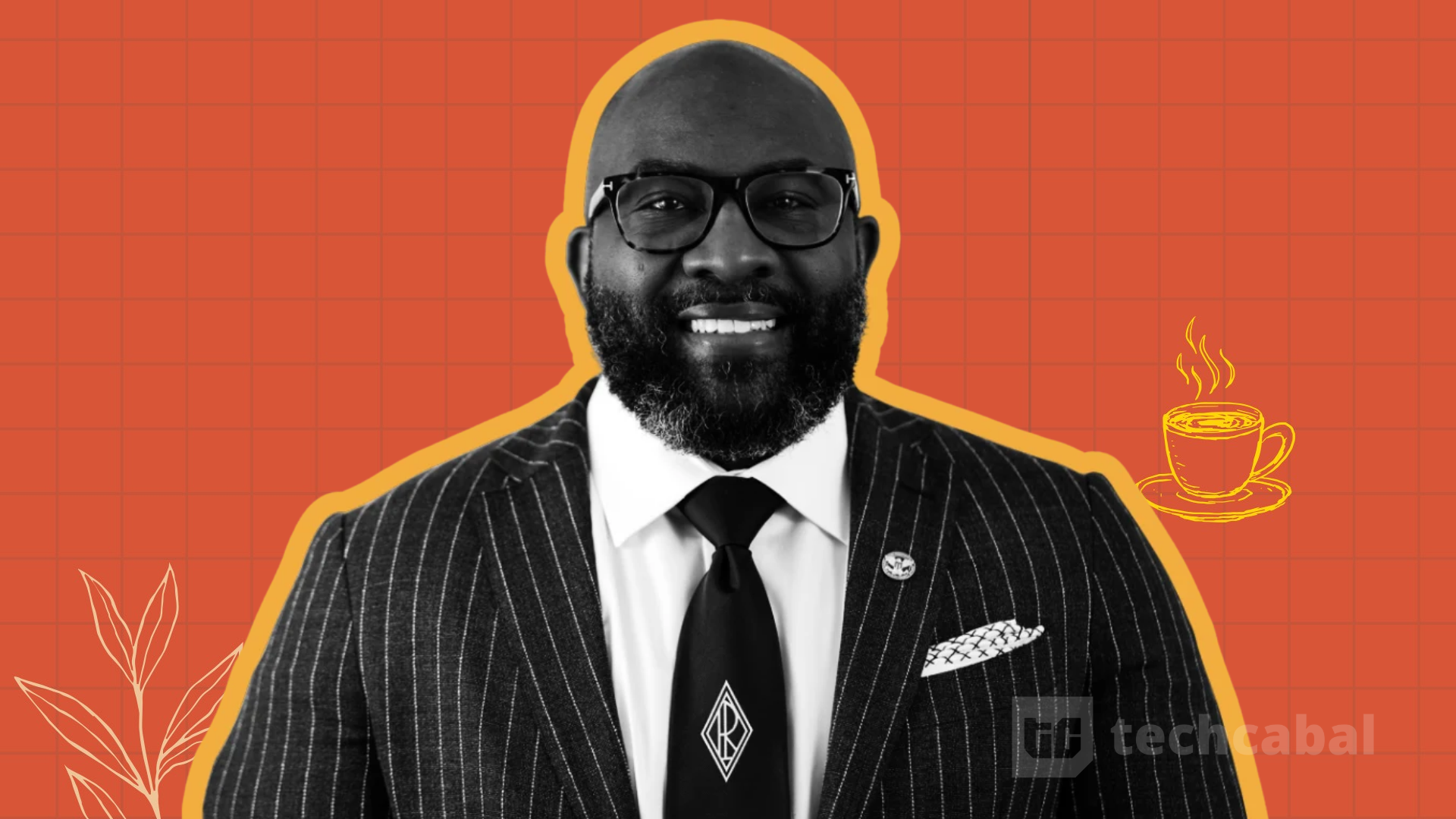
Larry Yon II, co-founder and president of the US-based AI cybersecurity company CyberAlliance, has urged Africa's technology ecosystem to aim for the kind of scale that produced global giants like NVIDIA. He made the call during a wide-ranging conversation about his career, the continent's digital future, and the role of trust in cross-border business.
Yon's first departure from South Africa left a lasting impression. Seated by the window as the landscape slipped away below, he was overcome by sadness, unsure whether he would ever set foot on the continent again. A second thought followed: he also did not know if he would ever be able to bring other Americans to see, feel and experience what he had.
That question has shaped much of his work since. His connection to Africa did not start with cybersecurity, artificial intelligence or venture capital. It started with a failed investment. Having backed an American expatriate doing business on the continent, Yon made a mistake common among first-time investors: he got swept up in the opportunity, failed to appreciate local market nuances and hurried his due diligence. The venture collapsed. Instead of retreating, he set out to understand what he had missed, travelling widely, meeting founders and building relationships that would later redirect his career.
As managing partner at B&C International, a prominent Black-owned global strategy consulting firm in the US, Africa became part of his professional brief. He advised American companies entering African markets and helped African businesses expand into the United States. South Africa gave the relationship a human dimension. While working on a business process outsourcing initiative in KwaZulu-Natal, he met the late liberation figure Winnie Madikizela-Mandela and the late King Goodwill Zwelithini, eighth monarch of the Zulu Kingdom. Madikizela-Mandela told him not to forget about the people, while King Zwelithini told him that his ability to tell Africa's story in the United States would always exceed the king's own. Yon has carried both lessons forward, grounding his belief that business is ultimately about people and giving him a sense of responsibility beyond spotting commercial opportunities.
Today, CyberAlliance operates across American and African markets, and Yon describes trust as the thread running through his career. Trade, cross-border investment and digital business all depend on it, and as artificial intelligence becomes more embedded in economies, questions about data, privacy, security and control become more pressing. Cybersecurity, he argues, is not a technical side project attached to Africa's digital transformation but part of the infrastructure that makes it possible. If cybersecurity does not keep pace with AI adoption, he warns, Africa risks losing the confidence that its innovation is safe, that personal and corporate data will be protected, and that countries and businesses can adopt global technologies and enter global partnerships without giving up sovereignty.
CyberAlliance has worked with startups, investors and universities across South Africa, Botswana, Zimbabwe, Senegal, Uganda, Tanzania, Nigeria and Morocco. Operating in such varied jurisdictions reinforced a basic lesson: Africa is not a monolith. Each country has its own regulatory landscape, business culture, technological maturity and threat profile, all of which shape how software is built, deployed and adopted. Yon puts it plainly: global capability does not replace local intelligence. World-class technology can be brought into a market, but if the context in which people will use it is not understood, the problem has not really been solved.
That thinking led to SallyAI, which CyberAlliance describes as an AI-powered cyber analyst and translation layer. It converts complex cybersecurity information into prioritised, business-ready intelligence for security teams, executives and boards. The idea was influenced by early work in Senegal, where Yon and his US team did not speak French fluently. The experience reinforced a broader point: for technology to be adopted and to inform decisions, people must be able to understand it. Cybersecurity is already complex, and technical terminology, language differences and cultural context can make it harder still. Yon believes technology can be used without requiring the user to be a technologist.
He also notes that AI can lower the cost of building businesses and accessing expertise, while simultaneously making cyberattacks cheaper, faster and more sophisticated. Cyber readiness, he argues, is becoming part of business readiness. For African startups, the issue can surface when they seek investment, enterprise customers, insurance or expansion into another country. Founders may focus on product, revenue and growth, but investors may also ask how customer data is handled, where it is stored and how intellectual property is protected. Treating cybersecurity as something to address after scaling is a mistake, he says, because it is part of what determines whether a company can scale at all. His work across venture capital and investment ecosystems has convinced him that cyber readiness is increasingly part of investment readiness, with funders looking beyond financial health and growth prospects to how well technology, data and intellectual property are safeguarded.
Not every lesson was technical. Senegal also changed his view of jollof rice, a subject he declined to elaborate on, joking that he did not want to upset his Nigerian or Ghanaian friends. The lighter moment underlined a genuine affinity for the continent that extends well beyond spreadsheets, investment metrics and software stacks.
to like, bookmark, and comment.
Comments
Join the conversation:
No comments yet. Be the first to share your thoughts.