Olawepo-Hashim Urges Nigerians to Shed 'Third Class' Mindset, Pledges $4tn Economy
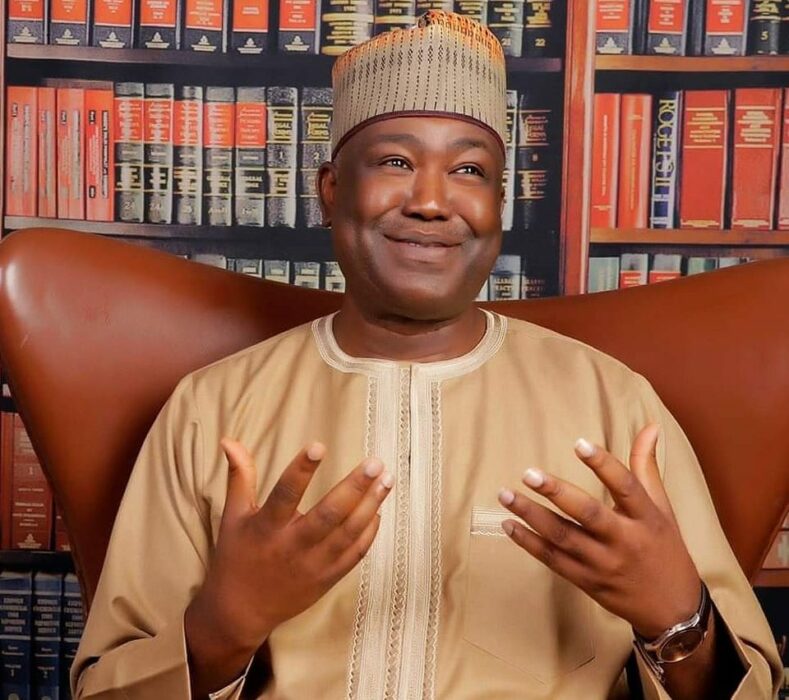
Dr. Gbenga Olawepo-Hashim, the Accord Party's presidential candidate, has called on Nigerians to discard the notion that their country is destined to remain a third class nation, and to take a firmer hand in shaping its future as the 2027 election approaches.
In an Independence Day message issued in Abuja, Olawepo-Hashim said Nigeria's stalled development cannot be blamed on a shortage of resources. The real problem, he argued, is that the country has failed to put its considerable human, natural and institutional capacity to work.
Among the forces he listed as holding Nigeria back are poverty, human trafficking, insecurity, the capture of institutions, a weakening civil service and deteriorating security infrastructure, all of which persist despite the country's vast potential.
He said Nigeria's large youth population should be turned from a developmental burden into its strongest economic asset, through skills training, education, jobs and opportunities for productive work.
"Nigeria is not a poor country. We have behaved like a poor country because we have consistently underutilised the enormous capacity available to us," he said.
Poor governance, he added, carries costs that go well beyond economic figures, touching the safety, dignity and prospects of ordinary citizens.
He noted that trafficking, joblessness and insecurity take root in places where people have no economic options and institutions are too frail to shield the vulnerable.
"You cannot permanently defeat trafficking without defeating the conditions that make human beings vulnerable to trafficking," Olawepo-Hashim said.
The Accord Party candidate said the 2027 ballot should be a moment for Nigerians to accept greater responsibility for setting the country's course.
He asked voters to insist that candidates present clear visions, measurable targets and accountability, instead of letting elections shrink into contests of personality, ethnicity, religion or slogans.
"Nigeria belongs to Nigerians. We must stop behaving as spectators in the affairs of our own country," he said.
Olawepo-Hashim said an Accord government would aim to grow Nigeria into a $4 trillion economy within eight years, powered by higher output in manufacturing, agriculture, energy, technology and services.
He added that the country has to shift away from an economy that mostly shares out resource revenues toward one that generates wealth through production and value addition.
He restated his plan to lift Nigeria's crude output to no less than four million barrels per day within 24 months of an Accord administration taking office.
That goal, he explained, would be pursued by reviving commercially viable shut-in oil wells, tightening security, investing in production infrastructure, improving crude evacuation and reforming petroleum production costs.
He also stressed that the extra crude must serve as a base for domestic industrialisation.
"Four million barrels a day cannot simply mean four million barrels exported. Nigerian crude must power Nigerian industry," he said.
Olawepo-Hashim repeated his proposal for a sustainable starting petrol price of ₦605 per litre, with a longer-term aim of bringing the price down to between ₦200 and ₦300 per litre.
He said the approach would rest on cutting the real cost of producing and delivering energy, rather than reviving an opaque subsidy regime.
The Accord candidate maintained that Nigeria needs to turn its oil and gas wealth into the bedrock of an energy and industrial economy that can compete globally.
He proposed major expansion across crude production, refining, petrochemicals, gas processing, electricity generation, pipelines, storage and other energy infrastructure.
"Nigeria must stop exporting the raw material and importing the finished value. We must capture the value chain here," he said.
Olawepo-Hashim argued that affordable, dependable energy would be key to bringing Nigeria's manufacturing sector back to life and bringing down production costs throughout the economy.
He also suggested making West African integration a central plank of Nigeria's foreign policy, describing the region as a significant opening for Nigerian economic growth.
He said Nigerian manufacturers, farmers, energy firms, financial institutions and technology companies should be positioned to serve a far larger integrated West African market.
"Our neighbourhood is not a burden, we are one family. West Africa is Nigeria's strategic economic space," he said.
He contended that Nigeria's fast-growing young population could become its biggest economic advantage if government deliberately invests in technical education, professional skills and productive employment.
"Our young population should be Nigeria's greatest economic asset. We must give them the skills and opportunities to turn their energy into wealth," he said.
Rebuilding the civil service and public institutions would be just as important, he said, since ambitious economic goals cannot be met without a capable and accountable state.
"We cannot build a $4 trillion economy with institutions that cannot perform. The Nigerian state itself must be rebuilt," Olawepo-Hashim said.
He said Independence Day should serve as a reminder that political freedom must eventually be matched by economic and institutional independence.
"The Nigeria we want cannot be outsourced. It cannot be imported. It must be built by Nigerians," he said.
In his view, the 2027 election offers Nigerians a chance to pick not just a government but a national direction.
"We are offering the vision. We are offering the leadership. But the ultimate power belongs to Nigerians," he said.
He closed with the thought that "our independence gave us ownership of Nigeria. It is time to exercise that ownership."
to like, bookmark, and comment.
Comments
Join the conversation:
No comments yet. Be the first to share your thoughts.