IFC Plans New Financing Platforms to Draw Private Capital into Nigeria's High-Risk Sectors
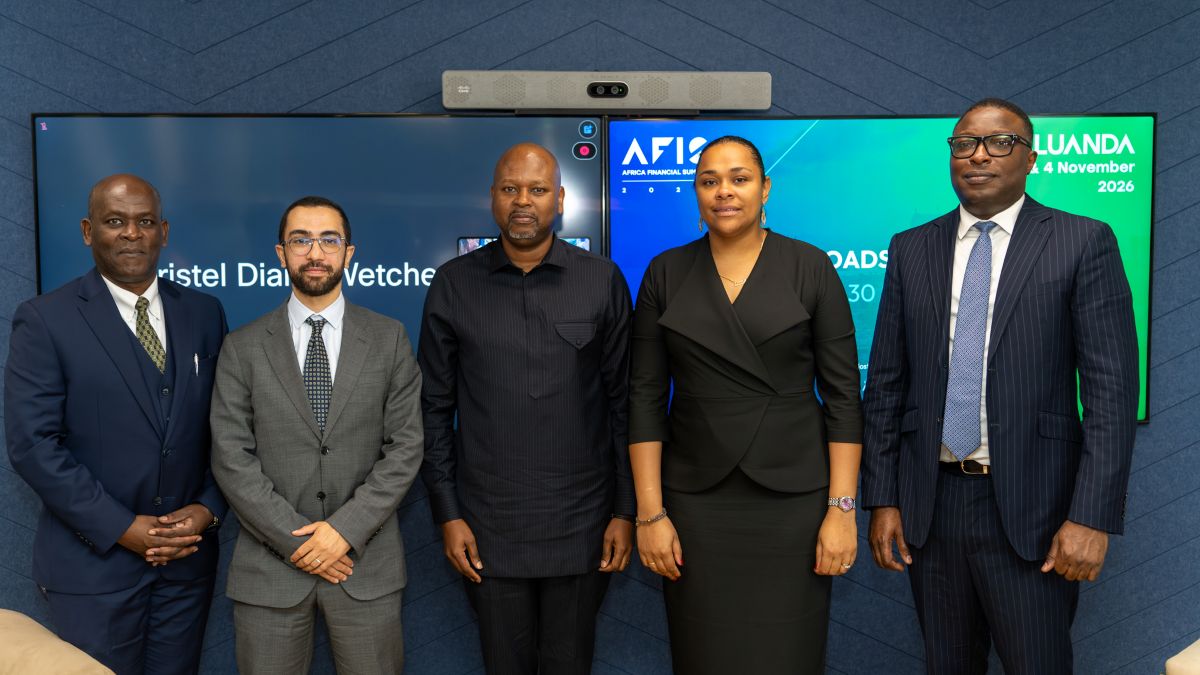
The International Finance Corporation (IFC) is working on new financing structures and risk mitigation instruments aimed at drawing more private capital into strategic areas of Nigeria's economy, including farming, infrastructure and small enterprises.
Olivier Buyoya, Division Director for Nigeria and Central Africa at the IFC, announced the plan at a press conference in Lagos. The briefing preceded the 2026 Africa Financial Summit (AFIS), which will take place in Luanda, Angola, on November 3 and 4.
Buyoya explained that the strategy is part of a fresh five-year Country Partnership Framework between the IFC and the World Bank Group. That framework is intended to convene stakeholders to jointly design responses to some of the continent's biggest financing obstacles.
He said the goal is to activate money that is already sitting in the financial system but is not flowing to strategic sectors because they are seen as too risky.
"The idea is how do we create platforms, solutions, so that we can mobilize funding that is out there but not being deployed in those sectors because they are deemed risky," Buyoya said.
Agriculture was singled out as an area needing immediate attention. Buyoya noted that commercial banks in Nigeria currently direct less than 5% of their lending to the agricultural sector.
Boosting financing for farming is essential for food security and job creation, he said, especially as African economies try to increase local production.
To that end, the IFC and the World Bank Group are designing mechanisms that would give banks and capital market participants more confidence to lend to sectors traditionally viewed as high risk.
Dafe Oraka, Principal Investment Officer at the IFC, also spoke at the briefing. He said the corporation is scaling up its local currency financing in response to sharp currency swings that African businesses are facing.
Oraka explained that the IFC has historically extended most of its financing in US dollars because it operates from a dollar balance sheet. But volatility in markets like Nigeria has made longer-term funding in local currencies more necessary.
He pointed to the IFC's collaboration with Access Bank as an illustration of this shift. In May, the two institutions signed a local currency borrowing framework agreement. The deal is meant to allow Access Bank to raise local currency in several African markets where it has a presence.
The arrangement is expected to help deliver long-term local currency financing to small and medium-sized enterprises and other businesses across the continent.
Turning to the upcoming summit, AFIS Director Hicham Al Morabet said the event was created in 2021 as a joint effort between the IFC and the Jeune Afrique Media Group to assemble major players in Africa's financial services industry.
The platform draws together banks, insurers, development finance institutions, fintech firms, policymakers and other financial sector actors.
According to Al Morabet, AFIS has moved beyond being mainly a talking shop toward greater coordination and concrete results.
"The purpose of the project was always to foster financial integration on the continent and to make the financial sector players on the continent work together to make the sector stronger and to finance the real economy," he said.
The 2026 edition in Luanda will focus on strengthening Africa's financial sector and mobilising capital for economic development. Organisers anticipate that more than 1,250 senior financial industry leaders will attend, among them bankers, insurers, fintech executives, capital market specialists, regulators and policymakers.
In its latest financing move in Nigeria, InfraCredit, the country's specialised infrastructure credit guarantee institution, has obtained a US$50 million subordinated unsecured 10-year debt facility from the IFC. InfraCredit said the facility will bolster its capital base and improve its ability to back a growing pipeline of infrastructure transactions and to attract long-term local currency financing in areas such as renewable energy, climate-smart agriculture, digital infrastructure and green growth, telecommunications, healthcare, transportation, and other productive sectors of the Nigerian economy.
to like, bookmark, and comment.
Comments
Join the conversation:
No comments yet. Be the first to share your thoughts.