Association Asks Govt To Address Housing Crisis
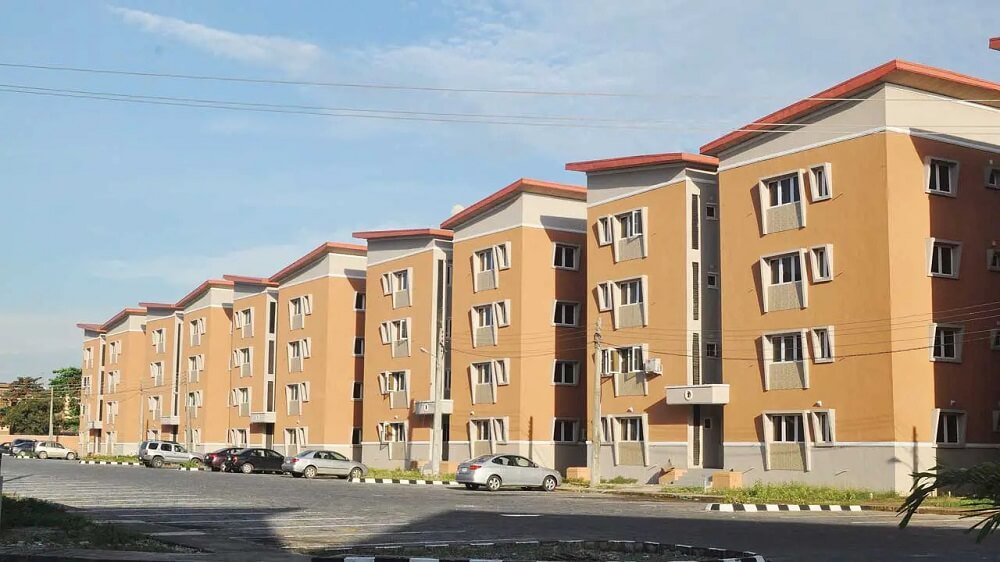
Association of Housing Corporations of Nigeria (AHCN) has demanded urgent action by the government against Nigeria’s worsening housing crisis.
He warned that the country’s housing deficit and structurally defective homes require fundamental reforms, improved financing and large-scale housing delivery.
The president/chairman of Council of AHCN, Eno Obongha, made the call yesterday in Abuja when he presented the “State of the Nation’s Housing Address” to commemorate World Habitat Day 2026, with the theme, “Adequate Housing for All.”
Obongha said the National Housing Data Centre had put Nigeria’s housing deficit at 14.925 million units, while 15.2 million homes were classified as structurally defective or substandard as of 2025.
He said the figures highlighted the urgent need for the federal government to strengthen housing data and use it as the basis for policy formulation, housing finance, land allocation and actual housing delivery.
“Data must become the foundation for housing policy, housing finance, land allocation and actual housing delivery,” he said.
According to him, housing should no longer be treated as an isolated sector because inadequate accommodation affects family stability, education, workers’ productivity, public health, security and the wider economy.
“Housing must become a central pillar of our national economic-development strategy,” he said.
The AHCN president also expressed concern over the under-utilisation of State Housing Corporations, which he described as a potentially critical engine for solving the nation’s housing crisis.
He said many of the corporations were operating below capacity due to inadequate funding, lack of access to affordable long-term finance, land constraints, outdated laws, weak revenue-generation mechanisms and poor integration into government housing strategies.
According to him, some states, including Bauchi, Taraba and Nasarawa, have merged their housing corporations with ministries, a development he said must be reversed.
He urged governments to reposition State Housing Corporations from annual budget-dependent agencies into self-sustaining housing-development institutions capable of mobilising private capital and delivering housing at scale.
Obongha also called for greater use of Public-Private Partnerships (PPPs), saying the model could help Nigeria move from delivering hundreds of houses to thousands of units.
He said State Housing Corporations and the Federal Housing Authority should provide land, planning approvals, infrastructure support, development rights, off-take arrangements and project coordination, while the private sector provides equity, construction expertise, technology, project management, finance and innovation.
The AHCN president further called for a review of the definition of affordable housing, arguing that a house could not be considered affordable simply because its selling price was low.
He called for the creation of special housing-finance windows involving the Federal Mortgage Bank of Nigeria (FMBN), Nigeria Mortgage Refinance Company, commercial and mortgage banks, pension funds, insurance companies, development finance institutions and private investors.
Obongha also advocated the establishment of a National State Housing Land Bank Initiative, saying high land costs and limited access to titled land were contributing to the housing crisis.
He said every State Housing Corporation should have a properly documented digital land bank containing information on the location, size, ownership, title status, infrastructure and development potential of land available for housing.
On the Federal Government’s Renewed Hope Housing Programme, Obongha said the initiative had initially raised expectations among Nigerians but warned that the pace of delivery remained inadequate.
He said the programme, launched in February 2024 with a projection of 100,000 housing units annually, had, based on available public figures, just over 15,000 units under construction across 14 states and the Federal Capital Territory.
He therefore called on the Federal Ministry of Housing and Urban Development to recognise State Housing Corporations as critical partners in the implementation of the Renewed Hope Housing Programme.
The AHCN also unveiled a five-point housing agenda for 2027, comprising a National Housing Corporation Data Register, State Housing Corporation reforms, a National Housing Land Bank, a Housing Corporation PPP Fund and the delivery of 740,000 homes through State Housing Corporations.
Obongha called on state governors not to allow their housing corporations to become dormant, urging them to provide land, appoint competent boards, facilitate access to funding and give the corporations clear and measurable performance targets.
He also called for the restructuring of State Housing Corporations into commercially viable agencies capable of originating projects, securing land, attracting investors, mobilising finance, supervising construction, managing estates and recovering investments.
The association further called for slum upgrading and redevelopment, the expansion of rental housing for low- and middle-income earners, and the implementation of its proposed Agric-Villages scheme to tackle housing shortages, food insecurity and rural-urban migration.
Obongha criticised the involvement of housing ministries in direct construction, arguing that ministries should concentrate on policy formulation while statutory housing agencies should implement housing programmes.
“Ministries both at the federal and state levels have no business in direct construction,” he said.
to like, bookmark, and comment.
Comments
Join the conversation:
No comments yet. Be the first to share your thoughts.