Akwa Ibom Judge Seeks Database for Children in Alternative Care
A call has gone out to the Akwa Ibom State Government to create a detailed register of children living in alternative care and to keep their welfare under constant review, so that they are shielded from harm and exploitation.
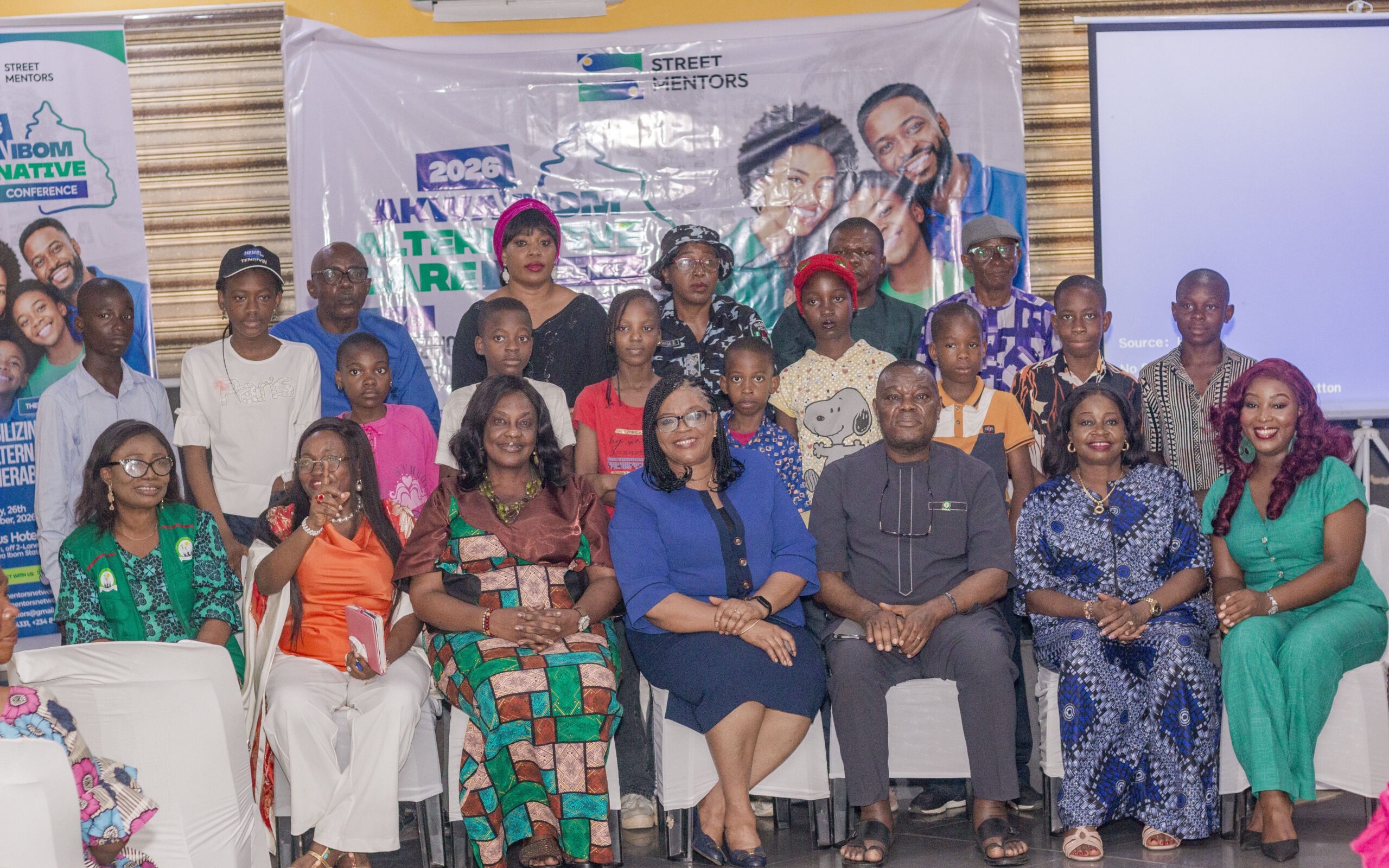
The appeal came from Theresa Obot, a judge of the Akwa Ibom State High Court, who delivered the keynote address on Saturday in Uyo at the Akwa Ibom Alternative Care Conference. Street Mentors Network organised the gathering, which adopted the theme "Mobilising Families for Alternative Care of Vulnerable Children" and doubled as the organisation's fifth anniversary commemoration.
Alternative care describes the protection extended to a child who, whether for a short period or permanently, is unable to reside safely with their biological or customary family. It takes forms including kinship care, foster care, guardianship, family-based care and, when the situation demands it, residential or institutional placement. The goal is to surround the child with safety, stability, support and nurture while safeguarding their rights and development.
Speaking to the theme "Every Child Deserves a Safe Family: The Law, Our Responsibility and the Way Forward," the judge warned that the absence of dependable figures on children in alternative care constitutes a significant danger to their protection.
"There is no data on how many children are in alternative care, hence there is a threat that so many things can happen to them," she said.
Mrs Obot insisted that alternative care must be properly organised, and that government ought to deliberately keep records of every child placed in such arrangements while conducting routine follow-ups to confirm their wellbeing.
She further demanded a shift in the way law enforcement personnel relate with children, claiming that some officers tamper with a child's age in order to keep them locked up in correctional institutions.
"I have had situations where police increase the age of a child to put them in prison so that they are not put in alternative care," she said.
Turning to the legal framework, the judge commended the state government for enacting the Child Rights Law in 2008, describing it as a structure for shielding children from abuse and exploitation and for resolving family disputes that involve children. She added that Akwa Ibom was likely the only state in the country whose law specifically forbids labelling a child as a witch or wizard.
According to her, the justice system must keep the safety, stability, dignity, belonging and development of children at the heart of matters concerning families.
"The question before a Family Court is what environment will allow this child to become whole?" she said.
Mrs Obot argued that holding a family together should not amount to leaving a child in a damaging environment, just as separating a child should not be the reflex response in cases where support, protection and rehabilitation can deliver safety.
She observed that disputes within families typically arrive in court as clashes between adults, among them husbands and wives, fathers and mothers, guardians and parents or relatives.
"But beneath the pleadings is often a child living the consequences of the dispute," she said.
Such children, she said, may endure emotional trauma, domestic violence, neglect, parental alienation, poverty, interrupted schooling, sexual abuse, physical punishment, abandonment, trafficking and exploitation. They may also be cut off from parents or siblings, or be shifted repeatedly from one home to another.
She urged Family Courts to guard against children's interests being swallowed up by legal battles waged between adults.
Mrs Obot maintained that a child should never be regarded as the property of either parent, and that custody must not serve as a reward or as a tool for punishing a parent.
"The child is not the property of either parent. Custody is not a prize. Access is not a favour. Maintenance is not charity. And the child must not become the instrument through which one parent punishes another," she said.
In weighing what serves a child's best interests, the judge said courts should take into account the child's physical safety, emotional wellbeing, education, healthcare, nutrition, ties with parents and siblings, and how stable the proposed living arrangement is.
She also singled out domestic violence as a serious problem, explaining that a child need not be physically struck to be damaged by violence in the home. A child who witnesses violence repeatedly, she said, may develop fear, anxiety, emotional insecurity, disrupted schooling and behavioural difficulties.
Members of the public who see children being abused, she said, should report to the police or turn to the Family Court, noting that people can be guided on the proper steps while the court can document complaints and grant restraining orders when required.
According to her, the task today is not merely about enacting laws but about ensuring that legal safeguards become genuine safety for children. She listed effective laws, competent courts, child-sensitive procedures, responsible parents, effective social services, professional lawyers, a responsive government and protective communities as essential elements of a child protection system that works.
Anita Michael, Executive Director of Street Mentors Network, said the conference was convened to consider how vulnerable children can be safeguarded when their biological parents are unable to raise them.
"We can't continue to sit on the fence and watch children wander without a future," Ms Michael said.
She referenced Nelson Mandela's observation that the treatment of children reveals much about a society, and stressed that children are especially exposed because their mental, emotional and physical capacities for self-protection are not yet developed.
"There are families that are led by children because the adult and society have failed," she said.
Ms Michael explained that Street Mentors was not interested in assigning blame, but in prompting stakeholders to confront what becomes of children who cannot be brought up within their biological families.
"What is ideal is that the child be raised with parents, but what happens when that does not happen? What can we do for that child to become a responsible person in society?" she asked, adding: "Akwa Ibom State should not be a state where children are still in the street."
Helen Ubit, Executive Director of Theolight Foundation, said her organisation collaborated with Street Mentors because of the latter's commitment to vulnerable children, and that stronger families are needed to keep children off the streets and away from further danger.
Ms Ubit listed her foundation's interventions to include psychosocial support for girls facing unplanned pregnancies, training and placement of domestic caregivers, and support and placement of children from disadvantaged families into homes where they can obtain basic necessities under structured and monitored arrangements. Those efforts, she said, are intended to reduce the likelihood of forced labour, abuse, maltreatment and trafficking.
Also speaking, Helen Umana, Chief Magistrate of the Chief Magistrate Court, Eket, and a sitting magistrate in the Family Court, said the courts are handling numerous cases involving custody, maintenance and family breakdown.
"We have cases that span through custody and who pays for education. We have a lot of cases of women wanting to le
to like, bookmark, and comment.
Comments
Join the conversation:
No comments yet. Be the first to share your thoughts.