Tinubu vs Opposition: Where The 2027 Presidential Election Will Be Won
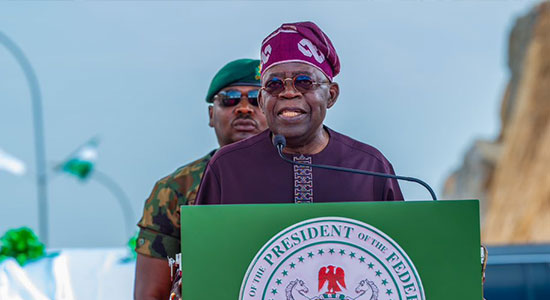
As Nigeria moves towards the 2027 general election, the presidential contest is shaping up around geography, voter turnout, regional margins, political structures and the ability of candidates to convert their strongholds into nationwide support.
President Bola Ahmed Tinubu will seek another term on the platform of the All Progressives Congress (APC), while former Vice President Atiku Abubakar is contesting under the African Democratic Congress (ADC). Former Anambra State Governor Peter Obi is also seeking the presidency under the Nigeria Democratic Congress (NDC).
The Independent National Electoral Commission (INEC) has listed 18 presidential candidates for the January 16, 2027 election.
But beneath the new alliances is a more fundamental question: what actually determined the 2023 election, and will those same factors determine the 2027 contest?
The answer could depend on whether the political realignments since 2023 have changed voter behaviour or merely changed the structures competing for votes.
What’s more, it remains unclear whether or not the 2027 voter data released by INEC last Tuesday will significantly alter the outcome of the forthcoming election.
While marking the 100-day mark to the elections, the INEC chairman, Prof Joash Amupitan, disclosed that the National Register of Voters now stands at 103 million.
He listed the top 10 states by number of registered voters as: Lagos – 7,488,633; Kano – 6,570,276; Kaduna -4,662,640; Katsina – 3,876,051; Rivers – 3,736,434; Oyo – 3,588,111; Delta -3,525,988; Benue – 3,057,225; Ogun – 3,037,981; Bauchi – 3,012,547.
Ekiti has the lowest number of registered voters, with 1,055,708, followed by Bayelsa, with 1,200,691 registered voters. The FCT comes next with 1,732,043, followed by Yobe with 1,733,671 and Gombe with 1,768,566.
But there is more. The data puts male voters at 53,528,218, representing 51.75 per cent of the register; and female voters at 49,900,497, representing 48.25 per cent.
Interestingly, the age profile shows that the register is dominated by voters aged 35 to 49 years, who account for 43,265,946 voters, or 41.83 per cent of the total.
They are followed by voters aged 18 to 34 years, numbering 29,777,578, representing 28.79 per cent. Voters aged 50 to 69 years account for 22,982,900, or 22.22 per cent, while those aged 70 years and above are the smallest age group, with 7,402,291 voters, representing 7.16 per cent.
The 2023 Starting Point
INEC recorded 93,469,008 registered voters for the 2023 presidential election. The North-West had the largest voter population, with 22,255,562 registered voters, followed by the South-West with 17,958,966, North-Central with 15,363,731, South-South with 14,440,714, North-East with 12,542,429 and South-East with 10,907,606. Yet only 24,025,940 valid votes were recorded nationally.
Tinubu won with 8,794,726 votes, followed by Atiku with 6,984,520 and Obi with 6,101,533.
The figures underscored the importance of turnout, regional concentration, vote splitting, political structures and electoral margins.
The election also demonstrated that strong regional support alone does not guarantee victory. What mattered was where candidates won and the size of their margins.
That remains an important starting point for examining the 2027 contest.
North-West: The Biggest In Numerical Prize
With more than 22 million registered voters in 2023, the North-West remains Nigeria’s largest electoral bloc.
The zone comprises Kano, Kaduna, Katsina, Jigawa, Sokoto, Kebbi and Zamfara.
Tinubu won the zone with 2,652,235 votes against Atiku’s 2,329,540. Rabiu Kwankwaso scored 1,268,250, while Obi obtained 350,182.
The relatively close margin between Tinubu and Atiku, alongside Kwankwaso’s performance, showed the effect of a divided opposition vote.
The political configuration is different in 2027. Atiku is running under the ADC with former Rivers State governor Rotimi Amaechi as his running mate, while Obi and Kwankwaso are aligned under the NDC.
The North-West will therefore provide an important test of whether opposition votes remain divided or become concentrated around fewer candidates.
Kano, with more than 5.9 million registered voters in 2023, will be particularly significant because of its size and political influence.
National Publicity Secretary of the NDC, Osa Director, said Obi and Kwankwaso were working to win the presidential election scheduled for January 2027.
According to Director, the NDC would seek to retain its former strongholds in the East, South-South, South-East and Lagos, while making greater inroads into the North-East and North-West.
“We will retain our former stronghold of East, South-southeast, Lagos and greater incursion into North-East and North-West,” Director said.
He said the party recently visited the Caliphate, where the delegation was warmly received.
“We recently paid a visit to the Caliphate and we were warmly received with heart-warming messages. That shows the victory is on our side in 2027,” he said.
Director further said the choice of Rabiu Kwankwaso as Obi’s running mate would strengthen the ticket’s prospects in the North.
He said, “Rabiu Kwankwaso’s running with Obi will greatly boost our chances in the North in 2027.”
The NDC’s position therefore places emphasis on combining Obi’s existing support base with Kwankwaso’s political presence in the North to expand its reach ahead of the election.
North-East: Atiku’s 2023 Advantage
Atiku’s strongest geopolitical performance in 2023 came from the North-East.
He scored 1,737,846 votes in the zone, compared with Tinubu’s 1,185,458. Obi recorded 315,107, while Kwankwaso had 126,343.
The region remains important to Atiku’s 2027 calculations, while Tinubu has the advantage of having Vice President Kashim Shettima from Borno and the APC’s established political structures across the zone.
The central question is whether Atiku can maintain his previous margins and whether the APC can narrow them.
For Atiku, winning the North-East may not be enough if his margins elsewhere remain weak. For Tinubu, reducing the opposition’s advantage could be important to national arithmetic.
North-Central: A Competitive Zone
The North-Central had 15.3 million registered voters in 2023.
Tinubu won the zone with 1,760,993 votes, followed by Obi with 1,415,577 and Atiku with 1,162,087.
The region, including the Federal Capital Territory, could again be important because it sits between the major northern and southern voting blocs.
Obi’s victory in the FCT in 2023 demonstrated the ability of a presidential candidate to attract support outside his traditional regional base.
Changes in political alliances, governors and party structures since 2023 could affect the region’s voting pattern.
The North-Central could therefore provide an indication of whether the new political alignments have translated into changes in voter behaviour.
South-West: The Margin Question
The South-West had 17,958,966 registered voters in 2023 and remains Tinubu’s principal political base.
He scored 2,279,407 votes in the zone, compared with Atiku’s 941,941 and Obi’s 846,478, winning five of the six states.
Lagos, however, went to Obi.
The significance of the South-West in 2027 may therefore lie not only in whether Tinubu retains the region, but also in the size of his margins.
A change in margins across major states could affect the national arithmetic even without a complete shift in regional allegiance.
For the opposition, the calculation may similarly be about reducing the incumbent’s margins rather than necessarily winning the entire region.
South-East: Obi’s Stronghold
Obi won all five South-East states in 2023, recording 1,952,998 votes across the zone.
The question for 2027 is whether he can retain that support while rebuilding the cross-regional backing he received in 2023.
His political platform has changed, with Obi now contesting under the NDC, while Atiku leads the ADC.
The South-East therefore remains a key part of Obi’s electoral base, but the wider contest will depend on whether his support extends beyond the region.
South-South: Structure Versus Voter Choice
The South-South produced one of Obi’s strongest regional performances in 2023. He obtained 1,210,675 votes, compared with Tinubu’s 799,957 and Atiku’s 717,908.
Since then, the political structure has changed.
The APC has strengthened its presence in parts of the region, while Atiku’s choice of Amaechi gives the ADC ticket a prominent South-South figure.
Rivers will be particularly significant because of the political histories of Amaechi and former governor Nyesom Wike.
In 2023, Tinubu won Rivers with 231,591 votes against Obi’s 175,071 and Atiku’s 88,468.
But Rivers is only one part of the South-South equation. Delta, Akwa Ibom, Edo, Bayelsa and Cross River could also influence the regional balance.
South-South Not Guaranteed – Rafsanjani
The executive director of the Civil Society Legislative Advocacy Centre (CISLAC), Comrade Auwal Musa Rafsanjani, has cautioned against assuming that the South-South belongs automatically to either the opposition or the APC.
Rafsanjani recalled that Obi secured about 1.21 million votes across the six South-South states in 2023, while Tinubu obtained about 800,000 and Atiku about 718,000.
He noted that the political landscape had since changed, with the APC expanding its institutional presence across parts of the region.
According to him, control of state governments gives a presidential candidate access to political structures, incumbent governors, legislators and grassroots networks.
But he stressed that control of state governments should not be confused with control of voters.
“Control of state governments must not be confused with control of voters,” Rafsanjani said.
He identified Rivers as a particularly important battleground because of the competing political structures associated with Wike and Amaechi.
He also pointed to Edo and Delta as tests of whether expanded political structures can translate into presidential votes.
Obi won both states in 2023, with Delta alone giving him 341,866 votes against Tinubu’s 90,183.
Rafsanjani said the 2027 election would be influenced by young and first-time voters, economically distressed citizens, urban and educated voters, rural voters, undecided and previously non-voting citizens, as well as women and young people.
His position places emphasis on voter behaviour rather than political declarations as a determinant of the final outcome.
Women And Voter Participation
A separate civil society perspective also points to the importance of voter participation and the role of women in the 2027 contest.
Okeke Amarachi Evangel, executive director of the Women’s Inclusion, Empowerment and Leadership Development Initiative, said the South-South should not be regarded as an automatic opposition stronghold, just as the APC should not assume that it has already taken over the region.
According to her, the political landscape has changed since 2023, making the 2027 contest more competitive.
She identified Rivers, Delta, Akwa Ibom, Edo, Bayelsa and Cross River as important states in assessing the region’s political direction.
For Evangel, the eventual outcome will depend less on elite alliances and more on voter turnout, candidate appeal, party cohesion and the issues that matter to citizens.
to like, bookmark, and comment.
Comments
Join the conversation:
No comments yet. Be the first to share your thoughts.