Zamfara not only about insecurity, Sharia – Gov Lawal
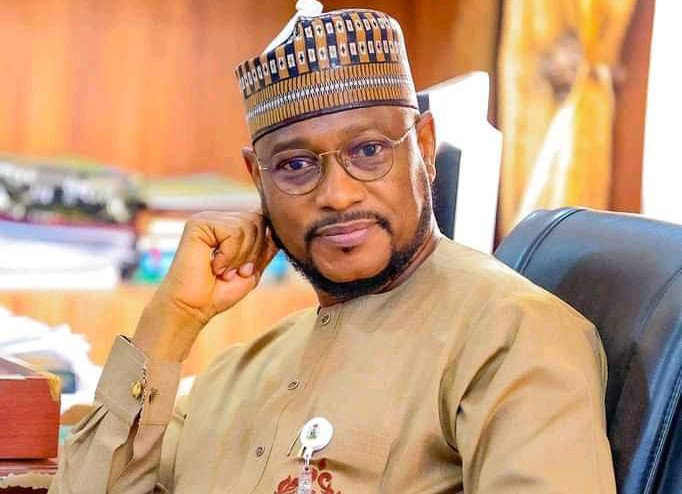
For years, Zamfara State has largely been associated with insecurity and the implementation of Sharia, a perception Governor Dauda Lawal says has overshadowed the state’s vast agricultural, mineral and economic potential. In this interview with some media executives on the sidelines of 30th anniversary of the creation of Zamfara State, Lawal dispelled the long-held perception, saying there are many good things about the state. He also spoke on state creation, state police among other issues.
Given that the constitutional amendment process is still ongoing in Nigeria and there is renewed agitation for the creation of more states, how would you say the creation of Zamfara State 30 years ago has benefited the people and brought development closer to them?
First of all, let me use this opportunity to welcome you to Zamfara State, a land of agriculture and solid minerals. Thank you very much for finding the time to be with us here in Zamfara State.
Coming back to your question, of course, this month we turned 30 years old. Zamfara State was created out of the former Sokoto State.
From what you have said, I believe the creation of the state has had a positive impact in terms of bringing development closer to the people. Prior to the creation of the state, Zamfara, as a local community, was not as developed as it is today.
There have also been a lot of advantages in terms of employment creation, urban development and so on.
So, I think it is a good thing. But at the same time, we should look at the reality of today and ask whether state creation will still have the same impact as it did in the past.
Having realised the financial challenges, even the states that have already been created now find it very difficult to function effectively because of finances.
So, I think it is something we need to really think through before we begin to agitate for the creation of additional states. Let us make sure the ones that are already there are comfortable and are bringing the kind of development that people expect.
That way, if we are comfortable with them, then, yes, we can begin to think of creating additional states.
But for me, for now, I think we need to put it on hold and let the existing states function effectively.
As governor of the state for the last three years, what would you say has been the greatest hurdle standing in the way of Zamfara’s development?
I would say it is leadership because each leader comes with a different perception and way of doing things.
The reality is that Zamfara State, right from its creation, had serious challenges. That is the reality of what it was until we came on board and began to look at the reality and ask: Is this how it should be?
Look at infrastructure, education, healthcare and agriculture, where we have comparative advantages. These were big challenges for the state.
So, we started making conscious efforts to face reality head-on and put certain things in place.
I am sure you have gone around the state capital within the last one or two days, and you can see the kind of development that is taking place. It is an ongoing process in Zamfara State.
There are so many other things that were supposed to have been done but were not properly put in place. This is where we are now laying the foundation for a better Zamfara State that will be able to compete with any state in Nigeria.
Some 26 years ago, I was in Gusau during the administration of Governor Ahmed Sani Yerima. Immediately after the amputation of Buba Bello Jangebe and the proclamation of Sharia, the impression that went around the world was that Zamfara was a fundamentalist Islamic state. It sent many people away. Even when we were coming here, many people were frightened and asked whether we were coming to a state where we could be killed. How have you been able to change that perception, which could deter people from investing in the state?
You are absolutely correct. Anywhere, not just in Nigeria, the first thing that comes to mind when people hear Zamfara is Sharia.
When Yerima decided to implement Sharia in Zamfara State, he had his reasons for doing so. However, I think the process of implementing Sharia was wrong.
If you are going to make such changes in a state like Zamfara, I think there should have been an engagement process, including with the media, for them to understand why you were doing what you were doing.
Instead, the perception people had, and still have, is that Zamfara is a no-go area; that there are no Christians, no churches, and that people have to wear long dresses and so on.
I am happy you can see how you are dressed. When you went around the city, did you see any change?
Yesterday was Sunday and you went to church. So, that tells you that the perception and narrative from day one were wrong.
It was fundamental, and it takes a while to change that perception. That is exactly what we are trying to do at the moment — change that perception.
Because there are two things people associate with Zamfara State: Sharia and insecurity.
You made mention of the fear people have whenever they hear that someone is coming to Zamfara. Based on the perception you had in the past and the reality on the ground, how do you see Zamfara now?
This is exactly what we are trying to do — perception management. We want to tell people that there are good things in Zamfara State and that there are good people here. There is freedom of religion in Zamfara State.
We have a lot of people from the South-West. In fact, if you go to the Sabongari area, it is predominantly inhabited by Yoruba people. If you go to Tudun Wada, it is predominantly inhabited by Igbo people.
There are also other tribes from across the country.
That is what we are doing right now — changing that mindset and perception of Zamfara.
As far as Sharia is concerned, there is nothing different from the way we do things. It is the way the whole thing was pronounced and portrayed to the people that gave the state that negative impression.
Just like when you hear about insecurity, you think everybody is living in a war zone and that people do not even exist. The reality is that it is not the case.
If you go through other local government areas, it is the same thing. So, yes, we are working on changing that perception.
Like I always say, we will not be defined by insecurity. Rather, we should be defined by the comparative advantages we have as a state.
Look at critical minerals. Today in Nigeria, if you speak about critical minerals, Zamfara is number one. We have seen it, tested it and we have the data.
That is why investors are now scrambling to come into Zamfara State and put their money here.
How do you imagine somebody coming into Zamfara if he knows that his return on investment is going to be uncertain? People invest because there is a clear understanding that something good will come out of it.
So, this is the new Zamfara, and this is what we are doing. We will continue to tell the world that Zamfara is not about Sharia. Zamfara is not about insecurity.
There are good things in Zamfara State, and those things will attract investment.
By putting the right infrastructure in place and making the environment conducive for investment, people are beginning to understand that Zamfara is not about insecurity and is not about Sharia.
Does changing the narrative also inform the change in your development model? Zamfara used to be known mainly as a farming state, but now it is being projected as a state of farming and solid minerals. Are these signs of the times after your research showed what the state should be known for?
Before I even went into this contest to become governor of Zamfara State, I had done my homework to understand the key things in Zamfara State — the advantages we have and what we can do differently.
How do we bring the state out of all the negative issues that have been out there in the media? That was the first thing.
That is why, when you look at our slogan, it is called “Rescue Mission”. Under the Rescue Mission, we have six agendas.
One is security, two, education; healthcare; agriculture; infrastructure; and human development.
This is what we are doing right now. I am happy to say that we have gone a long way, and we are still in the process of that transformation.
I can tell you that out of the six smart agendas, in every one that you check, we have done at least 60 to 70 per cent of where we want to be.
So, this will change the narrative. And I am happy you are here. You have seen it.
You were in Tsafe commissioning a 95-kilometre road project, one of the most troublesome security areas. Tsafe has come under numerous attacks alongside several other local government areas in the state. SBM Intelligence says more than 200 people have been kidnapped in the last year, with more than 1,900 victims. As governor, is the security situation improving or escalating? Are you getting the necessary support from the Federal Government?
Everything is based on data. If you ask me this question based on what happened a few years ago compared with what is happening today, particularly the number of people being killed daily before 2023, I will tell you that the number has reduced significantly.
That is one.
You can read further information. The data is there. Even if you don’t have it, we have that data.
Tsafe happens to be one of the critical areas where we have serious security challenges because one of the leaders, Ado Aleru, has a gang that is terrorising that area.
What we did yesterday was to try to improve our response time in the event of an attack in any of those areas.
The road from Zamfara to Gusau is a troublesome area. Whenever there is an attack, it is very difficult for security personnel to get there within a reasonable timeframe.
We felt that the road should be constructed so that the response time would be quicker.
Access is key to the kind of response people get, and I can tell you that insecurity has gone down drastically.
In the past, almost on a daily basis, you would hear that 200 people were being killed or that an entire village had been wiped out.
But go and check the data now. You hardly hear that.
There may be pockets of attacks in some ungoverned areas. And, of course, during the dry season, getting to some of those locations is extremely difficult.
That is why we are employing technology, including drones. We are perfecting the system.
We have started getting information about what is happening and what kind of response time we need in the event of an attack.
You are a strong proponent of state police. Do you think the establishment of state police will help address the security situation?
Yes, it will. I am a very strong supporter of state police, and I will tell you why.
Number one, if you are looking at all those rural communities, you need to bring in people from within those communities who understand the situation and the terrain very well.
Secondly, in all my previous interviews, I have mentioned the fact that the command-and-control structure is an issue.
In most cases where there are attacks, when you engage conventional security forces, there is a whole lot of process that you need to go through to get permission from headquarters before they act, even under a terrible situation.
So, I think with state police, it makes things easier in terms of command.
Even financially, let me say this: the state government finances security operations in the state — from the police to the military and others.
So, let it be my responsibility and let my people, who understand the situation better than the conventional security agencies, be the first point of reference in terms of any attack.
The response will be quicker than the way it is at the moment.
So, yes, I strongly believe that it will go a long way in solving some of the security challenges, not just in Zamfara but across Nigeria.
Do you still maintain that negotiation is certainly not the way to go? You seem to have tried it and later had to firmly put your foot down. But how do you maintain a balance when families whose loved ones have been kidnapped simply want them back alive and healthy? How do you convince them that your approach is the right way to go?
Thank you very much for this very important question. I will say this: my stand has always been no negotiation with the bandits, from day one. And I still maintain that stand.
People are going into this because it is more like a business now. Kidnapping people and asking for ransom is empowering the bandits.
For every naira that you pay, that is what they use to acquire sophisticated weapons.
If they don’t get the money, where do you think they will get the weapons?
It happened to me in 2025, when two of my blood brothers were kidnapped.
The first thing they asked for was a ransom of N300 million per person. I said I was not going to pay a dime.
You already have these people under your custody. You came to pick them yourselves. They did not go there. They even came to their houses and picked them.
And you expect me to pay money to secure their freedom? I said no. I will not do that.
I am a very strong believer that if they are meant to die within that period, they will die. Nobody will do anything.
But I will not give my money to a criminal and empower him to do more.
Secondly, if you look at the history of all the negotiations that took place under the previous administration, did they yield any positive results? The answer is no.
Remember, these people are not organised. If you decide to negotiate with A, another person will feel that you are underrating him.
He will show you that he is also somebody to recognise.
So, how do you negotiate with these kinds of people? Nobody takes responsibility. Nobody takes leadership. They operate in isolation.
In the case of your brothers, you were governor. Other families may not have the same conviction or authority to refuse ransom. How do you expect an ordinary family to respond when a loved one is being held by kidnappers?
I just want to imagine what the next family meeting would look like. Imagine a mother. I often see videos and footage of mothers crying.
My mother then came to me and said, “Look, you need to pay this money.”
I said, “No, I am not going to pay this money.”
The reason is that I have other brothers and sisters, including yourself. If they continue to pick each and every one of you, that is how we keep paying money.
And that means you have opened the door for them to continue doing what they are doing.
I also said, “Look, you are a Muslim and a strong believer. If, for example, I pay N300 million and rescue Yusuf, my brother, today, and they bring him back today, and tomorrow God decides to take his life, will you stop God from taking his life?”
She said no.
I said, “That is the point.”
Eventually, they got tired of keeping them. One day, they wanted to talk to me.
I said, “I am not going to talk to anybody. You have these young men. Please, if you want to kill them, kill them.”
How did your brothers react after they returned? How was your relationship with them afterwards?
There are certain hard decisions that you must take as a leader of a family.
Even though I was the third in the family, I was more in charge of the family based on so many other reasons. I made it very clear that this was my stand.
But if anybody felt otherwise, he was free to go and pay and bring Yusuf and Abba back.
Eventually, they got tired, and the last thing they asked for was, I think, N150,000 in recharge cards.
Even that I said I was not going to pay. Somebody from the family should pay that because I had made a commitment that I would never pay.
It was a very strong position.
Leadership is about hard decisions, to be quite honest.
But a better outcome for many people in Zamfara State would be for insecurity not to happen at all, so that they would not have to make a decision on whether to pay ransom or not.
Let me take you back to your campaign promises. As part of your “Rescue Mission”, you promised to rescue Zamfara from non-state armed groups and criminal syndicates. You also famously said that with political will and commitment, you would end insecurity in two years. It is now three years after that statement, and insecurity still persists. Some areas, including Anka, Maru and Zurmi local government areas, remain unsafe. At what point will your campaign promise become a reality?
Thank you very much. If you compare the data before 2023, before I came on board, with what is happening today, the data is very clear in terms of the rate of insecurity in Zamfara State.
Yes, part of my campaign promises at the time was to work on security, and I am happy to say that I have done so much.
I had not realised the magnitude of the challenge. The first thing I had to do was sit down and think about what would be the best way to handle the situation under the circumstances.
That was what informed my decision as governor to form the Community Protection Guards, known as CPG.
The CPG is our local security outfit that works in collaboration with conventional security officers.
We employed the services of the DSS to carry out the normal vetting. We wanted responsible people with credible histories.
We realised that we could not be everywhere in the 40 communities. Therefore, we identified people within those locations who lived with the people, understood the people and understood the terrain, and recruited them into the CPG. That was exactly what we did.
At the time, we had about 3,000 people.
How did the Community Protection Guards contribute to the fight against insecurity?
The first batch went through rigorous training conducted by the DSS, the military and the police, after going through the legislative process that allowed them to legally carry arms.
That was the first thing we did, and it helped in many ways.
They went through three months of compulsory training on how to handle arms, intelligence gathering and other areas, after which they were posted back to their respective communities.
We provided all the necessary logistics, including motorcycles, vehicles, ammunition and other equipment. It helped bring down the rate of attacks in those communities.
There are cases where even conventional security forces would not go in, but because the local CPG members understand the terrain very well, they always lead operations alongside the conventional security forces.
So, that has brought down insecurity in Zamfara drastically, and I am happy with what is happening right now.
The Federal Government has also empowered us to have forest guards, and we are recruiting from within the communities that live with the people.
Look at the terrain. Let me give you an example of one troublesome area called Anka.
That is a home of banditry in Zamfara.
When I went to Anka, it is about 120 kilometres away, but it took me eight hours to get there.
So, imagine when there is an attack in Anka. How do we get there? What kind of response would you give somebody?
When a governor is travelling to the same area, it took me eight and a half hours to get there. You can imagine how other security personnel would get there.
That is one of the reasons why the first thing I did was to initiate road construction in that area.
I am happy to say that it is near completion now. That way, the response time will be quicker and faster.
Based on all the negotiations that took place with previous governments, was there any meaningful change? And if not, why continue to negotiate with these groups?
The answer is no. Why would I continue to negotiate with people who are not organised, people who don’t know the value of life and people who are not educated? How do you convince them? What kind of dialogue are you talking about?
to like, bookmark, and comment.
Comments
Join the conversation:
No comments yet. Be the first to share your thoughts.