2027: Igbo Group Endorses Peter Obi
Gabi Hibbatullah
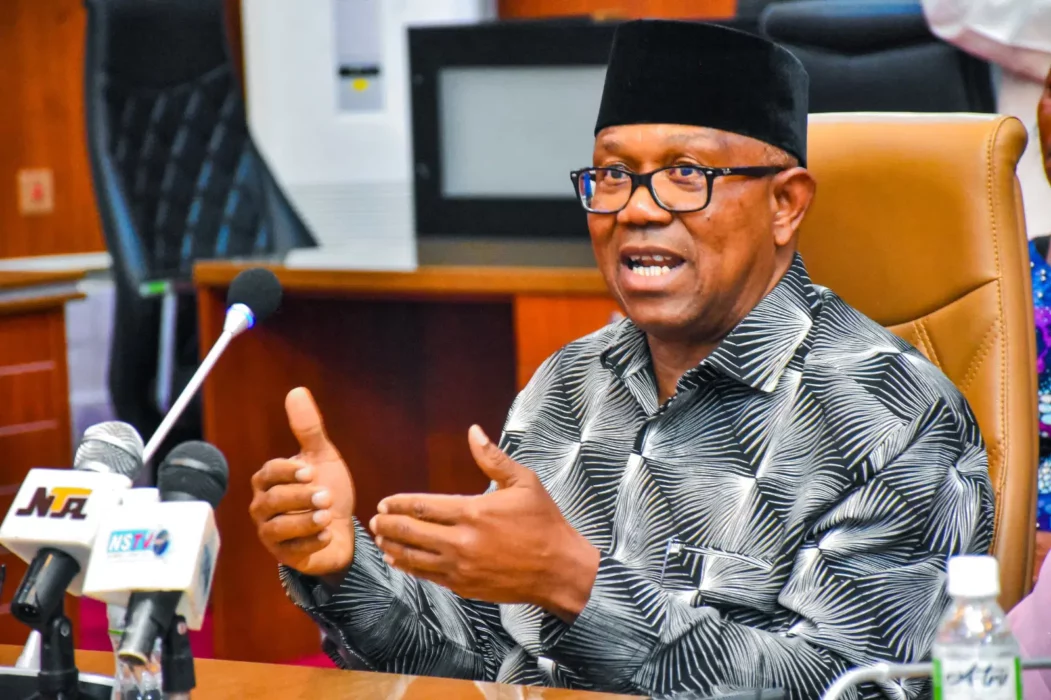
The Igbo Agenda Dialogue (IAD), a socio-political and pro-democracy organisation of Igbo people in Nigeria and the diaspora, has endorsed Peter Obi, the presidential candidate of the Nigeria Democratic Congress (NDC), for the January 16, 2027 presidential election.
The organisation also endorsed Senator Rabiu Musa Kwankwaso, former governor of Kano State, as Obi’s running mate, urging eligible Igbo voters to mobilise in support of their ticket.
The endorsement was announced yesterday, at a press conference in Abuja, in an address signed by the national chairman of IAD, Chief Dr Chekwas Okorie, and its executive secretary, Jonathan Elendu.
The group said its decision followed an assessment of the leading presidential candidates, taking into account their political records, concern for Nigerians, physical fitness for the demands of the presidency, and their management of public resources.
According to the organisation, consultations with Igbo unions, market associations, women’s associations, youth groups and civil society organisations informed its unanimous decision to support Obi.
IAD described the former Anambra State governor as a candidate capable of providing the compassionate, prudent and people-oriented leadership it believes Nigeria needs at this time.
The organisation also claimed that Obi enjoys widespread support across ethnic and religious divides and has significant international visibility. It argued that the 2027 election presents Nigerians with an opportunity to choose a president outside the pattern of leadership dominated by older politicians, which it described as gerontocracy.
The group further alleged that intimidation and threats were being used to undermine confidence in the electoral process, insisting that the country needs free, fair, credible, transparent and inclusive elections.
IAD called on eligible Igbo voters to turn out in large numbers to support Obi, claiming that Igbo people constitute at least 25 per cent of the voting population in each of 31 states and the Federal Capital Territory, while accounting for more than 99 per cent of voters in the five South-East states.
Explaining the historical basis for its position, IAD recalled instances in which Igbo political leaders collaborated with politicians from other parts of Nigeria to form governments and promote national unity. It cited the coalition between the National Council of Nigerian Citizens (NCNC), led by Dr Nnamdi Azikiwe, and the Northern Peoples Congress (NPC), which enabled the NPC to form the government led by Nigeria’s first Prime Minister, Tafawa Balewa, after independence.
The group also referenced the political accord between the Nigerian Peoples Party (NPP), led by Azikiwe, and the National Party of Nigeria (NPN) during the Second Republic.
It further recalled the decision of Igbo political leaders to support the Peoples Democratic Party (PDP) ahead of the 1999 elections, following assurances that the late former Vice-President Alex Ekwueme would receive support from northern political allies for the presidency.
However, IAD said Ekwueme was ultimately denied the party’s presidential ticket at its primary election in Jos, Plateau State, despite the support mobilised for the PDP in the South-East. The organisation said these historical experiences informed its position that political collaboration should be based on mutual respect, national interest and fairness.
To reinforce its argument for political inclusiveness, IAD cited the election of Alhaji Umaru Altine, a politician of Fulani extraction, as the first mayor of Enugu under the NCNC in the First Republic. It said Igbo voters subsequently re-elected Altine as an independent candidate after he lost his party’s nomination for a second term.
The group also recalled the appointment of Chief (Mrs) H.I.D. Awolowo, wife of former Action Group leader Chief Obafemi Awolowo, as a minister without portfolio by the government of Dr M.I. Okpara, then premier of the Eastern Region, while her husband was imprisoned.
According to IAD, the examples demonstrate the importance of political tolerance and extending support across ethnic and party lines.
The organisation consequently urged Igbo politicians supporting other presidential candidates to focus their campaigns on issues and avoid divisive rhetoric.
It maintained that political disagreements should not be allowed to undermine peaceful coexistence among Nigerians, regardless of their ethnic backgrounds or party affiliations.
to like, bookmark, and comment.
Comments
Join the conversation:
No comments yet. Be the first to share your thoughts.