👨🏿🚀TechCabal Daily – Moove-ing on
In partnership with
Lire en Français
اقرأ هذا باللغة العربية
TGIF. ☀️ ️️️
Check our job board for openings that could be your next ‘big boy’ or ‘big girl’ career move.
If you haven’t taken our survey yet, please do. Help us make TC Daily better by telling us what you’d love to see more of, what you’d like less of, and what would improve your reading experience. Share your thoughts here. We’d love to hear them.
Read smart insights about Francophone Africa’s tech ecosystem—weekly.
Moove exits Nigeria
SA offshore gambling plans
Who secured the bag? 💰
World Wide Web 3
Job Openings
collections
Class of 2016: PiggyVest
Would you trust three people in their early twenties with your hard-earned money? That was the ask PiggyVest’s founders put to Nigerians in 2016, the same year they lost ₦18 billion ($71 million) to MMM, a Ponzi scheme.
Winning that trust was only the start. PiggyVest spent its first four years relying on other companies’ licences, which cut its margins and what it could pay savers. In 2019, it dropped the name Piggybank.ng after the central bank made clear only licensed banks could use the word. In 2021, it survived a run of withdrawals that chief operating officer Odun Eweniyi calls the closest it came to failing.
Today, PiggyVest says it has 6.7 million users and paid ₦1.3 trillion ($983 million) back to savers in 2025 alone. Its parent company also owns Pocket, a payments app, and wants to become a financial ecosystem for every Nigerian.
[Read the PiggyVest profile →]
Then check out the full Class of 2016 project, including our profiles of Yoco and BuuPass and our analysis of what 2016’s startups returned to investors.
Happy customer service week.
Your success and ours are the same story. Happy Customer Service Week. This year’s theme is The Extra Mile, and it’s the only way we know how to do this.
Visit: fincra.com.
Companies
Moove exits Nigeria one month after Uber
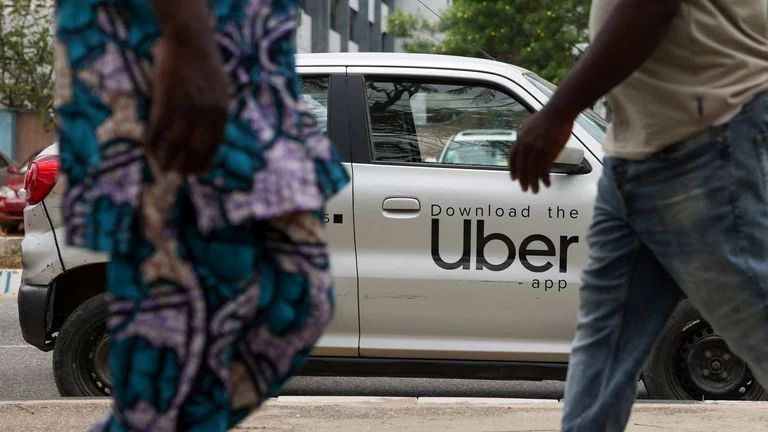
Sometimes, you order a ride on Uber and see that little grey Suzuki S-Presso car pulling up. Well, the company that helped put some of those cars on the road is leaving Nigeria.
What happened? Moove, the mobility fintech that financed and rented cars to ride-hailing drivers, is shutting down its Nigerian operations six years after launching in Lagos. It says eligible customers will get full ownership of vehicles worth about ₦35 billion ($26.3 million), free of charge.
There’s a bit of history here: Eyebrows are naturally going up because Moove’s exit comes just over a month after ride-hailing giant Uber left Nigeria, saying it was reviewing its business priorities and where it wanted to invest across Africa. Moove hasn’t said Uber’s exit is why it is leaving, but the timing is hard to ignore.
Explain like I’m new here: Moove and Uber were practically joined at the hip in Nigeria. When Moove launched in 2020, it found drivers who wanted to make money from ride-hailing but didn’t have enough money to buy a car. Moove financed cars for drivers, letting them use those vehicles for work while paying towards ownership from their earnings. In 2020, Moove became Uber’s car-financing and vehicle-supply partner in sub-Saharan Africa, supplying vehicles including Suzuki Alto and S-Presso models. Uber later invested in Moove, leading its $100 million Series B round in 2024.
Money Mooves: By 2024, it had raised $460 million across equity and debt, valuing the company at $750 million. In August, it raised $250 million in Series C funding at a $2.1 billion valuation, joining the Lagos-born startup unicorn club. It was building a much bigger mobility business. In January 2025, it acquired Brazilian mobility startup Kovi, and later acquired Tokyo Taxi in Japan, adding established fleets to its growing global footprint. It also moved into autonomous vehicles in the United States through a partnership with Waymo, managing driverless fleets in Phoenix and Miami.
What happens now? For the drivers, the ending is actually a bit sweet. Moove says over 9,000 customers have used its drive-to-own and rental products in Nigeria. Eligible customers can keep their cars for free. The company continues to operate elsewhere, with 42,000 vehicles across 29 cities including Accra, Cape Town, Nairobi, London, Dubai, Cairo, as well as its autonomous operations in Phoenix and Miami.
Nigeria may have lost Moove, but for the drivers who spent years paying for those cars, the company is leaving behind the one thing its business was built to help them get.
Don’t miss Moonshot 2026 for anything in the world!
True scale demands moving beyond surface-level integrations to robust execution. We’ve filtered the noise out of Moonshot 2026, optimising the conference strictly for high-calibre connections between startup founders, global financial operators, enterprise leaders and individuals rewiring Africa’s technical frameworks. Join us on October 28 & 29, 2026.
Get your ticket.
regulation
South Africa wants new rules for gambling on your phone
Gambling is already tightly regulated in South Africa. The country has laws governing casinos, betting, and other forms of gambling, but phones have made it much easier to access gambling products from almost anywhere. Now, the government is looking at whether the networks carrying that activity should have a bigger role in regulating it.
What happened? Communications Minister Solly Malatsi has said he will engage the Independent Communications Authority of South Africa (ICASA), the country’s tech regulator, to put a guardrail around offshore gambling. Malatsi said existing gambling laws already regulate gambling activities, but acknowledged that the government needs to consider whether more consumer protections are needed when electronic networks are involved.
Explain like I’m new here: South Africa already has a gambling rulebook. The National Gambling Act and provincial laws govern gambling and betting, while the National Gambling Board (NGB) says interactive online gambling remains illegal. Online betting is allowed when it is offered by a licenced South African bookmaker. Yet, the Internet has made those lines harder to police. People can use the same phone and mobile network to place a legal sports bet, buy a gambling voucher or reach an offshore gambling platform.
A lot is already going into this: Since October 2025, the Department of Trade, Industry and Competition has been reviewing the National Gambling Act, with a new bill expected to reach Cabinet later this year. A Gambling Technical Committee has also been reviewing the legislation and how national and provincial rules fit together. In April, licenced bookmakers called on banks and payment providers to block transactions to offshore gambling platforms. Malatsi’s move is targeting the communications networks through which people access these services.
The ads are getting attention too: The National Gambling Board is also working on advertising regulations, with planned measures including responsible-gambling warnings and restrictions on placing gambling ads where most of the audience is under 18.
What happens now? Malatsi’s engagement with ICASA is still at the discussion stage. There is no new blanket ban on gambling through mobile networks. However, if the government eventually decides that networks should have a role, the rules could potentially focus on activities like how gambling platforms are accessed or whether unlicensed services should be blocked.
insights
Funding tracker
MNT-Halan, an Egyptian startup, raised $82 million in debt funding from Tasheel Finance and Halan Consumer Finance. The raise comprised two tranches of $24.6 million and $46.8 million from Tasheel Finance and $10.8 million from Halan Consumer Finance. (Oct 2)
Here are the other deals for the week:
Satlyt, a Kenyan-founded space tech startup, raised $8 million in a seed funding round led by Non Sibi Ventures. (Oct 2)
WalaPay, a South African fintech startup, raised $4.6 million in seed funding led by 4DX Ventures and JAM Fund, with participation from a group of angel investors including executives from Coinbase and Solana. (Oct 3)
Cold Solutions Rwanda, a Rwandan cold chain and logistics startup, secured $18 million debt financing from Africa Go Green Fund. (Oct 5)
Cloud9, a Kenyan fintech startup, raised $500,000 in equity funding from Alliance. (Oct 6)
East Africa Foods, a Tanzanian agritech startup, raised $40 million in a funding round led by InfraCo, with participation from Oikocredit, the Dutch entrepreneurial development bank, ARAF, Goodwell, Africa Eats, FINCA, and Schmidt Family Foundation. (Oct 7)
Ocular AI, a Zimbabwean AI company, raised $2 million in a pre-seed funding round led by Drive Capital, with participation from Y Combinator, Alumni Ventures, 1745 Ventures, Orange Collective, MyAsia VC, and a group of angel investors. (Oct 7)
That’s all for this week. Before you go, did you know that Africa carries one of the world’s highest burdens of drug-resistant infections? Find out the data gap behind the crisis here.
Follow us on Twitter, Instagram, and LinkedIn for more funding announcements.
CRYPTO TRACKER
The World Wide Web3
Source:
Coin Name
Current Value
Day
Month
Bitcoin
$82,542
+ 0.51%
– 4.45%
Ether
$2,497
– 2.96%
– 0.04%
XRP
$1.40
– 0.67%
– 1.96%
Solana
$110.62
– 4.27%
+ 6.15%
* Data as of 06.37 AM WAT, October 9, 2026.
Job Openings
Bumpa — Social Media Associate — Lagos, Nigeria
Paystack — Product Manager, Financial Systems, several other roles — Hybrid (Lagos, Nigeria)
Paystack — Product Manager, South Africa, Account Manager — Hybrid (Cape Town, South Africa)
Paystack — Platform Security Engineer — Nigeria, Kenya, South Africa
Qore — Engineering Specialist, Offensive Security — Lagos, Nigeria
OPay — PR Strategist — Lagos, Nigeria
RadioNow — Videographer — Lagos, Nigeria
Looking for more opportunities? There are additional openings on TechCabal’s job board. We’ve also cleared out outdated listings to keep opportunities fresh for job seekers. If you’re hiring and would like to feature an open role, please submit it via this form.
Billionaires online, broke offline: Nigerians escape reality inside viral games
Goodbye mango tree, hello AWS: The cloud sovereignty paradox behind Nigeria’s new postcode
South Africa targets 17.5 billion spam calls with new registry
Written by: Muktar Oladunmade, Success Sotonwa, and Yemi Kareem
Edited by: Emmanuel Nwosu & Ganiu Oloruntade
Want more of TechCabal?
Sign up for our insightful newsletters on the business and economy of tech in Africa.
The Next Wave: futuristic analysis of the business of tech in Africa.
Francophone Weekly by TechCabal: insider insights and analysis of Francophone’s tech ecosystem
P:S If you’re often missing TC Daily in your inbox, check your Promotions folder and move any edition of TC Daily from “Promotions” to your “Main” or “Primary” folder and TC Daily will always come to you.
to like, bookmark, and comment.
Comments
Join the conversation:
No comments yet. Be the first to share your thoughts.