The strategy behind Equity Bank’s new digital wallet
Digital banking in East Africa is no longer about moving branch services onto mobile phones. More than 90% of retail transactions at Kenya’s tier-1 lenders now happen outside branches, leaving physical outlets largely as a backstop. Even with KES 2.16 trillion ($16.7 billion) in assets and KES 75.5 billion ($580 million) in annual net earnings, the region’s biggest banks face bigger changes in how customers move and manage money.
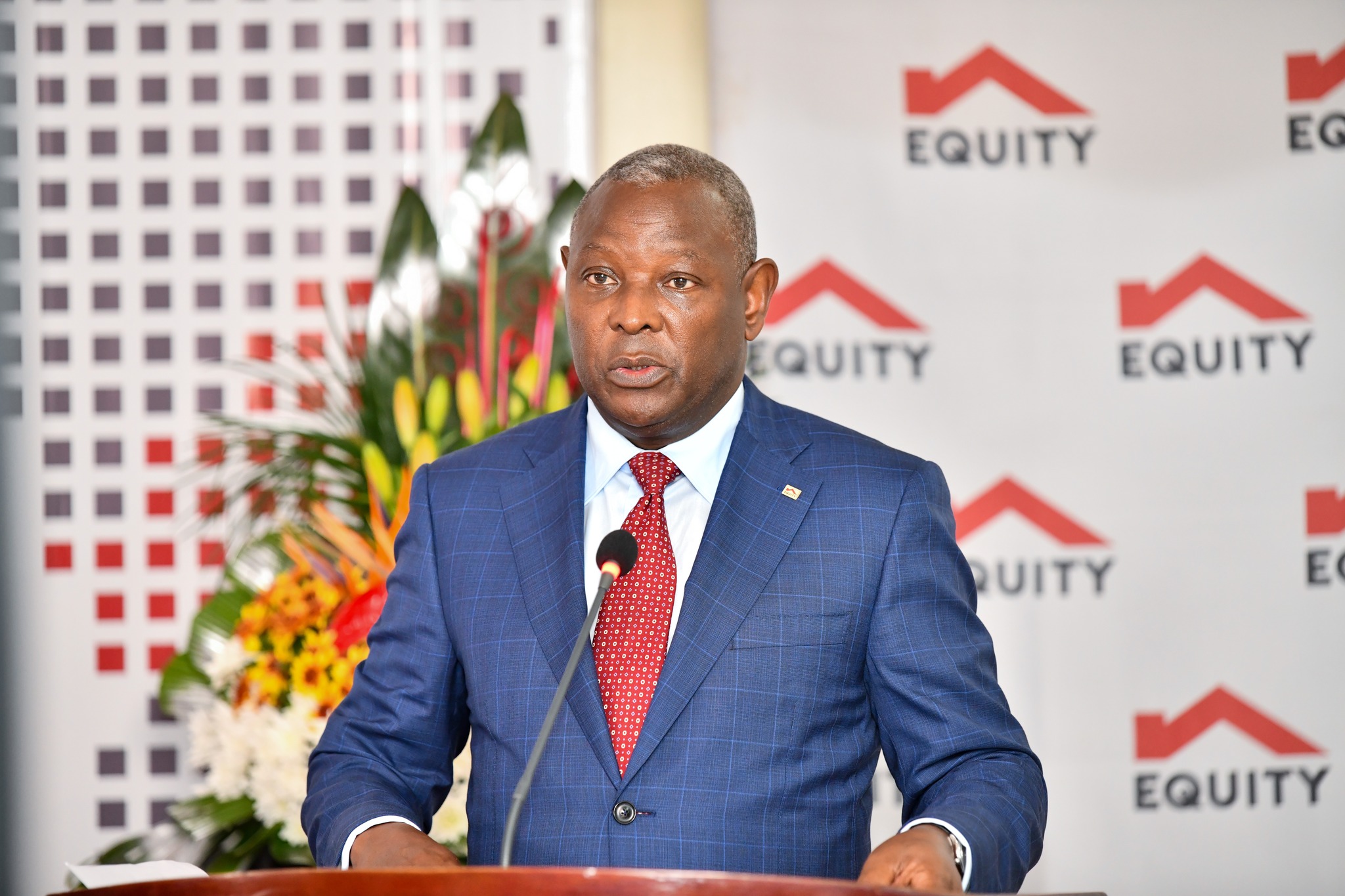
Equity Bank is responding with EMMA, a wallet launched by its fintech arm, Finserve Africa. Customers can access it through an Android app, USSD, or the Equitel SIM toolkit. At first glance, it looks like another version of the services Equity already offers.
Equity already operates its flagship Equity Mobile banking application, runs an established mobile virtual network operator, Equitel, manages thousands of agency outlets, and handles substantial transaction volumes through its biller code.
EMMA is less about replacing the bank’s existing services than about where customers transact each day. Banks still hold most deposits, but mobile operators and fintechs are taking a larger share of everyday payments.
Equity wants to keep merchant and peer-to-peer payments on its platform, retain the data that feeds its lending models and build a base for cross-border finance by moving more transactions outside its traditional banking system.
The neobank playbook
EMMA feels less like opening a bank account and more like signing up for a payments app. The process takes a few minutes, and all a user needs is an ID or passport to complete facial authentication. There are no minimum balance requirements or lengthy forms to get through.
Built under Finserve rather than directly under Equity’s banking licence, EMMA is designed for everyday transactions. Users can send money to each other, buy airtime, take instant loans, save and pay bills from the same wallet.
The app has been designed around open interoperability rather than a closed loop. Users can push liquidity directly from EMMA into Safaricom’s M-PESA merchant ecosystem, transfer balances to Airtel Money, route funds to commercial bank accounts, or remit money to unregistered recipients. Equity is treating the payment interface not as a locked depository, but as an open utility.
The approach reflects an industry-wide pivot toward deliberate self-disruption. Incumbents are already establishing independent digital platforms to capture market segments that avoid traditional banking halls.
Absa Bank Kenya is taking a similar approach with Absa Next. The cloud-based platform runs on Amazon Web Services (AWS), and the bank built it through its internal technology incubator.
It is open to both Absa customers and non-customers. Like other neo-banking platforms, sign-up takes less than a minute. Users can link cards from other banks, digitise informal savings groups and access instant credit from KES 500 ($3.86) to KES 1 million ($7,710). According to Absa, the lender uses alternative behavioural data to assess borrowers. The bank is also running Absa Next alongside its main banking app.
NCBA Group, another tier-1 Kenyan bank, was an early mover with LOOP, run through its standalone fintech subsidiary, LOOP DFS. It started as an urban lifestyle neobank but has since evolved into a Platform-as-a-Service business.
LOOP now goes beyond personal finance, offering automated underwriting, Buy Now Pay Later (BNPL) credit through LOOP Flex, device financing, and embedded credit for transport and agricultural cooperatives.
Equity is taking a similar route with EMMA under Finserve. The structure gives the bank more room to move outside its core banking system. It can roll out updates, test pricing and build products for informal commerce at a faster pace than a traditional bank platform allows.
Embedded finance angle
The commercial imperative is to stop banks from losing everyday transactions to mobile operators and fintechs. Kenya’s population is among the most digitally active on the continent, with 75% under 35 and a median age hovering near 20. In this cohort, mobile money penetration stands at 101.3%, compared with roughly 84.8% for formal financial services adoption.
For commercial banks, the risk is becoming a place where money arrives but does not stay. Salaries and business receipts may still land in bank accounts each month, but customers can quickly move that money into mobile wallets to handle everyday spending. Once it leaves, the bank gives up more than payment fees. It also loses cheap deposits and a stream of data about how customers use their money.
Data is key for banks that lend to customers without collateral. Consumer loans and -small and medium enterprises (SME) working-capital facilities rely on transaction behaviour to assess risk. How often a customer pays bills, buys airtime or receives merchant payments can tell a lender more than a balance sitting in an account. If telcos and fintechs own those daily transactions, they also own the data that can help price the next loan.
EMMA gives Equity a way to keep more of those transactions within its own ecosystem. The wallet is not only another channel for moving money; it also gives the bank a direct view of how customers earn, spend, save, and borrow.
Finserve already powers Equity’s Jenga application programming interface (API) and payment gateway. As Equity grows in markets such as the Democratic Republic of Congo, Rwanda and Uganda, it faces a practical problem. Rebuilding the branch and banking infrastructure it has in Kenya would be expensive and slow.
A wallet that can be deployed as software offers a different route. Equity can plug financial services into agricultural supply chains, distributor networks and cross-border trade without building the same physical footprint in each market.
Holding the account may no longer be enough, and Equity understands that an institution that owns the daily payment interface has a closer view of the customer and more chances to sell the next financial product.
EMMA is Equity’s attempt to keep both sides of that relationship.
True scale demands moving beyond surface-level integrations to robust execution. We’ve filtered the noise out of Moonshot 2026, optimising the conference strictly for high-calibre connections between startup founders, global financial operators, enterprise leaders and individuals rewiring Africa’s technical frameworks. Get 20% off Early Bird tickets for a limited time.
to like, bookmark, and comment.
Comments
Join the conversation:
No comments yet. Be the first to share your thoughts.